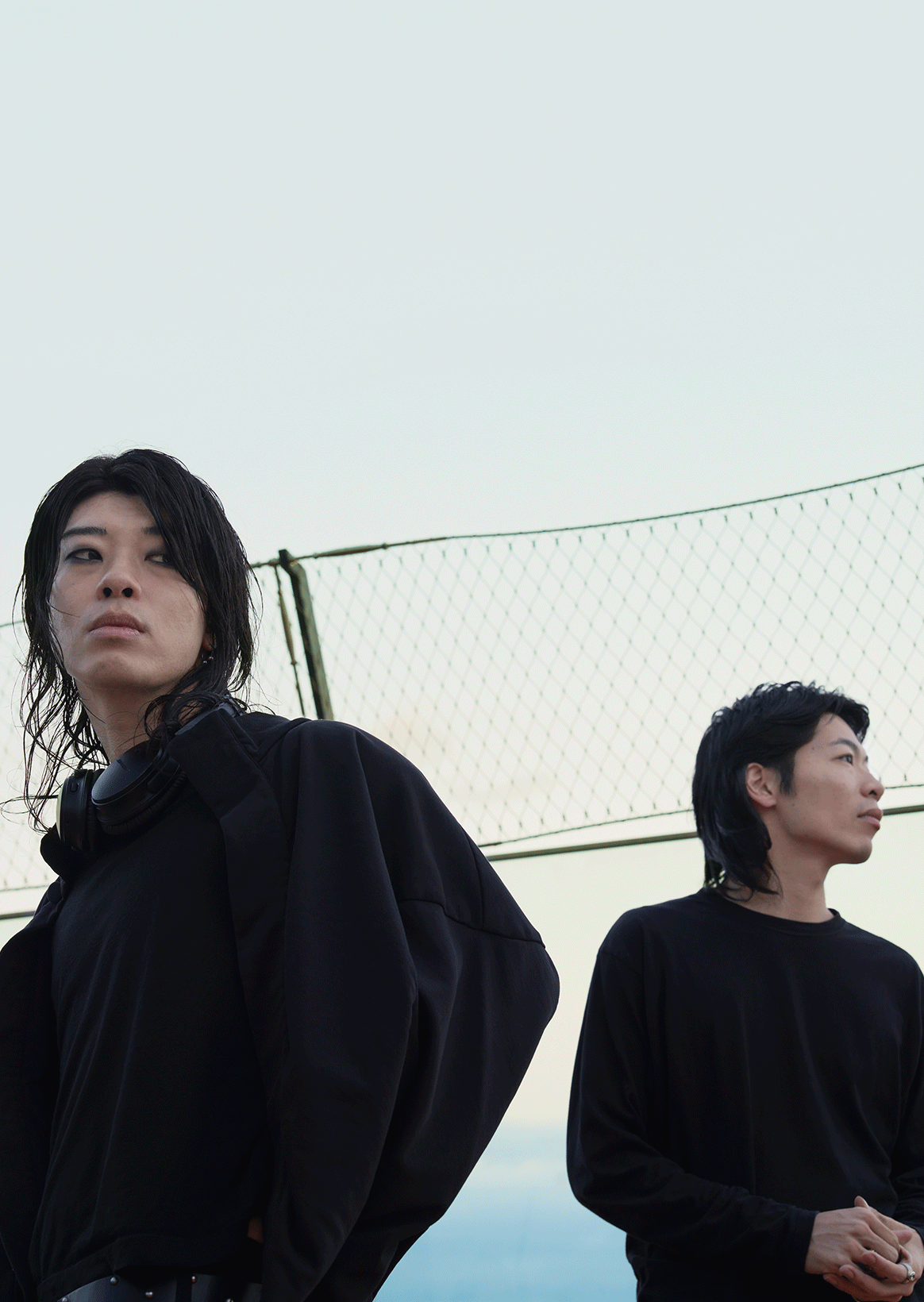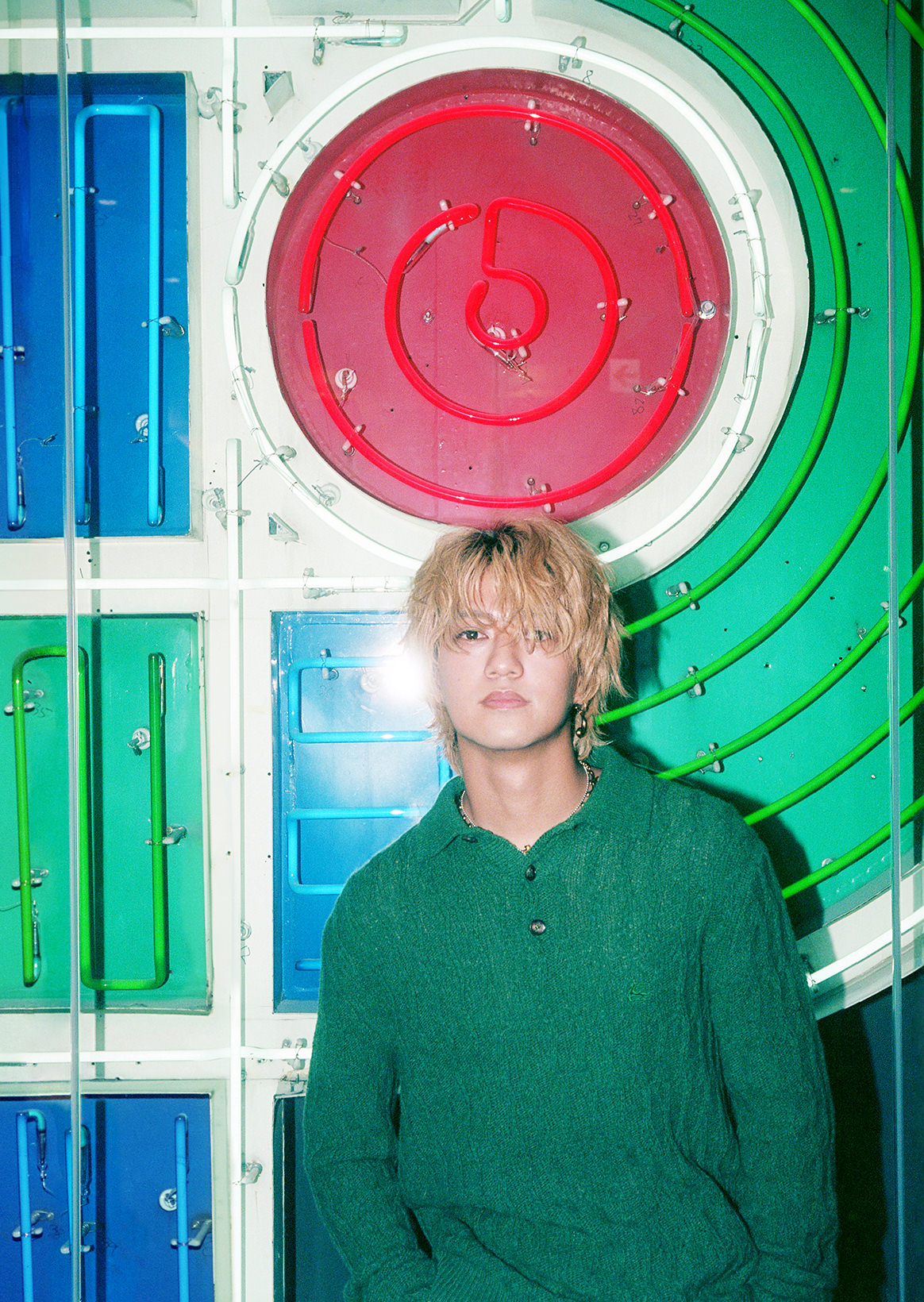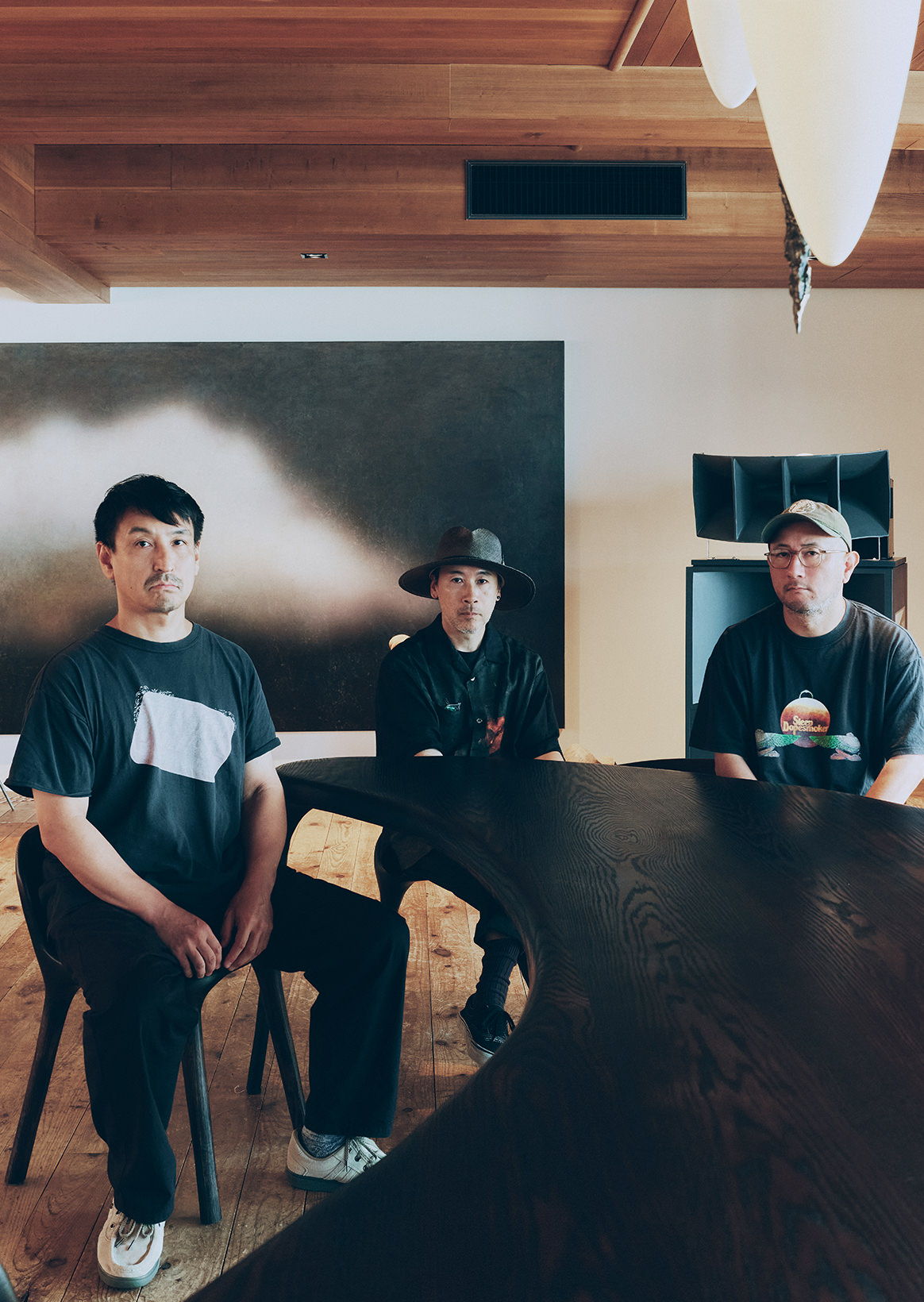
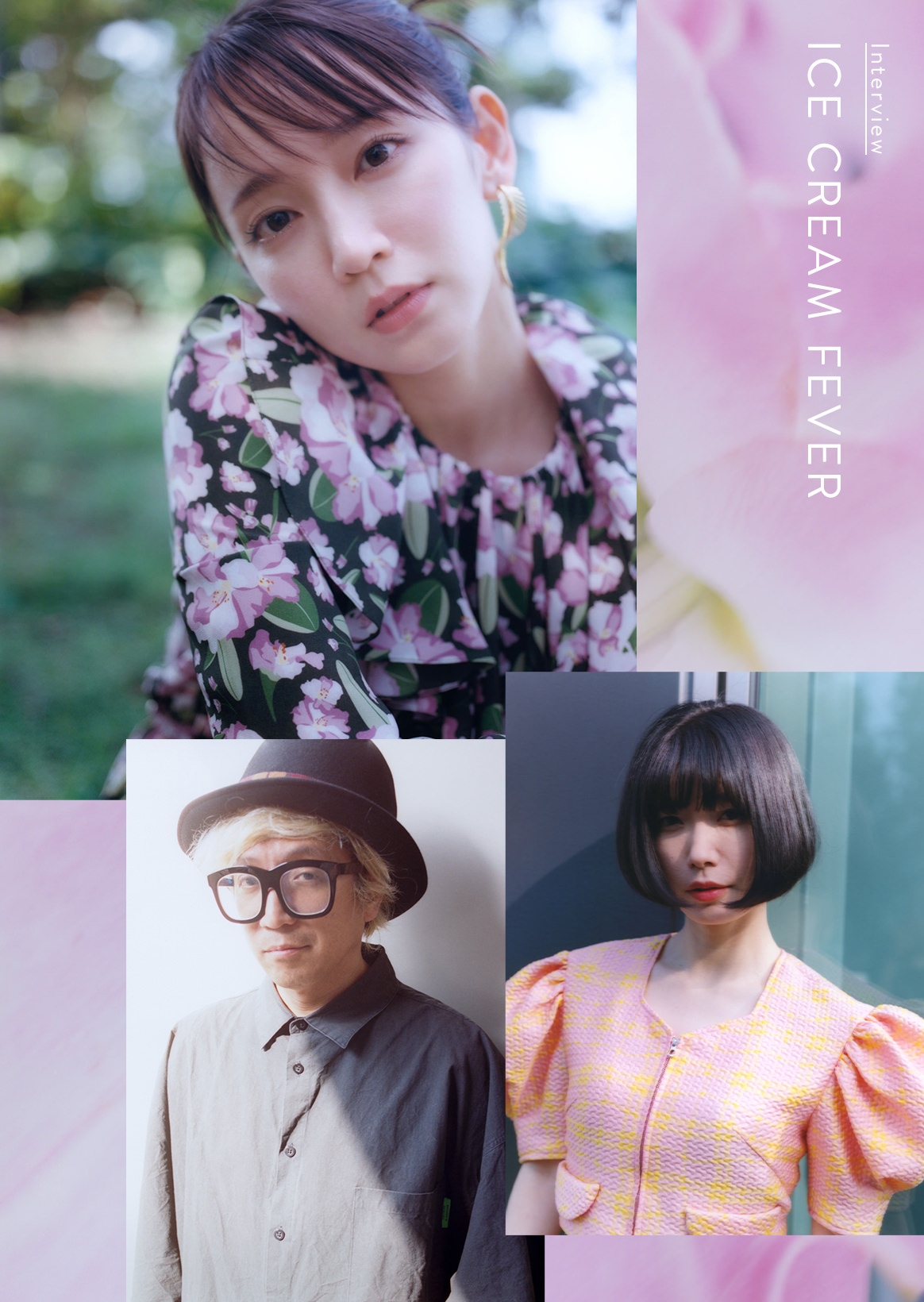
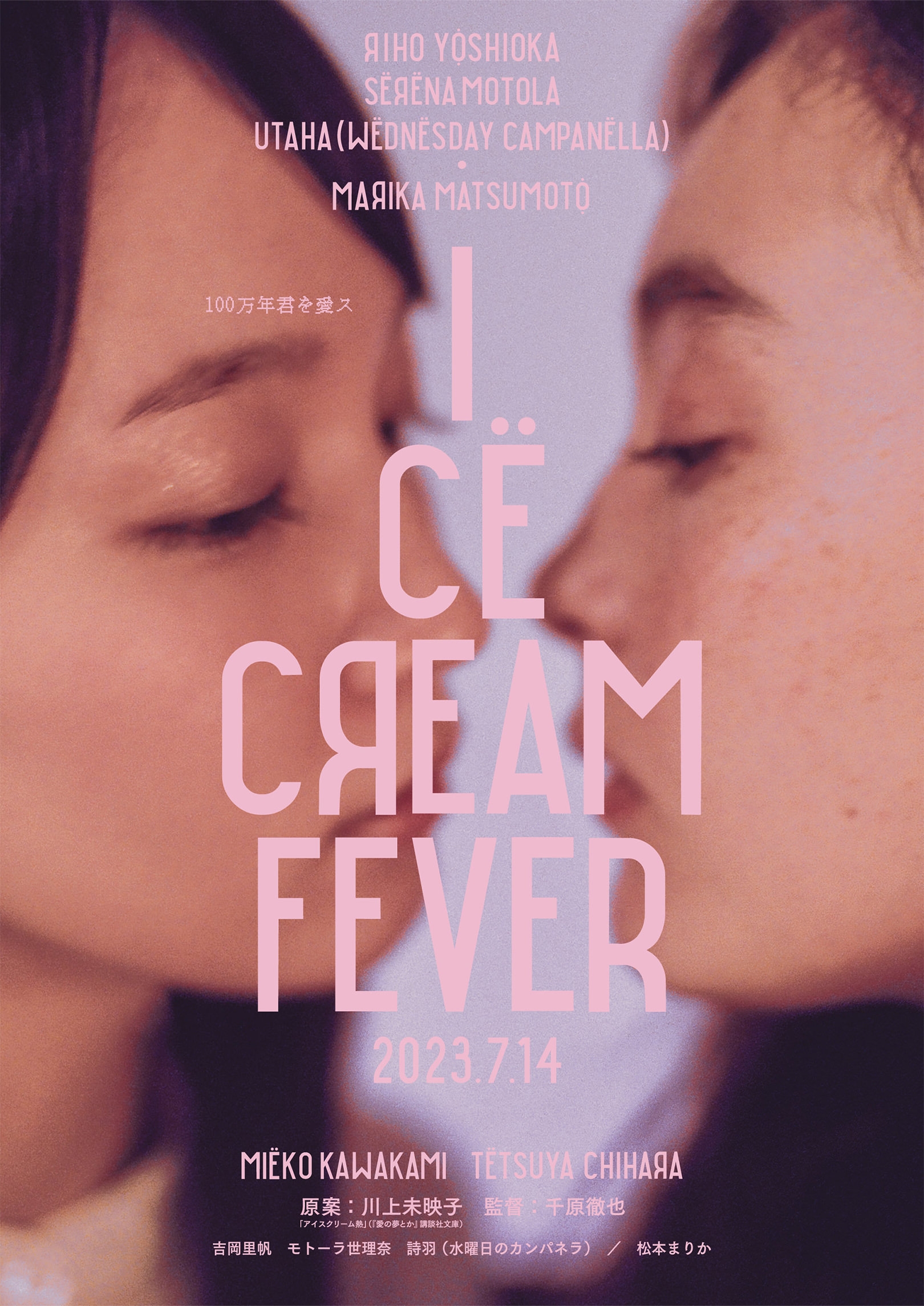
Art director Tetsuya Chihara's directorial debut film, "Ice Cream Fever," will be released in theaters on Friday, July 14th.
Based on the short story "Ice Cream Fever" by Akutagawa Prize-winning author Mieko Kawakami, this love story depicts the intertwined feelings of four women from different generations. Riho Yoshioka, Serena Motola, Utaha (Wednesday Campanella), and Marika Matsumoto play the central characters of the story.
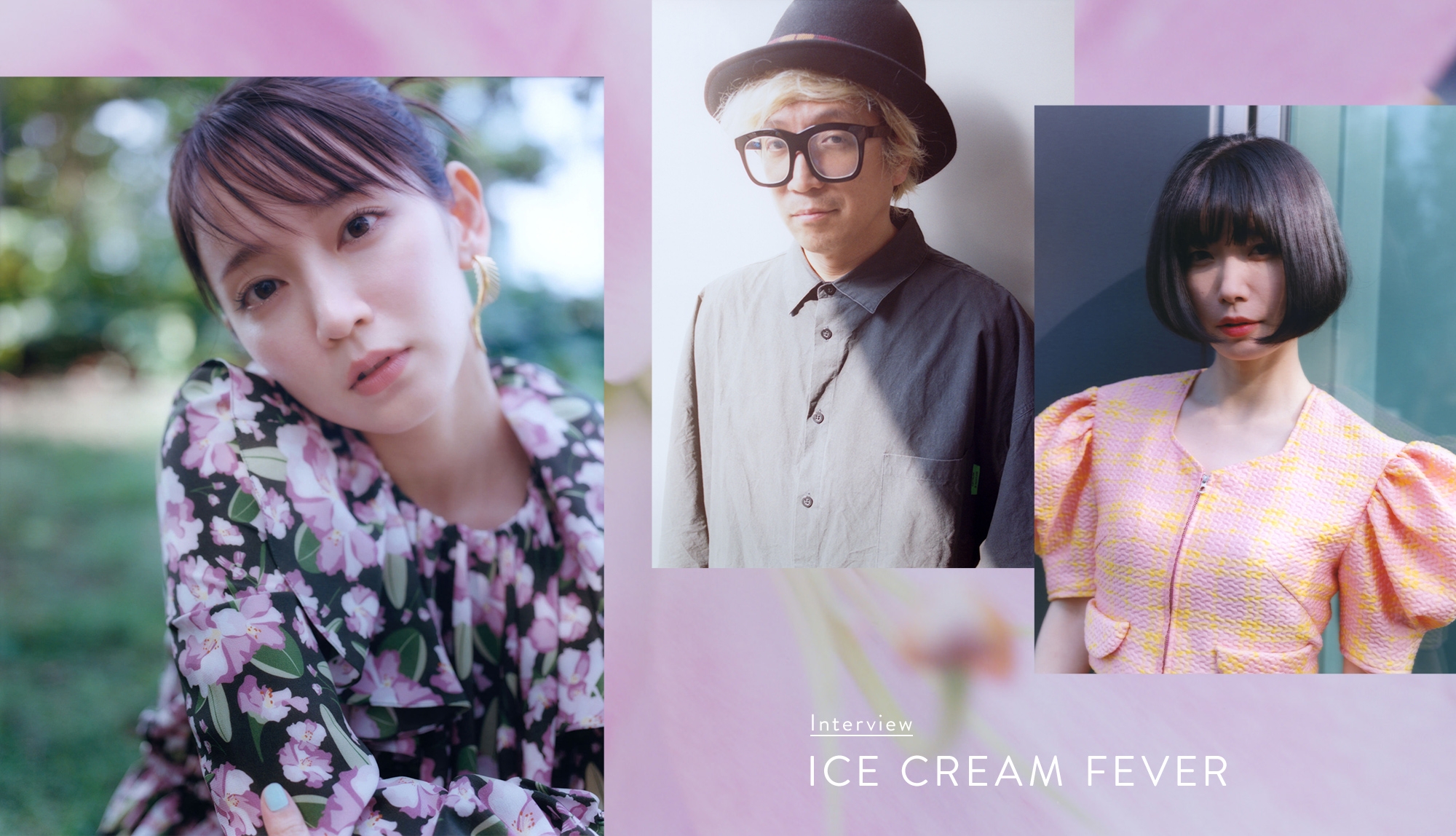
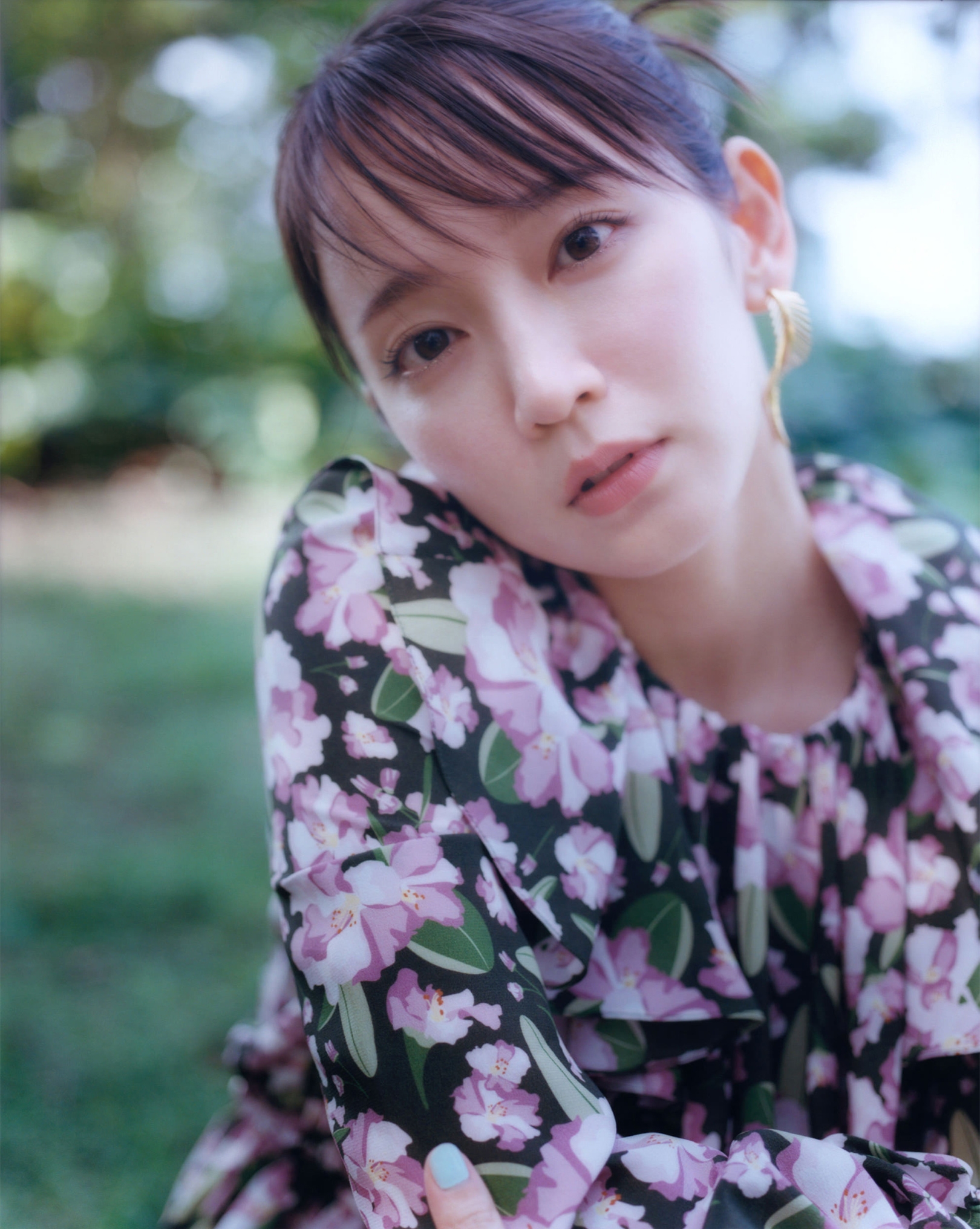
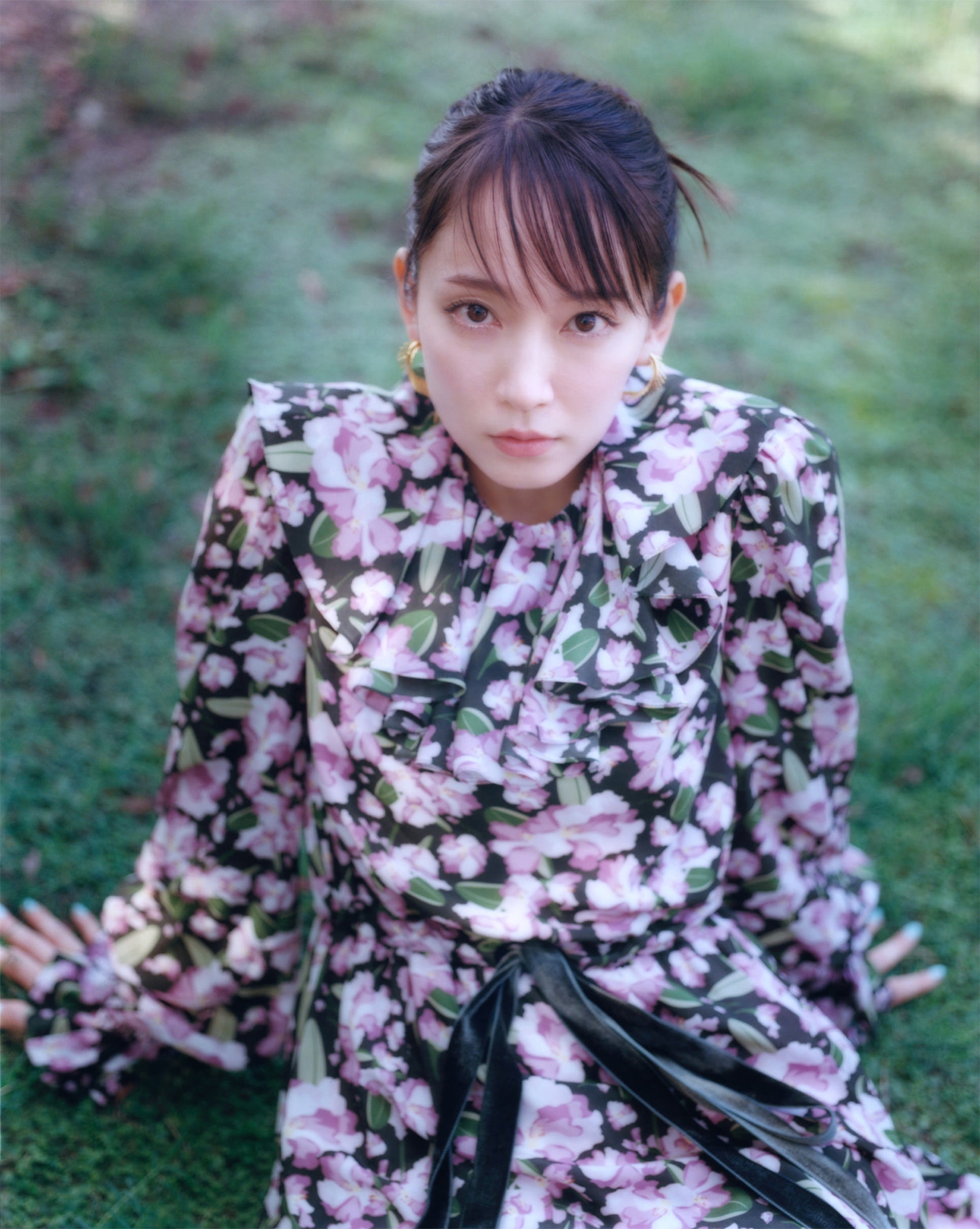
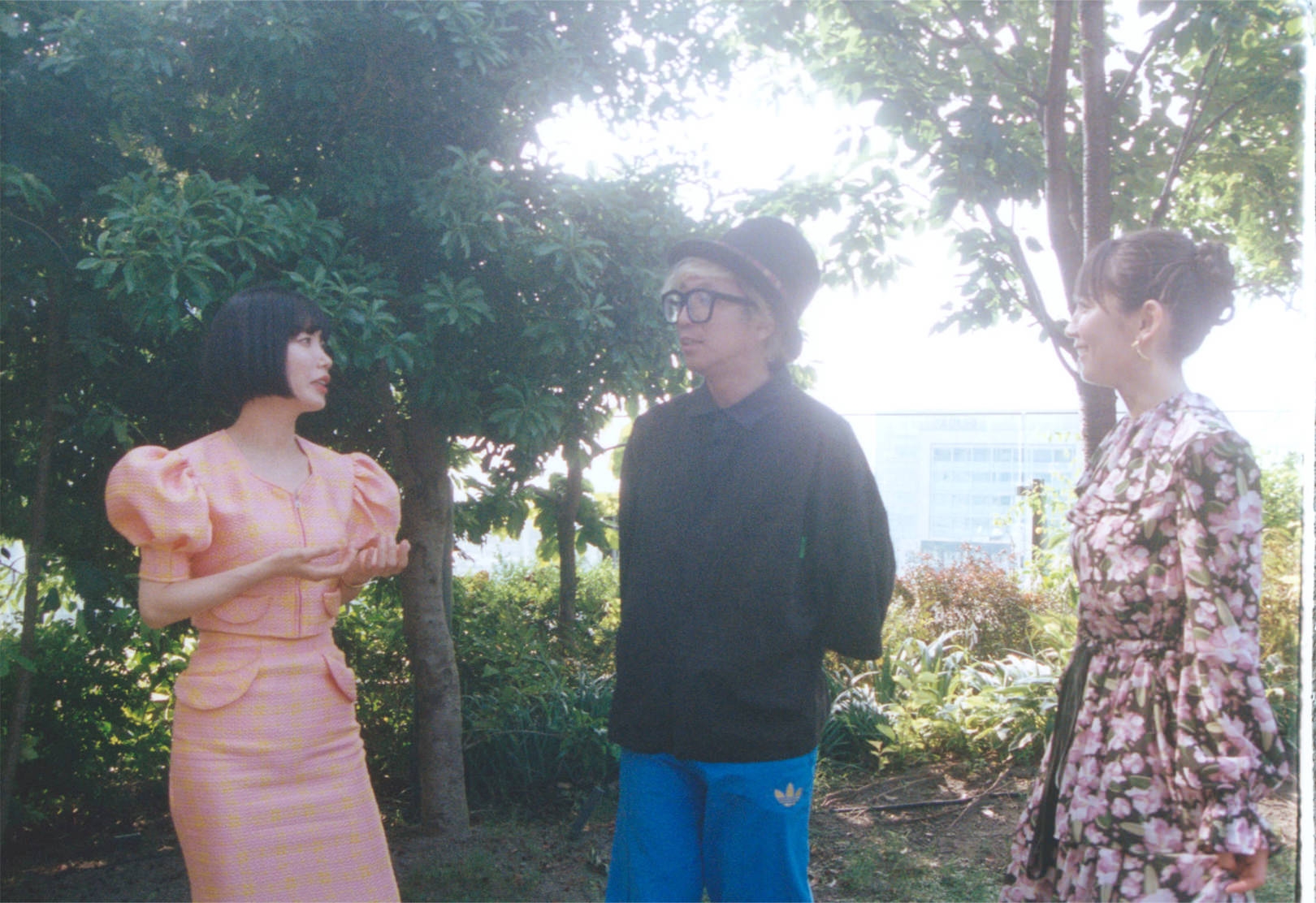
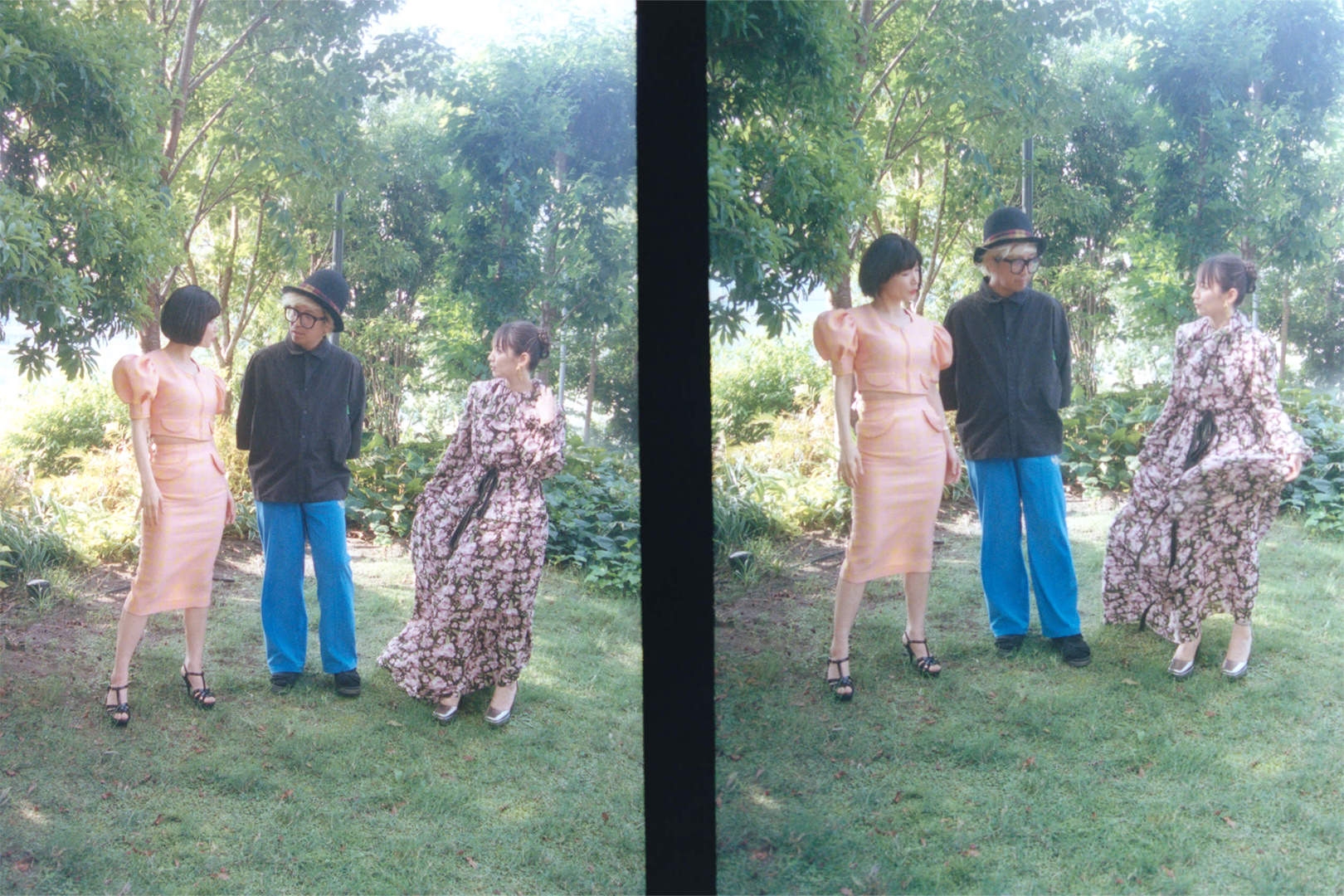
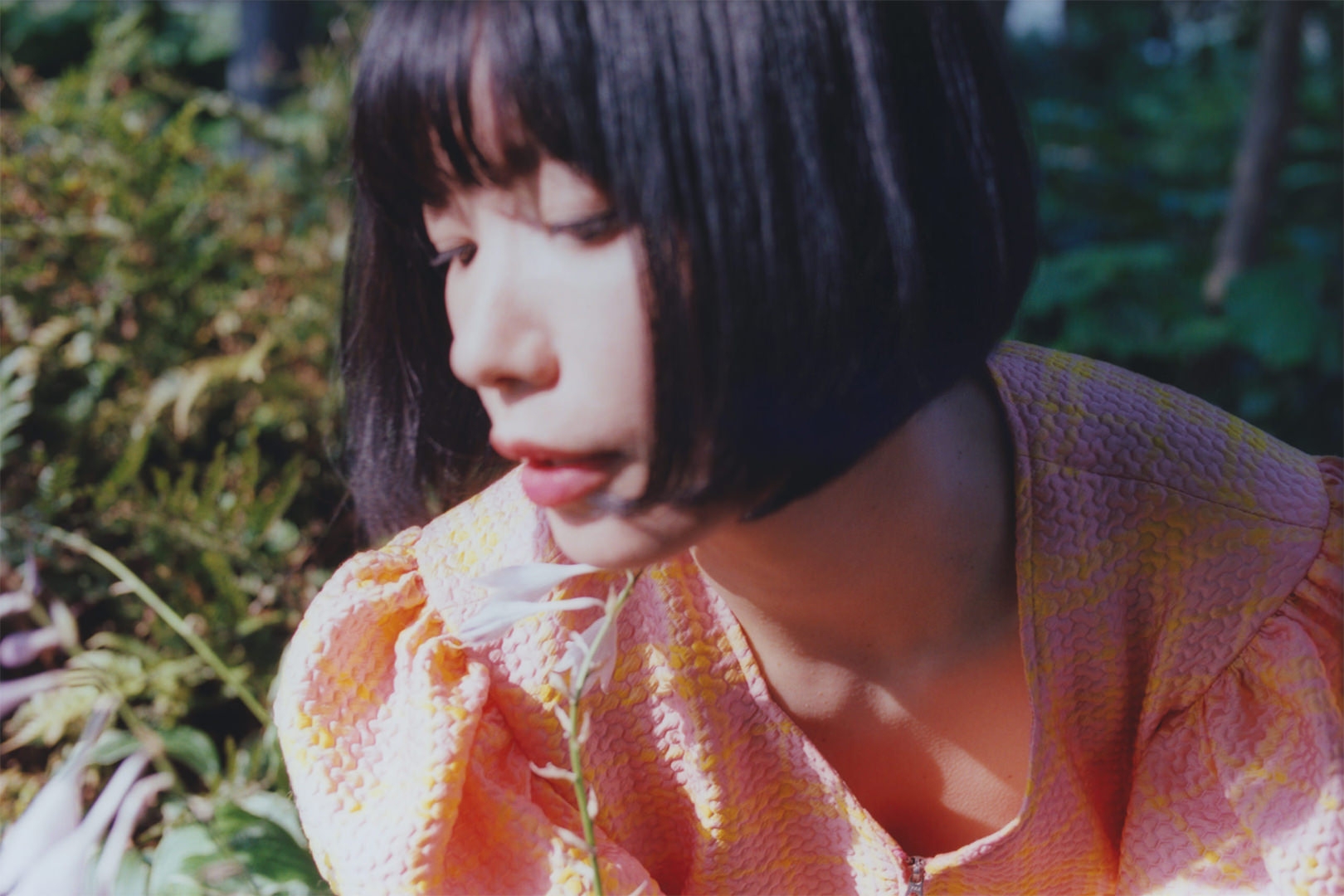
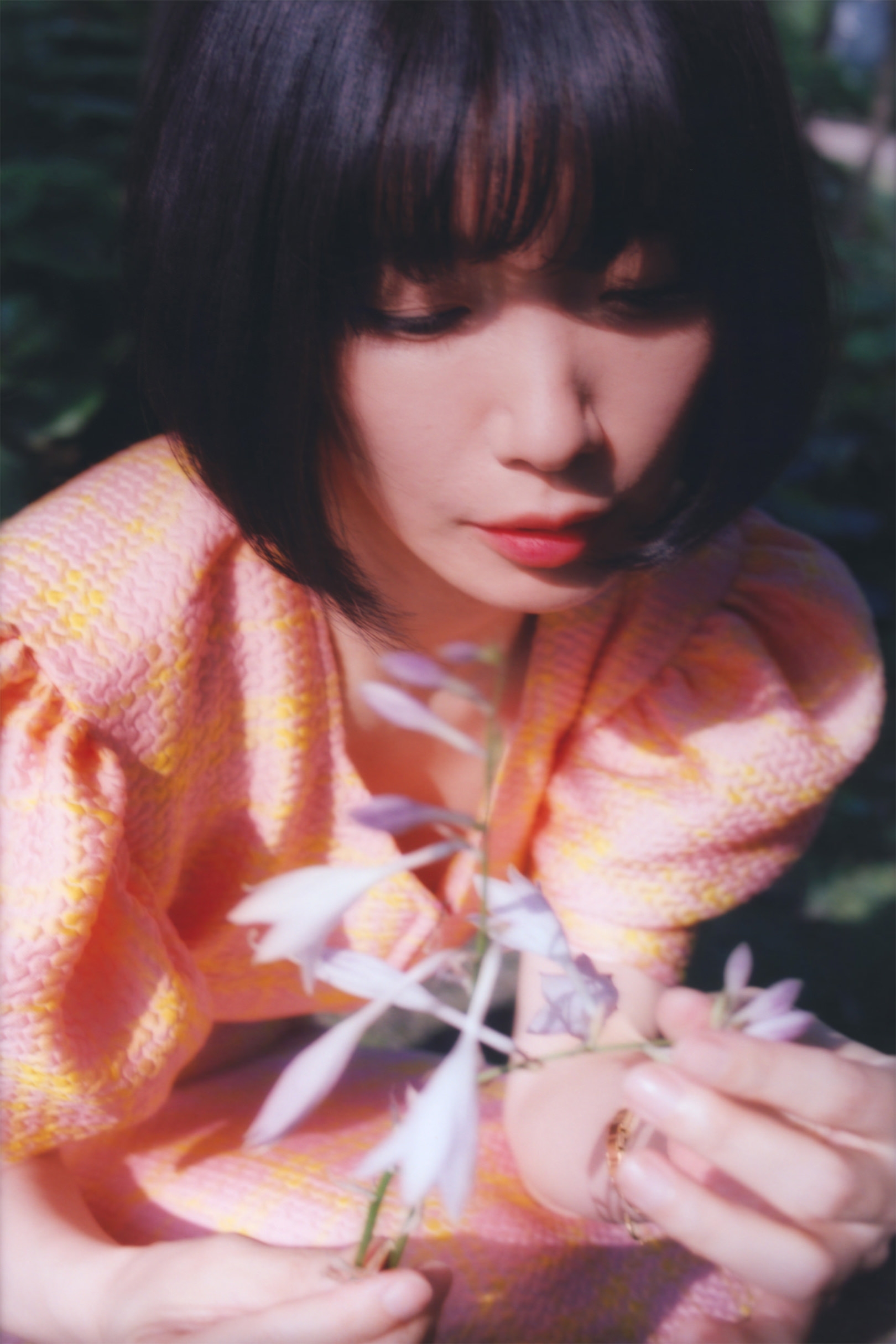
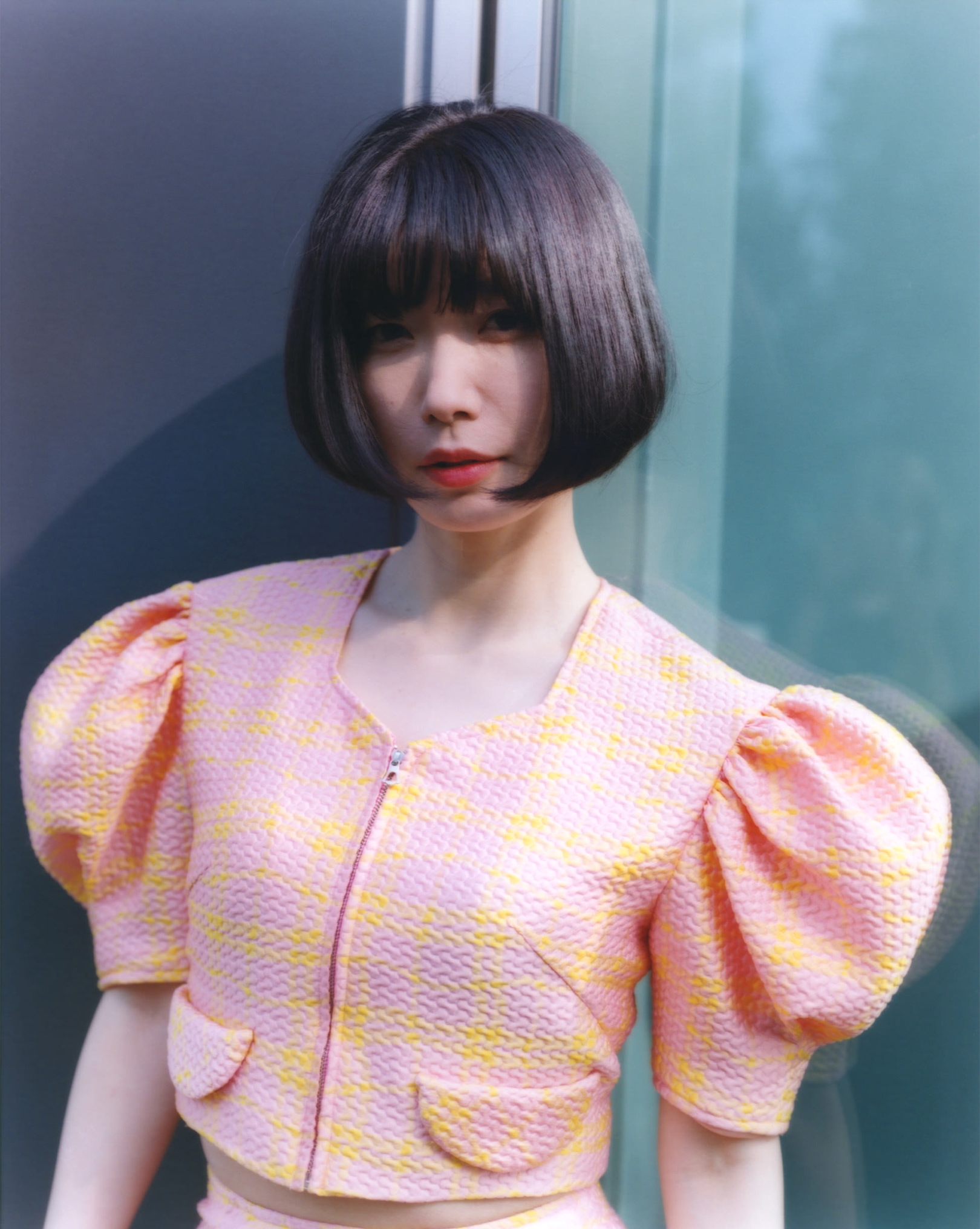
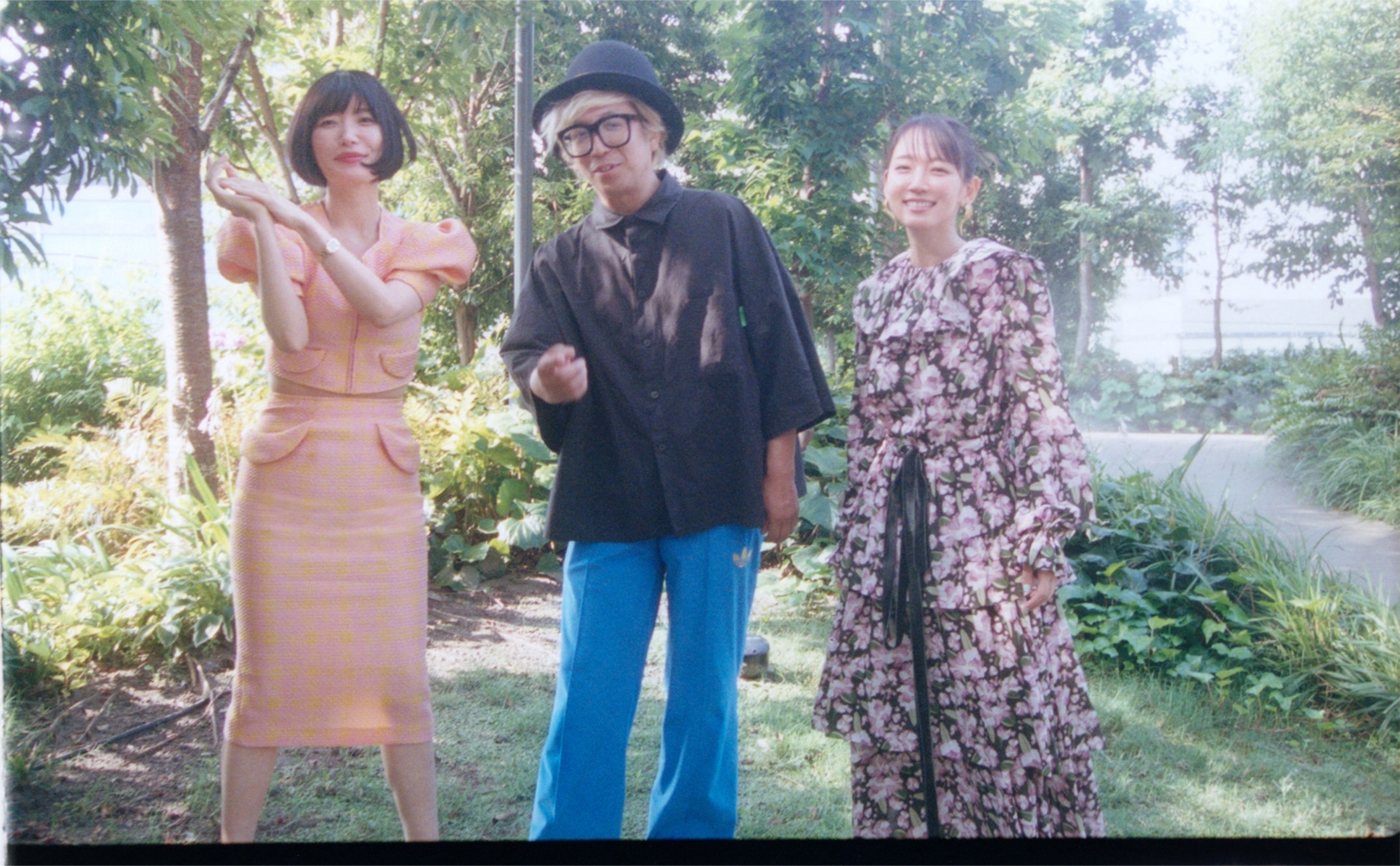
This time, we conducted a three-way discussion with director Tetsuya Chihara, actress Mieko Kawakami, and actress Riho Yoshioka. It was an in-depth, long interview covering everything from behind-the-scenes stories of the film to their creative philosophies.
- Photo
- Nico Perez
- Styling
- AYA KUROSAKI(LINX)(Riho Yoshioka)
- Styling
- Saoli Iguchi(Mieko Kawakami)
- Hair&Make
- SayokoYoshizaki(io)(Riho Yoshioka)
- Hair&Make
- Mieko Yoshioka(Mieko Kawakami)
- Text
- SYO
- Edit
- RIDE Inc.
-- Mr. Chihara, "Ice Cream Fever" is your first feature film as a director. How do you feel now, before its release?
Chihara: I feel a sense of fear about something I've created for the first time. I've never felt this way before in my design work, but it's like I'm standing naked on the front lines, or on the edge of a cliff, and it's terrifying. The reason I'm still able to maintain my sanity amidst all this is because I'm equally excited. I'm really looking forward to the release date, and I'm excited every day.
—I understand that this film originally started when Mr. Kawakami was consulted by Mr. Chihara about making a film, and Mr. Kawakami recommended "Ice Cream Fever."
Kawakami: When Chihara-kun said he wanted to make a movie, I was struck by the fact that he was going to do something new, even before considering the content. We're the same generation, but doing something new means becoming a newcomer in that field, so I honestly thought it was amazing. When we talked for about an hour at Starbucks, Chihara-kun said he wanted to do it together, and that's when I became interested in "making my own novel into a movie," something I hadn't been very interested in before. The first thing that came to mind at that time was "Ice Cream Fever." The reason I chose a short story was because I had this preconceived notion that "the shorter the original work, the better." I thought that turning a short novel into a movie would result in a more layered story.
Chihara: That's true for "Josee, the Tiger and the Fish" too, isn't it?
Kawakami: That's right. So I suggested it to Chihara-kun and he said, "That's a good idea." We decided it in the first 20 minutes of the hour we talked. It took a long time from there. Congratulations on completing it.
Chihara: Thank you. The most time-consuming part was probably figuring out how far I could take the original concept of "Ice Cream Fever," and how much of what I wanted to do I could incorporate into it while also including other people's ideas. Film is something sacred to me, so at first I was hesitant and proceeded cautiously.
-- What were your impressions after reading "Ice Cream Fever," Ms. Chihara?
Chihara: I've read a few of Kawakami's short stories, and the goal isn't success or failure, is it? This work doesn't have a clear goal either, but your feelings change a little, don't they? It's not a time for someone to die at the end or defeat the enemy, or to find a clear answer, but even if you don't find an answer in the end, your feelings change. I wanted to express that through visual expression, so it felt like it fit perfectly.
—I heard that the idea of a "story between two girls," featuring Natsumi, played by Yoshioka, and Saho, played by Motola, came from Kawakami-san.
Kawakami: Yes. After finishing this work, I sometimes think back and think, "If it had been a story about two girls, I could have written it for longer." That's one of the reasons I recommended this work, and that idea was there from the beginning.
Yoshioka: Oh, really! I didn't know that. The original story was about a man and a woman, so I was surprised when I read the script.
Kawakami: Nowadays, terms like "sisterhood" and "empowerment" are used quite a lot, but many of my novels feature paired stories between women. In that sense, it was a natural progression. In my creative work, I always think, "I hope I can depict emotions and relationships that haven't been named yet." For example, instead of bringing it into a love story that we can feel comfortable with, I place great importance on the feeling of "not knowing."
Yoshioka: That's a very fresh perspective.
Kawakami: Really? That's great!
Chihara: I myself have always been trapped by the fixed idea that "I have to come up with an answer." Most of the design work I do is for advertisements, so I'm asked to "come up with one clear answer." When asked, "What are that person's feelings?", "What is the meaning of this scene?", "Why do you want to make a movie?", I felt like I had to have all the answers, but I feel like this movie has changed that feeling. There is a line in the movie that says, "It's mine because there is no answer," and it made me realize that it's okay not to have an answer.
When we actually started shooting, at first I was trying too hard to come up with "my own style" as the answer. I was trying to fit myself into a framework like, "Kon Ichikawa would shoot it this way, Wes Anderson would shoot it this way," but once I stopped thinking that way, I started to feel that something more spontaneous was more interesting, and I started to have Yoshioka and the others "find the answer while feeling the atmosphere of this film."
Kawakami: I see. Was this photoshoot an unusual experience for you, Yoshioka-san?
Yoshioka: It was completely different from anything I'd done before. In the films I've worked on in the past, there's usually a lot of time for the director and actors to discuss and refine their roles. For example, we might do three or four test takes and discuss them before moving on to the actual shoot, but this time it wasn't like that; it was a set where they just filmed things "as they were." In a sense, it captured moments where I was completely exposed, so viewers often tell me it felt "raw." Since some of the actors were acting for the first time, I think this method of filming them naturally was very effective.
Also, not knowing the style was refreshing. I recently worked on a film by director Takashi Miike, and for example, when shooting violent scenes with Director Miike, I would go into the set with an image in mind based on watching his past works, such as the intensity of the scenes. But since this is Chihara's first feature film as a director, there were no films to refer to. Even on set, it felt like I was encountering a completely new directing style.
Chihara: On the first day of filming, there was a scene where Yoshioka was the only actor. When Yoshioka was in that situation, her face showed that she understood, "Ah, so this is how I need to approach this," and she sensed the atmosphere and acted accordingly, which was a huge help.
Yoshioka: What surprised me was that many of the staff members were also working on a film set for the first time. When I first appeared in a student film as a teenager, we all didn't know anything, but we just pushed forward with the feeling that "this is what we like," and I never thought I would be able to experience that feeling again as an adult.
Chihara: It turns out that Yoshioka was the only one with experience on a film set (laughs).
Yoshioka: I was also working as a script supervisor (a staff member who records the details of the filmed footage) (laughs). There's a scene where it starts raining and everyone gets soaked, and I was checking the "continuity" (with the previous scene) and thinking things like, "Is this OK!?" And when Shiha-chan said, "Green lips are cute, so I'd like to try it," and the makeup artist said, "That's a good idea!", I interrupted and said, "Wait a minute!" and suggested, "If you do that, the continuity will be off in today's scene, so maybe we should do it when we're filming this other scene!" (laughs). Those kinds of experiences were fun. In the midst of all that, when I told Chihara-san, "The hairstyles don't match," he said, "But the visual was good, so it's OK," and I felt like, "Right now, I'm in the workplace of creating something new."
Chihara: When we're making a film, the words "reality" and "realism" come up often, but in my films, it feels more "authentic" if the characters are dressed a little stylishly. That includes hairstyles, too. I thought that by focusing on that aspect rather than on consistency, I could create the atmosphere of this film.
Kawakami: By the way, have you and Chihara known each other for a long time?
Yoshioka: We met about seven years ago, and I've been asking him to direct my calendar ever since.
Chihara: People I only see once a year (laughs). But this time, people like Yoshioka-san, who have been exposed to "Lemon Life" and my designs, came out, so I think there was some kind of unspoken imprinting. I felt like they understood things like "this is different" and the rhythm.
—I understand that this film had the concept of "designing filmmaking (from scratch)," so the common language of "Chihara's design" was at the root of the zero-based approach on set, wasn't it?
Chihara: I think so. However, for me personally, I couldn't find the answer to the feeling, atmosphere, and light of my own image just from the finished footage, and I found it through the editing process. Design is the job of adjusting the colors of the photos you've taken, adding text, and processing them, so in the case of filmmaking, I feel like I came to understand "myself" through that process.
Yoshioka: When I saw the finished film, I was reminded once again that Chihara is an editor and a designer. On set, I couldn't fully imagine how the sounds and text would be incorporated, or the balance of color and light, and I was often surprised to see how such a beautiful world would be created and how time would intersect. For example, the scene where Natsumi and Saho (Motola Serena) are about to kiss is a continuous sequence in the script, but in the finished film, it's used in fragments, and I really liked the way it was edited to create flashbacks that made it unclear whether it was a dream or reality.
--Ms. Kawakami, what were your impressions after seeing the finished work?
Yoshioka: I'm also curious about that. This is something I wanted to ask you when I met you, Kawakami-san, but was it okay that the story changed so much from "ice cream fever"?
Kawakami: There are a lot of characters I don't know (laughs). To be honest, I haven't been very interested in my own works being adapted into films or TV shows until now. I didn't feel the need for it, so to speak. But this time, I thought it would be really good.
Yoshioka: That's great...! I also had the impression that Kawakami-san wouldn't make a movie out of it, so my initial reaction was, "You're going to do it with Kawakami-san's original idea!?" I think it's partly due to Kawakami-san's friendship with Chihara-san, but I was really happy to hear through Chihara-san that he "graciously accepted" it. At the same time, I was curious about the reason why Kawakami-san entrusted it to us.
Kawakami: I can't really explain it myself, but I think the fact that it was independent was a big factor. Up until now, even when I've been offered a film adaptation, I've sometimes felt like, "We have this much budget, and we're looking for a source material that fits this," but this time it was completely different. I have respect for creators who work independently, so I wasn't worried at all about the fact that it was a first and we didn't know what would happen. Rather, I trusted Chihara's creative impulse and challenging spirit to venture into the unknown.
Yoshioka: I'm really moved by that. I don't think you'd hand over rights or say, "Let's create something together," just because you're good friends. But this time, it's wonderful to see professionals joining forces based on trust.
Kawakami: Well, I've seen how incredibly hard Chihara-kun has worked, including raising funds, all by himself. I think it's a miracle that a movie even makes it to the world. Of course, there's a very long road to publication for novels as well, and it's not something everyone can do, but a movie involves an incomparably larger number of people, so I just want to say "congratulations" just for it to take shape. This time, I was able to watch it from that perspective for the first time.
Yoshioka: I understand. I've seen directors and producers I've met in the past struggle greatly to raise budgets, so I was deeply moved by Chihara's ability to make things happen and his enthusiasm to keep saying "please" even after all these years.
Kawakami: When you put something out into the world, the evaluation and results will be reflected in numbers, and you have to accept that for what it is. Basically, you only live once, and once you're over 30, you have to understand that you never know what will happen tomorrow, like getting sick or losing someone important. That's why creators should ideally do what they want to do, however they want, without worrying about what other people think. I think it's really amazing that Chihara-kun has managed to do that in his late 40s.
Chihara: We never talked about this kind of thing before we started (laughs). Whenever I sent Kawakami-san the script in progress or the footage of the main film that was being edited, he would always say, "That's great!"
Kawakami: That's right. It was all "That's great, that's great!" (laughs).
Yoshioka: That's a really great story... I feel like I've finally got my answer, and I'm very happy.
Kawakami: I'm happy too. Creativity is all about trial and error, isn't it? Later you might think, "I could have done it this way," but the feeling that you found the best solution at the time, even if it was better than what you could have done, is what keeps you going, and that's the only way to live. So, I'd be happiest if young people watch this movie and think, "I want to try something too."
Chihara: That's right.
Kawakami: It's very important to be recognized by people who have seen a lot of different things, but I think the greatest significance of creation is to give something to people who don't know who they are or what they want to do.
Chihara: I think the key is whether we can get into that mindset. At first, you inevitably worry about what other people think and you start thinking, "Is this right? Is it wrong?" This time, I was glad that I was able to come to the realization that "there's no such thing as being right or wrong" along the way.
Kawakami: I believe that expression, no matter how happy it may be, usually ends up hurting people. Because each person who receives it is in a different situation, there will inevitably be people who are hurt just by the title of my novel, "The Yellow House." So I think we have to accept the premise that "we are doing work that inevitably hurts someone." On top of that, I want to hand out encouragement and energy, not necessarily represented by a smile, but something like "let's just try to live through this moment," and that's something I myself also seek.
Whether it's movies or novels, the work we do is powerless against people who are truly desperate. As I get older, I often think about how we must always keep in mind that this is the context in which we are engaged in this work.
"Ice Cream Fever" is very youthful, sparkling, and fresh, so some people might not be able to relate to that world. But sparkling things don't represent sparkling things, and dark things don't represent dark things. I hope that some kind of energy will be generated from the fleeting encounter between the film "Ice Cream Fever" and the people who watch it.
Chihara: My own children are like this, but I feel that people of this generation tend not to act unless there is a clear answer. They can act if they are told to "go to point A," but they are surprisingly not used to things like "let's just go" or "let's enjoy the excitement." I get the impression that they look at analyses and strategies to check their answers when watching movies or playing games. In that sense, entertainment is becoming synonymous with things that have a clear answer.
But there's no single right way to make this film, and even if the ultimate goal is "to be screened in a movie theater," the formula can be anything. As long as the final dish is delicious, the cooking method is up to you. I have no intention of telling people to watch my method and learn from it; I would just be happy if they could get a sense of my broad perspective on how to approach creativity.
Yoshioka: "Ice Cream Fever" is also a work that gives you the opportunity to meet creators. Even something as simple as the POP that Natsumi, the character I played, writes is done by an illustrator, and the figurines placed on the table are by up-and-coming artists, so there are lots of things that will make the hearts of people who are on the lookout for new trends flutter.
Natsumi, having failed to achieve her dream of becoming a designer, says, "If you take away design from me, there's nothing left; I'm nothing." But then she meets Saho and gains the courage to think, "I feel like I can still do it." I love this story that shows you don't necessarily have to struggle alone to achieve your dreams. Meeting someone who is working hard at something can open up new possibilities for the future, so I hope that everyone will consider going out a little under the pretext of "watching a movie."
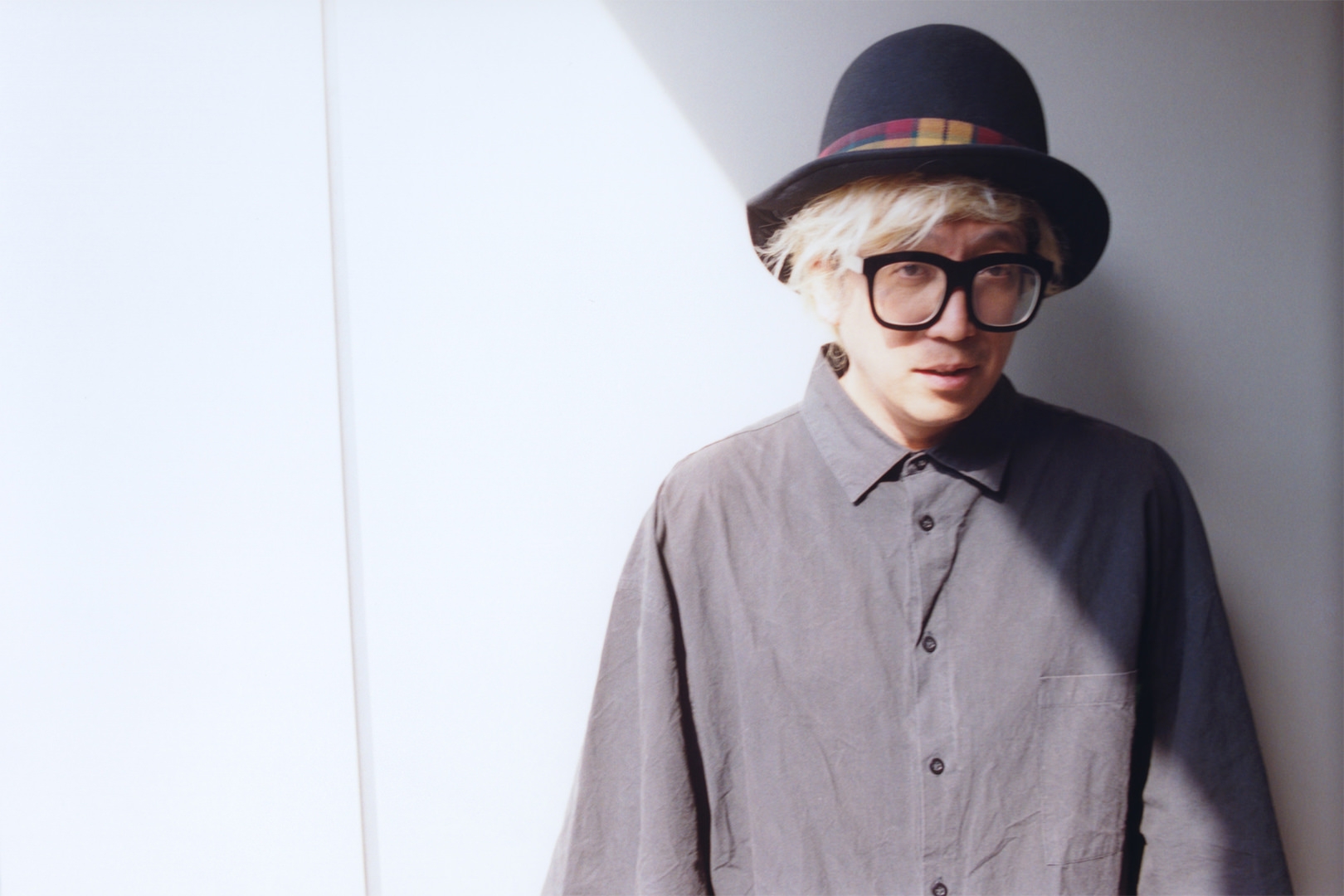
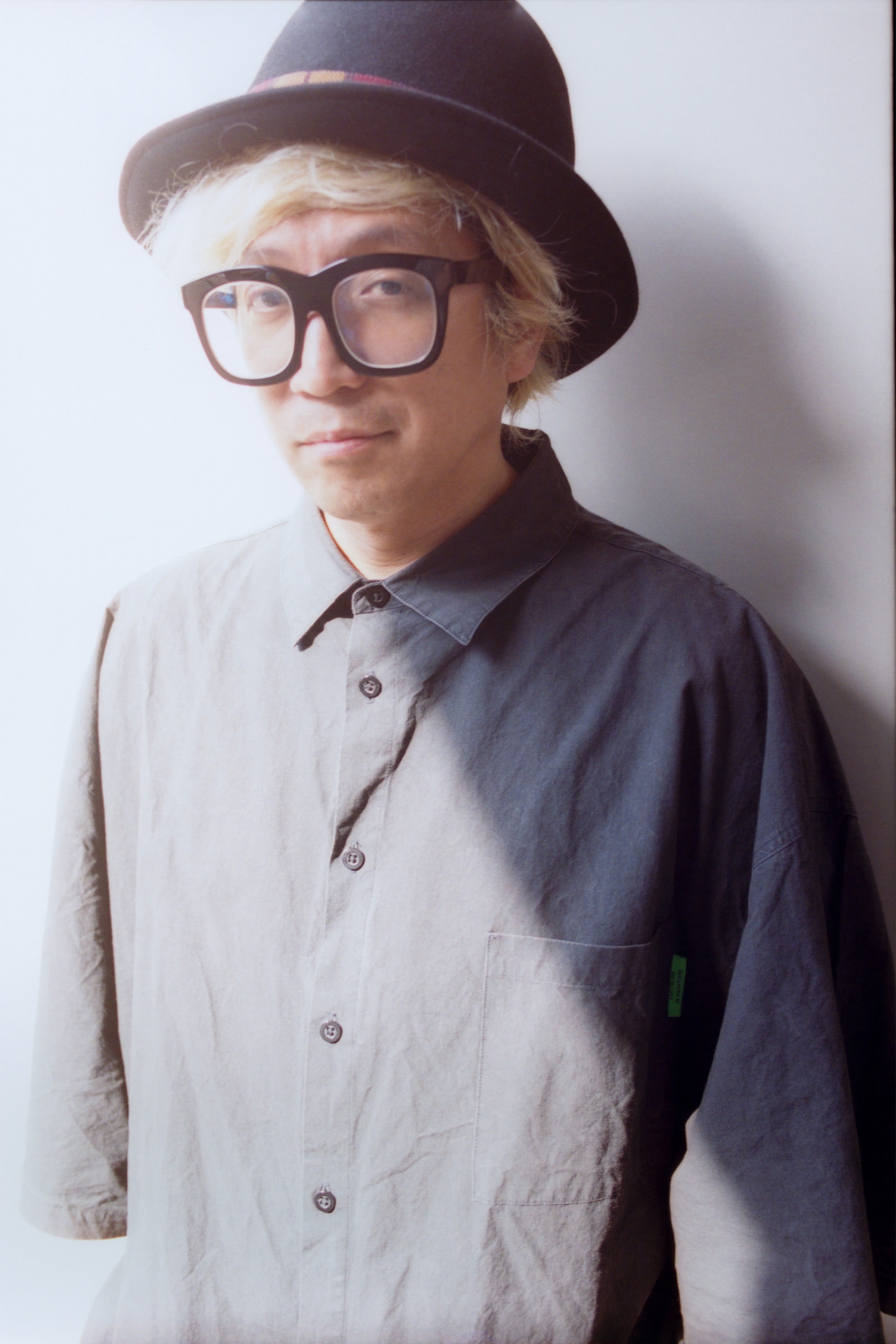
--One of the settings for "Ice Cream Fever" is Shibuya, and today's interview is taking place at Shibuya PARCO. Please tell us about your memories of Shibuya.
Chihara: I'm from Kyoto, and about twice a year I would take an overnight bus to Shibuya to shop or visit new shops I'd seen in magazines. I'd go to record stores, cafes, select shops, buy clothes, and watch independent films that hadn't been shown in Kyoto... I'd do things like that, and then take another overnight bus back home.
Kawakami: For me, it's a bittersweet city. I originally came to Tokyo from Osaka in 2000 for my music career, and I always felt acutely that "all sorts of music was playing throughout the city, but my music wasn't." That's why when I walk around Shibuya now, I think, "So much time has passed." It's a city that reminds me that "young people come here with dreams."
—Even after building your career, that bittersweet feeling remains within you, doesn't it?
Kawakami: Yes, it does, and it brings back memories. Shibuya has a lot of ups and downs, as you can see from the name "Tani" (valley). Every time I walk around, I think about that, and it acts as a trigger that brings back memories.
Yoshioka: One of the charms of Shibuya is the feeling that young people living in the present are gathering and coming and going. Natsumi gets lost in the crowd and worries about "how to establish herself," but I think the atmosphere of there being so many people that you don't know who's in the city comes across as convincing precisely because it was filmed in Shibuya.
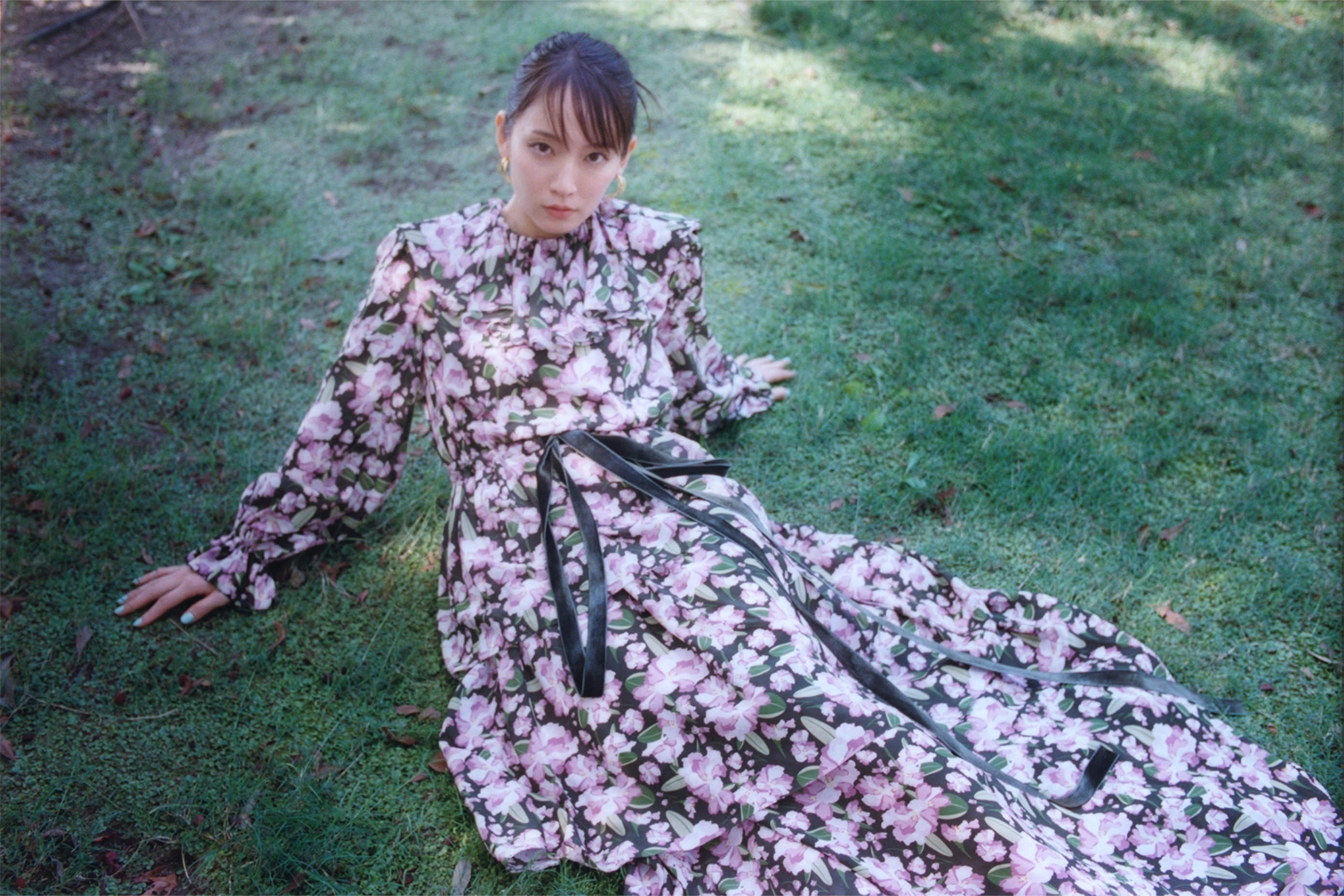
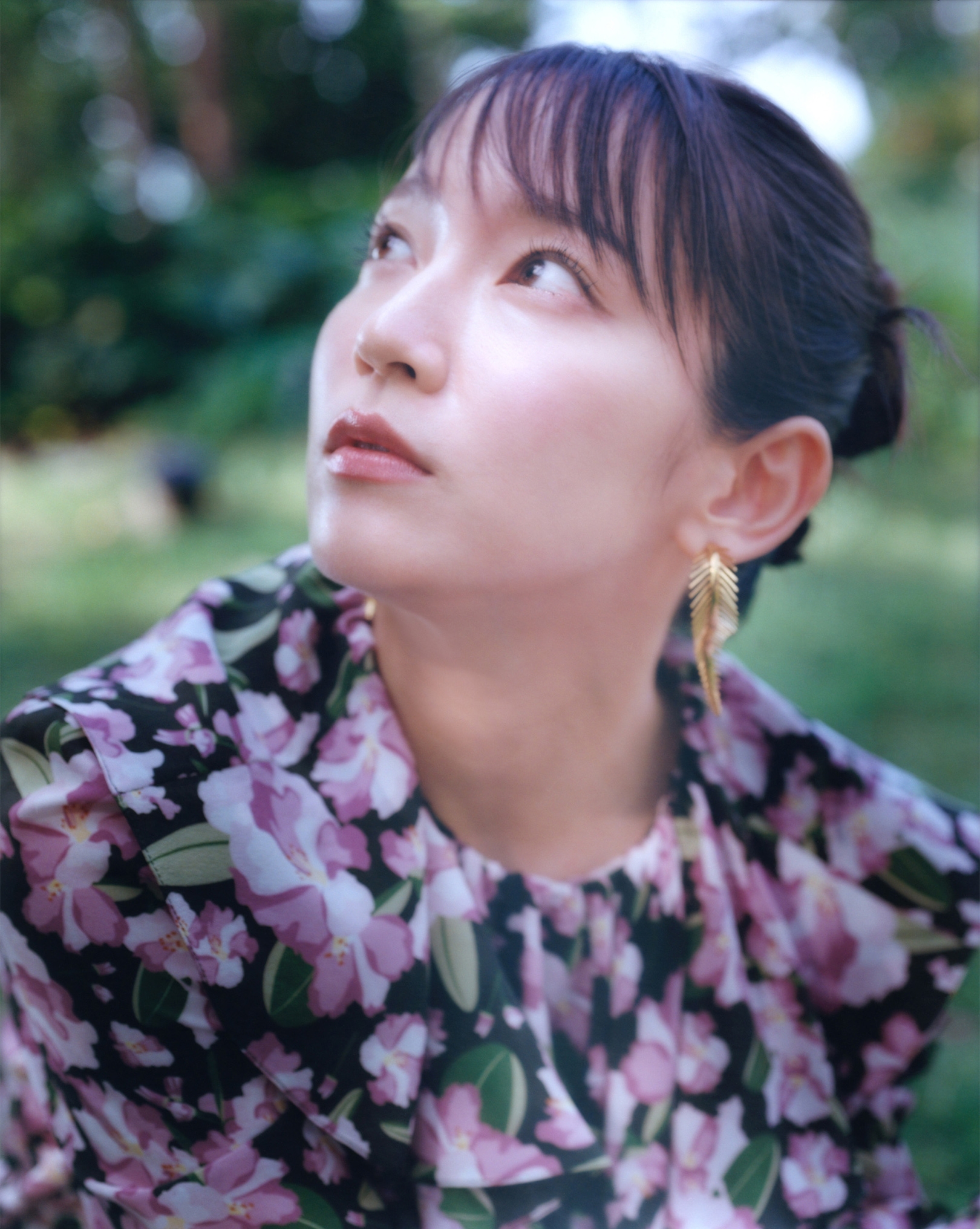
—Do you have any personal memories of Shibuya, Ms. Yoshioka?
Yoshioka: The movie theaters are open late, so I often go there after work. There are also many shops I like. But we don't use it for filming very often, so this was a rare experience. I never thought the day would come when I'd be skateboarding in Shibuya! (laughs)
One of the most memorable scenes from this shoot, though it was ultimately cut, was the one where the skateboard goes down a hill. While the staff were trying to figure out how to film it, Serena Motola and I were told we could take a break, so we snuck off the set and went on a date to a shaved ice shop. It was so much fun. The scene itself wasn't used, but I think that time really came through in Natsumi's sparkling smile afterward.
- Performances
- The movie "Ice Cream Fever"
- Release date
- July 14th (Friday)
- Business Hours
- 11:00 AM to 9:00 PM
- venue
- CINE QUINTO (next to Shibuya Loft) / WHITE CINE QUINTO
- distribution
- PARCO
- Official website
- https://icecreamfever-movie.com/
- @icecreamfever_m
© 2023 "Ice Cream Fever" Production Committee
Win tickets to the movie "Ice Cream Fever"!
From July 7th (Fri) to July 16th (Sun), 2023, we will be holding a giveaway campaign on Shibuya PARCO's official social media accounts.
Please enter the giveaway using the method below.
① Instagram (@parco_shibuya_official Follow the official account
② Please "like" and comment on the official Instagram post on July 7th (Friday) that is eligible for the giveaway of tickets to the movie "Ice Cream Fever".
We will be giving away prizes to a total of 3 pairs of 6 people selected by lottery from among all participants.
Winners will be contacted via direct message, so please follow the official Shibuya PARCO Instagram account.
*Only one entry per person is allowed.
*Those who are already following us are also eligible to participate.
*The right to receive the prize belongs solely to the winner and may not be transferred to a third party (whether for a fee or free of charge) or exchanged for cash.
<Winner Announcement>
After a rigorous selection process, winners will be contacted via Instagram Direct Message around late July 2023. The shipment of prizes will serve as confirmation of winning. Prize shipment is scheduled for late July 2023. Please note that there may be slight delays due to unforeseen circumstances.
*If you do not respond to the direct message within the specified period, or if you do not provide your address or other information after being notified of your win, your win will be invalidated.
*Personal information provided by winners will be used solely for the purpose of notifying winners and shipping prizes for this campaign.
*We do not accept any inquiries regarding the reasons for winning.
*Actions that interfere with the operation of social media, actions that go against the purpose of this platform, or actions that we deem inappropriate are prohibited.
*This campaign is not affiliated with Facebook or Instagram in any way.
*Please note that this campaign may be changed or canceled without prior notice.
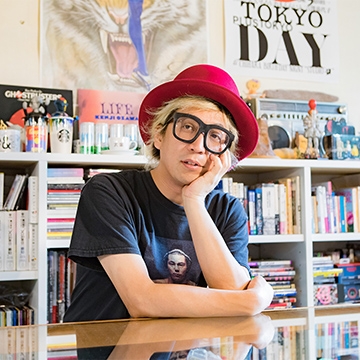
Tetsuya Chihara
Born in Kyoto Prefecture in 1975. As an art director, he has worked on a wide range of design projects, including advertising (H&M, Nissin Cup Noodles x Laforet Harajuku, etc.), corporate branding (Uniqlo, etc.), CD jackets (Keisuke Kuwata's "Garakuta," Kayoko Yoshizawa, etc.), drama production, and commercial production. He is also active as a producer, organizing "Katte ni Southern DAY," initiating the Tokyo support logo "KISS, TOKYO," and running the Fujiyoshida City revitalization community "Kissaten Lemon."
Instagram (@thechihara)
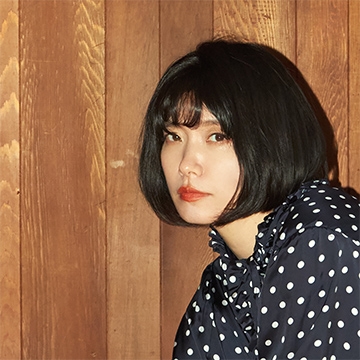
Photo:当山礼子
Mieko Kawakami
Born in Osaka Prefecture. In 2008, she won the Akutagawa Prize for "Milk and Eggs," in 2009 the Nakahara Chuya Prize for her poetry collection "At the Tip, I Pierce and I'm Pierced, That's Fine," in 2010 the Minister of Education, Culture, Sports, Science and Technology Award for New Artists and the Murasaki Shikibu Literary Prize for "Heaven," in 2013 the Takami Jun Prize for her poetry collection "Water Jar," and in the same year the Tanizaki Junichiro Prize for "Dreams of Love and Such," in 2016 the Watanabe Junichi Literary Prize for "Longing," and in 2019 the Mainichi Publishing Culture Award for "Summer Story." Other works include "Things I Fear of Spring." "Summer Story" is being published in more than 40 countries, and the English translation of "Heaven" was selected as a finalist for the 2022 Booker International Prize. In February 2023, "All Midnight Lovers" was nominated as a finalist for the National Book Critics Circle Award. Her latest book is "The Yellow House."
Instagram (@kawakami_mieko)

Riho Yoshioka
Born on January 15, 1993, in Kyoto Prefecture. She gained attention for her appearance in the NHK morning drama "Asa ga Kita" (2015). Her recent major works include the dramas "Ren'ai Manga-ka" (2021), "Karei naru Ichizoku" (2021), "Shizuka-chan to Papa" (2022), and "Gannibal" (2022), and the films "Mienai Mokugekisha" (2019), "Nakuko wa Inee ga" (2020), "xxxHOLiC" (2022), and "Shimamori no Tou" (2022). She won the Best Actress Award at the 46th Japan Academy Awards for her starring role in the film "Haken Anime!". Upcoming works include the film "G-Men" (released in August), "Yutori desu ga Nani ka International" (released in October), the film "Kaibutsu no Kikori" (released in December), and "Renzoku Drama W Rakujitsu" (continuous drama W, Sunset) which will be broadcast and streamed on WOWOW from September.
Instagram (@riho_yoshioka)