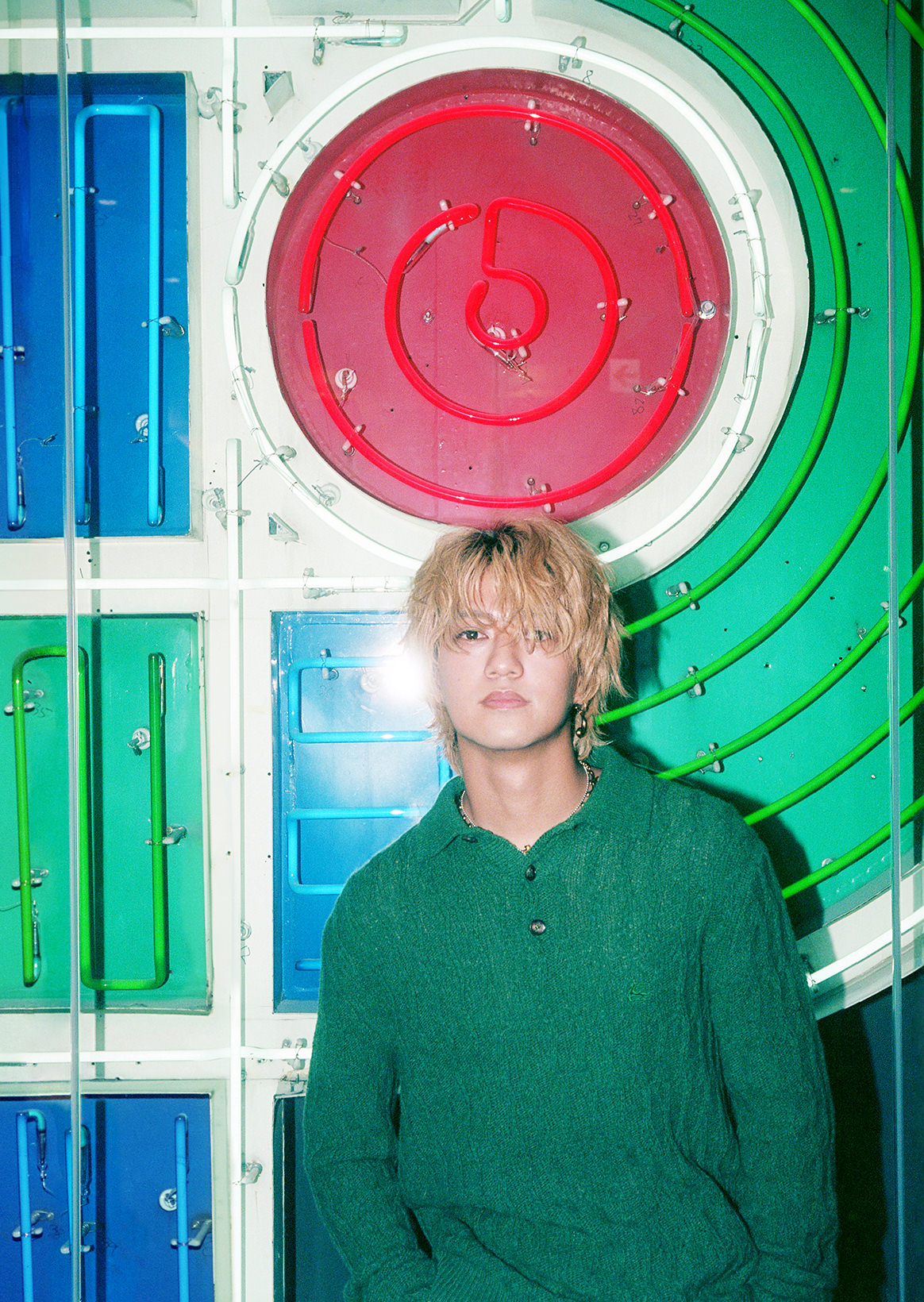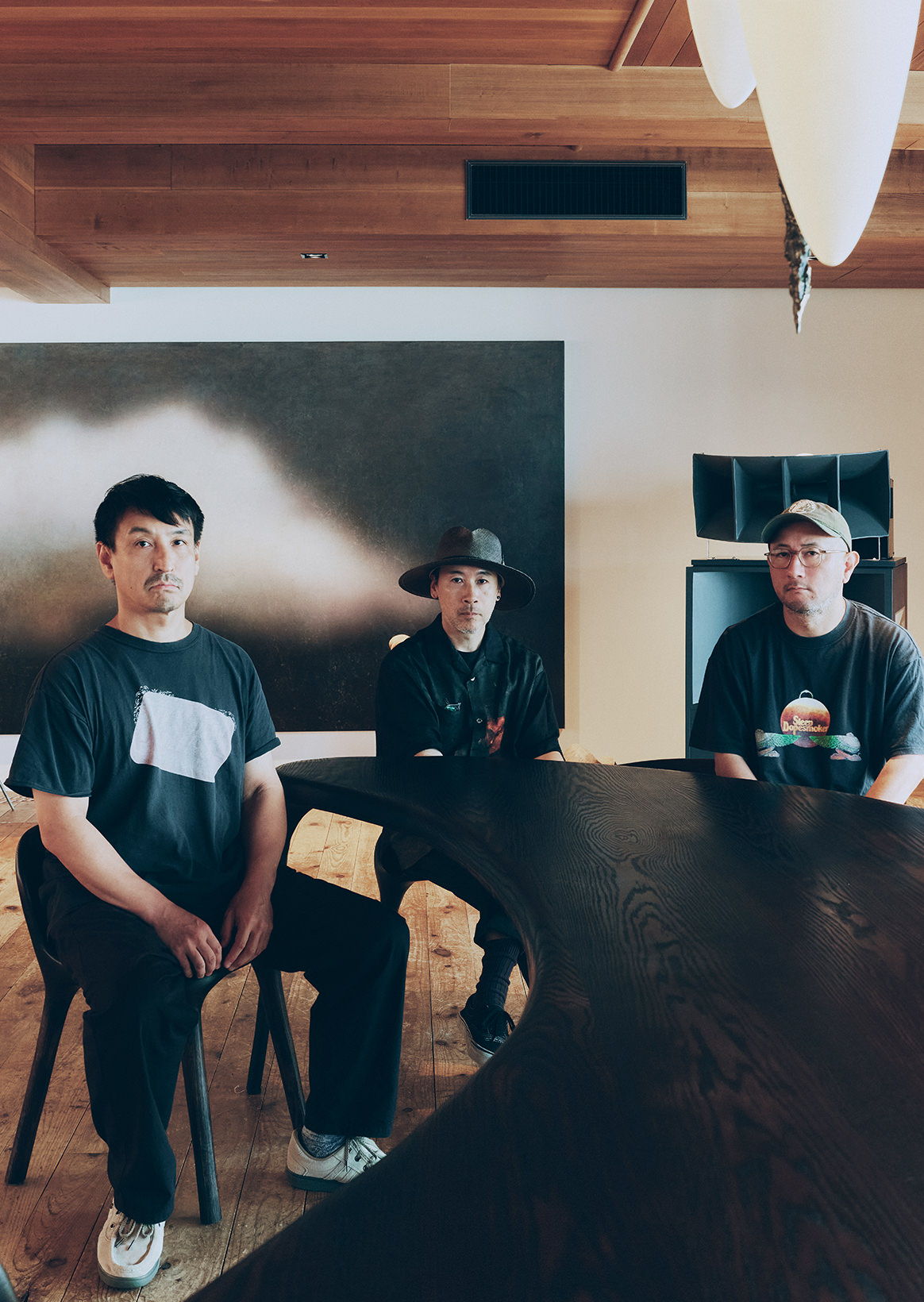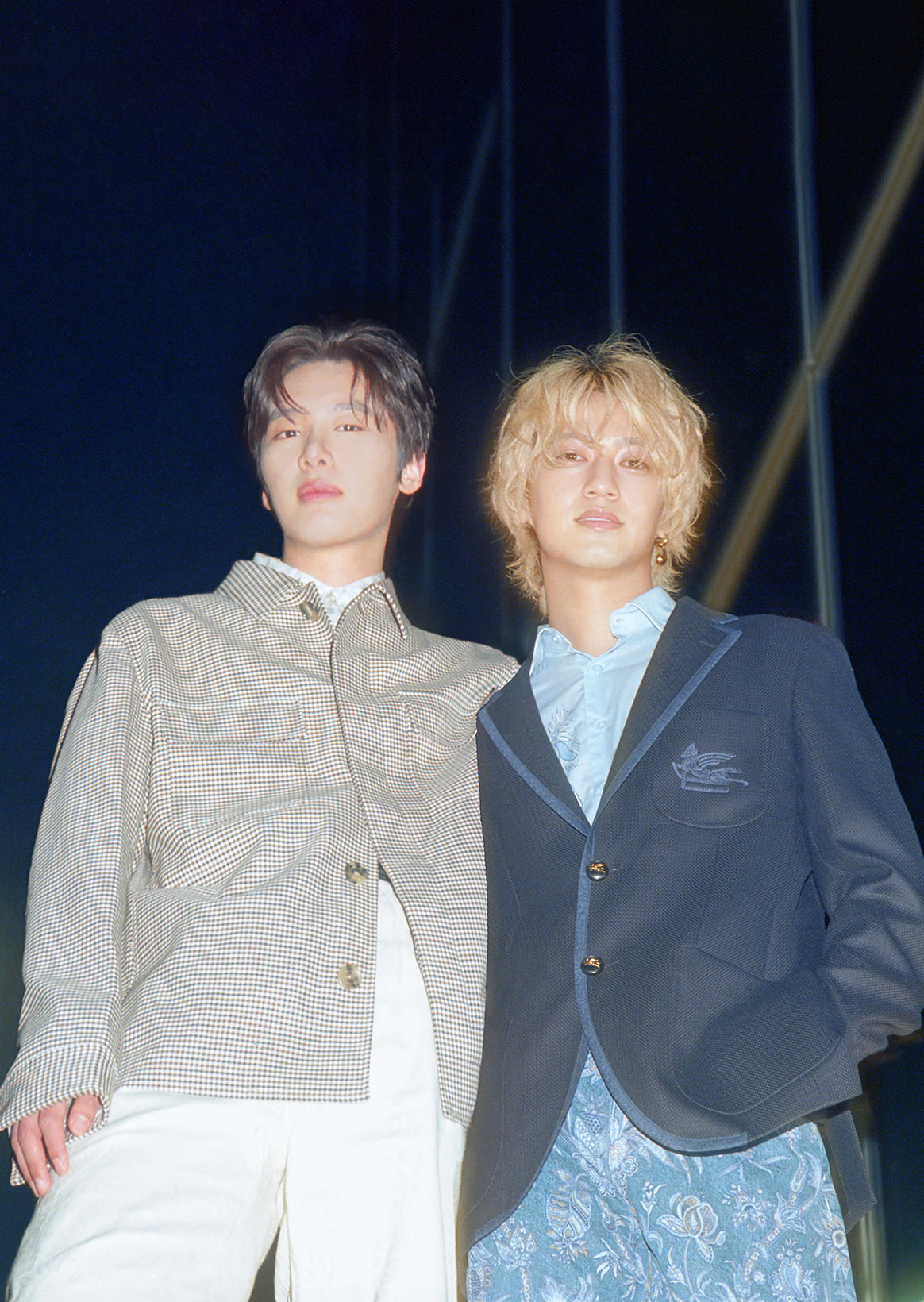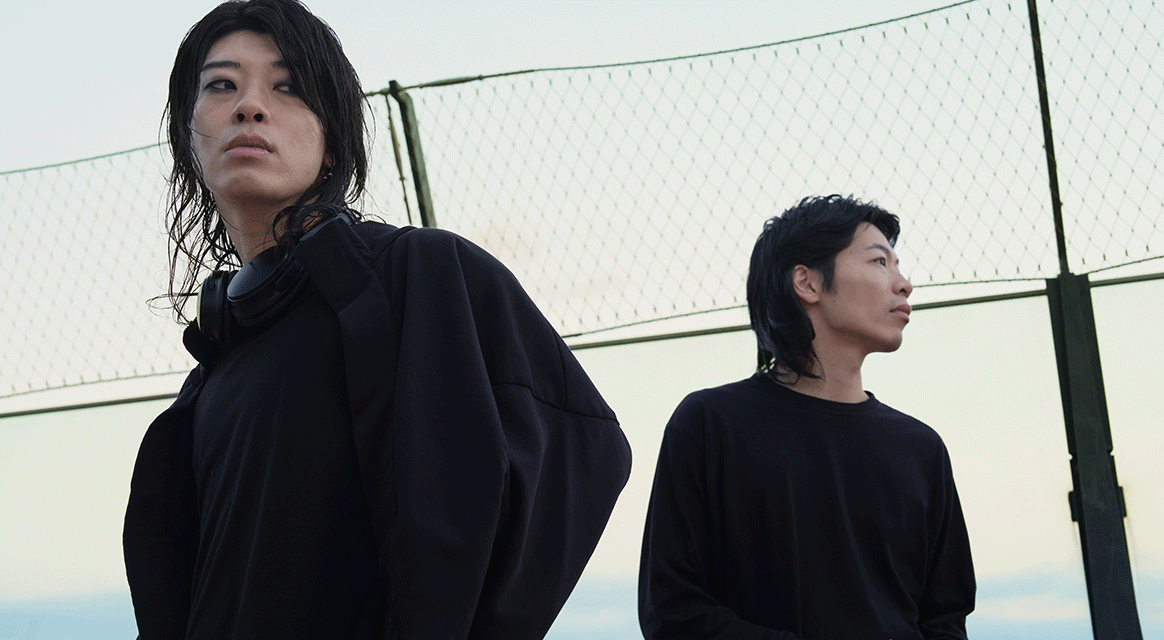
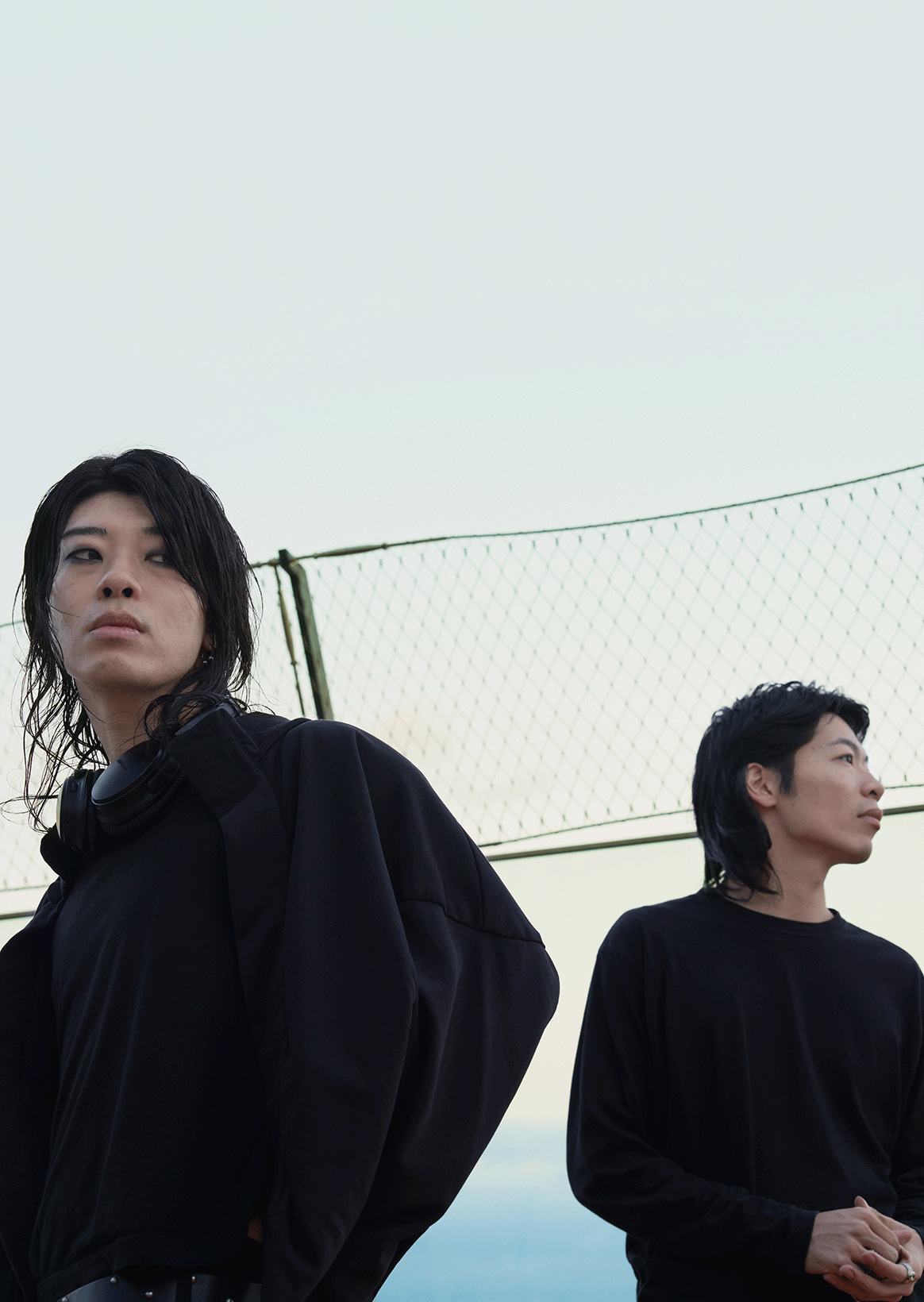
Tohji, a rapper and artist who has pursued unique expressions in the fields of music and contemporary art, and GILLOCHINDOX☆GILLOCHINDAE (hereinafter referred to as GILLOCHINDOX), a contemporary artist, have collaborated across boundaries, with Tohji appearing in GILLOCHINDOX's art project "JYU" and GILLOCHINDOX handling the stage production for Tohji's arena concerts. This time, a conversation between GILLOCHINDOX, who created the key visual for Shibuya PARCO's 7th anniversary, and Tohji has been realized. From the redeveloping cityscape of Shibuya and the relationship between the city and culture, to their respective childhoods and the origins of their creative work, the two, who resonate with each other's expressions, talked about the present and future of Tokyo and the future of culture.
- Photo
- Koichiro Iwamoto(KiKi)
- Hair
- Hayate Maeda,
────assistant genkimurakami|Tohji
- Make up
- Yuka Hirac,
────assistant Beri|Tohji
- Text
- Kei Harada
- Edit
- Ayumi Kinoshita
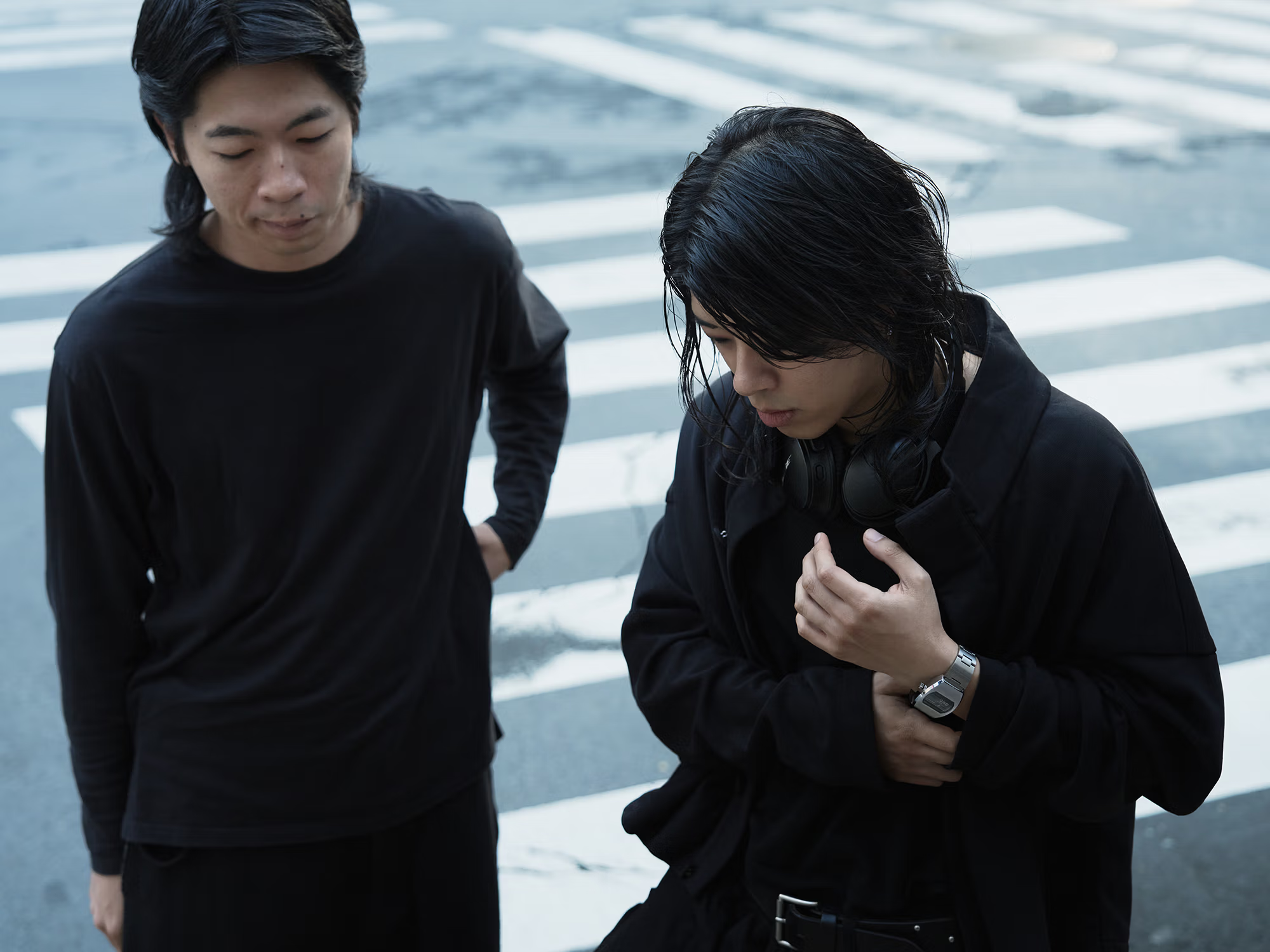
— Tohji, you've toured to many different cities around the world. Has your impression of Tokyo changed after going on tour?
Tohji: Hmm. I still really like Tokyo. I feel like there's a sense of unity, in both good and bad ways. In America and Europe, I feel like there's a weaker sense of everyone doing things together. It's like they only see themselves and their friends. To put it simply, in London and New York, there's a lot of shoplifting, right? I think that's because their boundaries with other people are really narrow, or they only see their own group. It's like their social circle is small. In Japan, I think people's perspectives are a bit broader, and they're more considerate of the shopkeepers and things like that.
Guillotine. Yeah.
Tohji: I think there's a sense of unity throughout the city because people have a wide sense of boundaries with others. You could say it's closed off, to put it negatively. But I think that's because people spend a lot of time in group settings like schools, so they're more considerate of the feelings of shopkeepers, and they try not to litter on the streets, so their empathy in that sense is heightened. That sense of connection is both comfortable and uncomfortable because it feels like everyone is watching each other. I'm sure that's part of how safety is maintained. On the other hand, in Europe, it's more on an individual level, and I think many people find that kind of approach simpler and easier to live with.
Guillotine. That might be it.
Tohji: For example, in New York or London, there are lots of people who say they've come from Barcelona or Paris, but I think they're more like they're in that city for a span of 5 or 10 years rather than staying there until they're 80, so their feelings towards the city seem a bit vague. If you come alone from overseas, you're probably preoccupied with your own affairs. But the number of foreigners moving to Tokyo is increasing. I often meet foreigners in clubs who are doing design or photography and have recently moved to Tokyo. Compared to foreigners, I'm more comfortable because I came from within the Japanese urban environment, but I think it might be a little more difficult for people coming from other countries.
In Tokyo, compared to other major cities, the vast majority of people only speak Japanese. Korea and China might have a slightly more open atmosphere.
Tohji: That's right. Speaking of Tokyo these days, I get the impression that a lot of art artists live in the eastern part of Tokyo. It's a very vague observation, but what's the reason for that?
There might be a lot of guillotines. Artists need space to create their work, so they end up having no choice but to go to areas with cheap rent. Some artists whose work sells well build huge warehouses in rural areas and live there. In reality, I think there are many people who feel that it doesn't really matter whether they live in the countryside or in Tokyo, as long as they can create and sell their work. Young artists also need to attend exhibition openings and communicate with various people, so I think there are advantages to living a little closer to the city center.
Tohji: How important is community to artists? Do you feel like it's not that necessary?
A guillotine... Hmm, I think a lot of people don't think it's necessary. There are plenty of people who just stay holed up in their studios, create their work, exhibit it, and sell it.
Tohji, I see.
Because of the guillotine, I think there's a tendency for contemporary art to be centered in Tokyo. There are scenes in Kyoto and Osaka as well, though.
Tohji: I have this image that art is really involved in revitalizing local communities, and that it cares more about regional areas than any other genre, so it's surprising that the scene is centered in Tokyo.
There are all sorts of interesting local art festivals and art initiatives, but they seem to be somewhat detached from the mainstream scene.
Tohji: Who asks those guys from the countryside to do it?
Guillotine demonstrations are often organized by the local government of the city. Corporate-sponsored events are more common in Tokyo, though. In rural areas, there are often large abandoned buildings and spacious venues for exhibitions, so artists might want to try their hand at it. And I think the culture of people gathering to see these kinds of events is well-established in Japan as well.
Tohji: Don't the locals get angry about that?
Guillotine? No, it definitely happens. Contemporary art can be provocative, so if, for example, a nude human figure is suddenly brought to a rural area as part of an artwork, friction can arise. Furthermore, if the government is involved, it can cause outrage with people asking what they're doing with public funds.
Tohji, I see.

—From the perspective of culture and place, in New York and London, it seems that artists move their residences as rents rise, and consequently, the centers of culture and communities change frequently. On the other hand, in Tokyo, Shibuya seems to have remained the center for a long time.
Guillotine I think there's a strong sense of coercion in how the centers of London and New York are constantly changing. But back when Juro Kara set up his red tent and Shuji Terayama was around, the center was in Shinjuku, with all sorts of live performances taking place in front of the station, but when all that disappeared, the center gradually shifted to Shibuya, I guess. But now I'm not sure if Shibuya is still alive or not. And to be honest, I don't know where it's going to move to next either.
Tohji: I don't know much about the old days, so I can't really say anything. Since I don't know, I can't say things like "things have changed."
Guillotine: Yeah, I think Shibuya will continue to thrive, but I also feel like that's because there's nowhere else to go.
Tohji: I mean, why are they even doing the Shibuya redevelopment in the first place? They're beautifying all sorts of places and building new commercial facilities.
Isn't the guillotine meant to clean up and increase the value of the city? Well, Japan has earthquakes and things like that, so I suppose there are also buildings that need to be rebuilt due to aging.
Tohji: But speaking from a tourism perspective, wouldn't it be better not to change things too much? What's the point of bringing the same brands you can find in duty-free shops at any airport to Shibuya? People can just go to the airport, right?
—Perhaps people in Tokyo don't know any other way to enhance the value of the city than to create something new.
Guillotine I totally get that. The idea that making something clean and bright will increase its value is similar to the thinking behind building new towns in the suburbs. Selling it as a utopia surrounded by smooth, clean things. However, I don't think new towns or malls are bad, and as Tohji has been doing all along, there are definitely emotions and melancholy that can only be found in those smooth landscapes. The problem is bringing the method of creating it in a "place where there was nothing" directly to Tokyo. If you do the same thing in a city like Shibuya, where layers and layers of people's memories have already been piled up, you end up erasing the tactile feel that was built up. I think it's possible that it becomes clean, but nothing unique remains there.
—Shibuya PARCO closed once in 2016 for renovations and reopened three years later in November 2019. Have either of you ever been to Shibuya PARCO before the renovations?
Tohji: I wasn't a high school student with tons of money, so I just hung out in parks and along the riverbanks like normal, and I didn't go to PARCO very often. I went to Manhattan Records and stuff, but I don't think I ever went to PARCO.
I don't think I've ever seen a guillotine, but when the building was being renovated, I used to come to Shibuya often when the temporary construction fence was decorated with an 'AKIRA' art wall.
Tohji: Back then, whenever I had a gig at WWW or something, I was often asked to take pictures in front of it.
 Guillotine created the key visual for Shibuya PARCO's 7th anniversary. To express the message of "transcending place, gender, and nationality" embodied in the anniversary theme "BORDER/SHIBUYA," they photographed the approximately 300 people who gathered that day from the 4th floor of WWW.
Guillotine Tohji also appeared at PARCO's anniversary event, right?
Tohji, I think it was in 2019. Probably the first one. We performed live during the opening. With Zakoshi (Hollywood Zakoshishow), GEZAN, and Mall Boyz.
Guillotines in a strange arrangement (lol).
Tohji: Yeah. Everyone was so different, I remember we didn't talk at all, even backstage. I think only Reiji (Okamoto Reiji) was connected to those three groups, but the performers themselves weren't really connected to each other.
The thought of a guillotine is kind of scary (lol).
Tohji PARCO has this image of being a cultural patron. But we don't know what Japan was like when the economy was booming, so it's almost like an urban legend now.
I understand about the guillotine.
I also remember that the costume designer for Tohji's "The Fall" (Eiko Ishioka) did a lot of work for PARCO. I mean, PARCO often appeared in advertisements for old issues of magazines like "STUDIO VOICE" that you can find at places like Book Off.
Guillotine I don't live in Shibuya, but I used to go to PARCO in Chofu a lot. I usually go to Ito-Yokado, but I would go to PARCO for special occasions. It had a movie theater and a good bookstore.
Tohji: Is it like Takashimaya for the guillotine? Maybe not quite.
Guillotine? No, I think the defining feature of PARCO was that it had a movie theater. It had a bit more of a cultural feel to it.
Tohji: That's true. They had an UNDERCOVER movie playing recently, didn't they?
—Do you have any image of what you'd like Tokyo or Shibuya to be like in 10 years?
Tohji: I feel like it's becoming more like the image I want it to have, or like New York or London. I just can't help it.
—What exactly do you mean by that?
Tohji: I do feel that, for better or for worse, the influence of foreign cultures on Japan will increase proportionally. The number of people coming from overseas will also increase from now on. There will be various ways of accepting that, but we may be able to develop a sense that is a little different from the domestic culture we have had until now. That is something to look forward to.
Guillotine: I want to resist the trend of homogenization that comes with globalization progressing too much. I feel like there's no point in being too conscious of "global" things and doing things that can be experienced in any country. If I were to go to another country, I wouldn't want to do things that I could experience in Japan, and I think it's more natural to want to eat something strange that isn't available in Japan, or go to a strange place. I've been thinking lately, even while working on "Kemono," that if we don't keep a certain degree of locality in mind, the meaning of what we're doing will disappear.
Tohji: That's right.
Regarding the format and quality of Guillotine, it's certainly important to be mindful of Western-style intensity, but as for the content, I think it's okay if it's local enough that people from overseas might not understand it yet. I'd prefer it to be something they can understand slowly.
Guillotine Tohji said something in the POP YOURS documentary like, "I don't understand why people die just because they're imitating what's done overseas," and that applies to art as well. Art has a hierarchy centered on the West, or more specifically, on white people, so if you follow the white way, you can make some ground, but if you only do it that way, you can't overturn the current hierarchy. I think that unless you use the Western style well, but at the same time think of ways to overturn it, nothing new will be born.
Tohji: I think that by working together under the umbrella of Asia, there might be a possibility to overturn those kinds of perceptions.
Guillotine. Yeah, definitely. I'm actually going to China and South Korea next month for the weddings of some artist friends, and I get the feeling they're really close. There's a lot of common ground in terms of cultural things they share. They watch a lot of manga and anime, too.
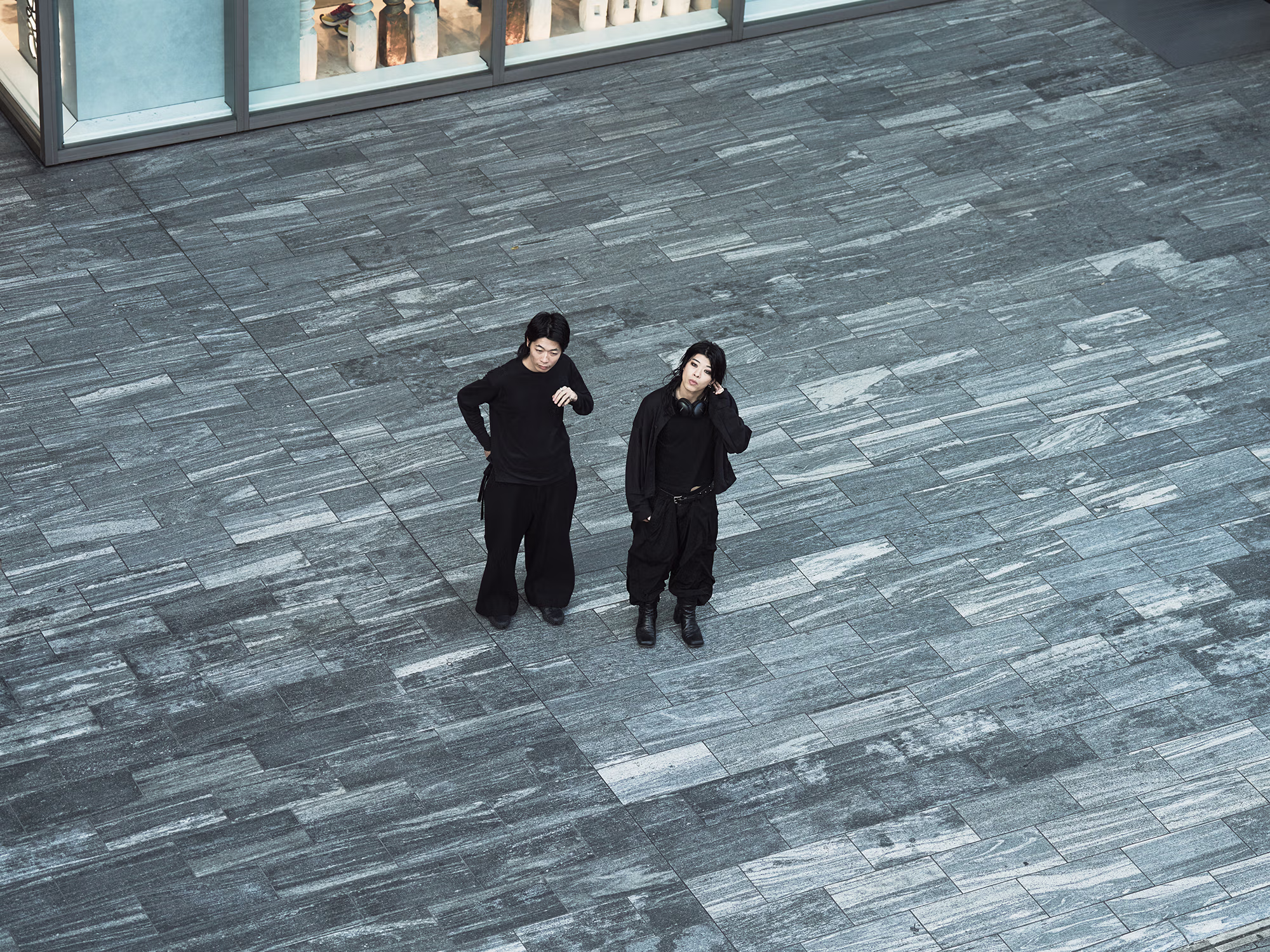
—What do you think is important for cities to become more interesting in the future?
Guillotine: The pandemic was actually pretty good. When I went to Shimokitazawa station, there were lots of people sitting outside drinking. I thought that was interesting in its own way. It was a difficult situation, but there was a richness to it.
—Yes, you could certainly see scenes like that back then.
With guillotine art, the ones organized by big organizations are often not very good. They tend to be too neat and tidy, somehow lacking in heart. I think you need to do something outrageous, including how you allocate the budget, to create something interesting. Like giving the entire budget to one person. I know that's probably impossible in reality, so I guess we just have to do our best. What do you think, Tohji?
Tohji: Hmm, I don't know.
Is Guillotine trying to escape by retiring? (lol)
Tohji (laughs). Well, in the end, I don't think there's much point in talking about this kind of thing, because I think the time for change will come no matter what, so I feel like all we can do is prepare for it. For example, I really don't like Japanese department store clerks. They're just too proper.
Guillotine, yeah.
Tohji, if you even try to take a picture of the clothes, they'll immediately say, "Please refrain from taking pictures," or if you just walk a little, they'll follow you really closely. I mean, I'm not going to steal anything or anything, but still. But nowadays, there are a lot of Chinese customers in department stores, so there are quite a few staff members who can speak Chinese but are also very polite. Those people are used to dealing with Chinese customers, so I feel like they're a bit more tolerant.
A guillotine, I see.
Tohji: So, those kinds of people are a bit more hands-off, you know? They leave you alone even when you're in the store, but if you talk to them, they're very polite. Sometimes I get annoyed by the sales staff in clothing stores and it makes me not want to buy anything, so when I think about that, I sometimes think that Chinese shop assistants are much better.
Guillotine. Maybe.
Tohji: How should I put it? It's not like we're talking about the store staff, but I think that if we can combine people in the right places according to their backgrounds and cultures, we can create even better and more interesting things than we have now.
—Mr. Guillotine, your art project "JYU" is a long-term project that spans seven years, isn't it?
Guillotine: In this era where everything moves incredibly fast, from the flow of consumption on social media to the urban development in Tokyo that I mentioned earlier, we at "Kemono" value thinking about things over a long span of seven years. Precisely because the world is moving so fast, we want to value moving forward while maintaining a certain rhythm.
 In November 2025, the installation "Beast (Chapter 3 / EDGE)" was held on the banks of the Tama River. In a space covered with approximately 60,000 pampas grass stalks, a variety of performances were presented by Tohji and other close artists and writers, and collaborative video works and sculptures were also exhibited. (Courtesy of Artist and JYU)
Tohji: With "Beast," you've involved a lot of different people, is it because you feel that you wouldn't be able to build connections with others otherwise? It's the same with "CON_", the gallery that Guillotine belongs to, and I get the impression that you really value working with others in group exhibitions and things like that.
Guillotine: It's definitely true that we value involving a variety of people. For example, with "Beast," if we had left the entire exhibition setup to professionals, it felt like we wouldn't have been able to create that same feeling. They could do 100% of what we told them to do, but it rarely reached 150%. But when friends were involved, they would say things like, "Wouldn't this be better?" along the way, or they would give each other instructions without being asked. When that happens, the friends who got involved become creators, not just audience members of the exhibition, so they treat "Beast" as something more personal, and they start promoting it on their own and bringing lots of friends along. It feels like that increases the chances of something great happening.
Tohji: I want to increase the probability of something happening.
Guillotine: Yeah, I guess so. I want to increase the chances of moments happening that I never imagined. To do that, it's often better not to decide and control everything myself, but rather not to define the outline too much. I feel like setting up a certain framework and then leaving the rest to each individual increases the chances of interesting things happening.
Tohji: I think the experience of going to an art exhibition or something like that basically happens in the minds and hearts of the people who come to see it, so objectively it might look like nothing is happening there, but that's not what I mean. You want something to happen physically, right there?
Guillotine. That's right. That's why we have live music performances and things like that. And also moments like when the pampas grass suddenly sways, or when someone suddenly appears lying down on the spot. I cherish those kinds of moments.
Tohji: Conversely, what do you think about typical art exhibitions? The kind that evoke something in the viewer's heart or mind?
I do like exhibits like the guillotine, but if I were to do it in this day and age, I think I'd do it the way I do it now. I think it's the same with music, but in art, the person who invents something new is the greatest, and when you invent something, you can become history. I want to do something like that, so I think it's better to think about different forms and different ways of evoking emotions.
Tohji, I see.
Guillotine I think last year's "Beast" will still be interesting to look at decades from now. There were living plants and pampas grass, and the audience and artists were in the same space, so if you looked at it normally it would look like a live event, but because the artist organized it as an art event, it was able to become a work of art in itself. I think it was good that the situation itself became a work of art.
Tohji: Yeah, that was good.