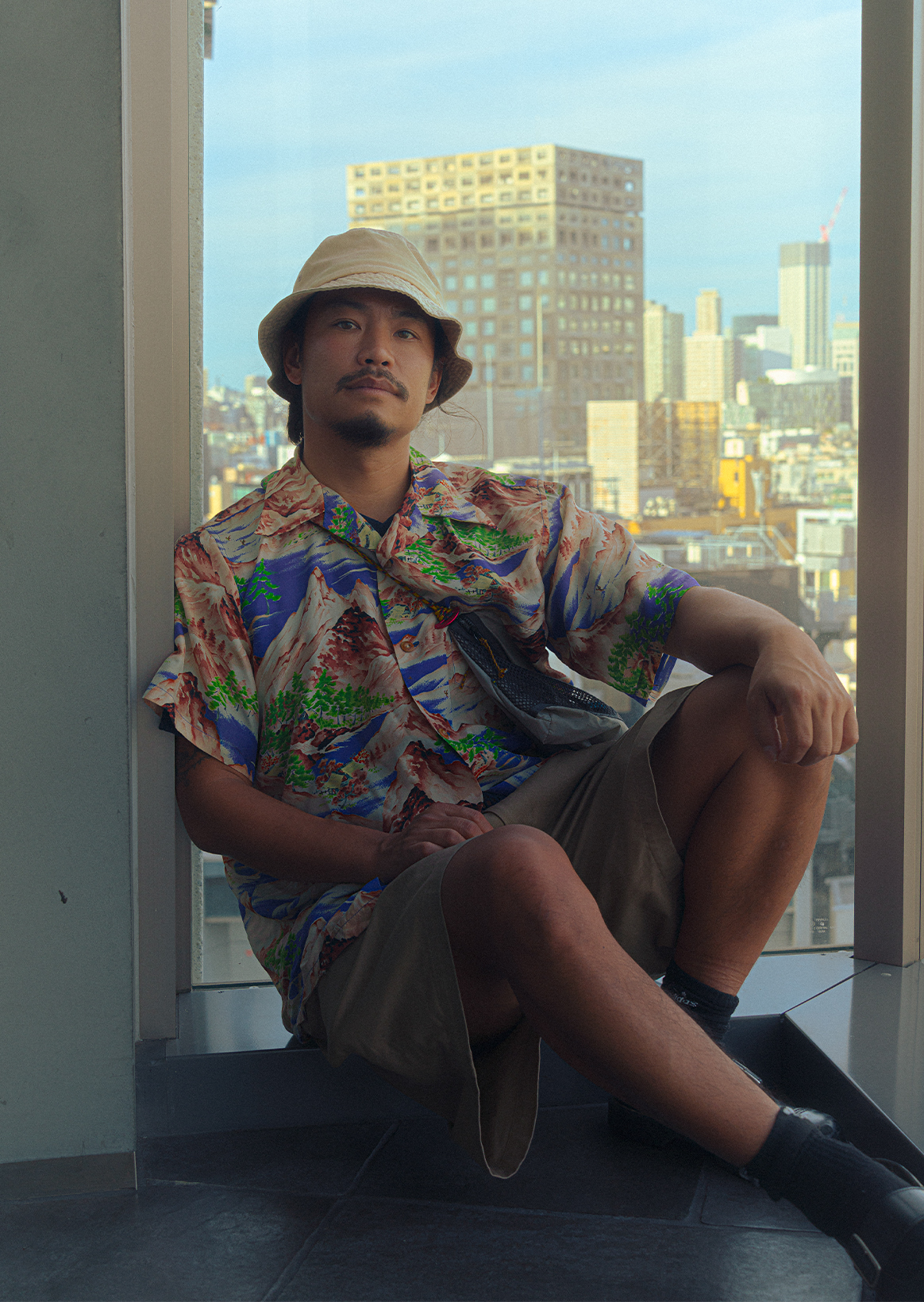
Based in Los Angeles, Brain Dead leads a global cultural movement by spanning fashion, art, film, and spatial design. One of these bases is "BRAIN DEAD STUDIOS SHIBUYA," located on the 5th floor of Shibuya PARCO.
Director Kyle Ng has continuously created a "playground" where chaotic mixing of various genres allows continuous experiences of different cultures. The "chaos" he describes is not mere chaos but a situation where all styles coexist, intersect, and unpredictably change.
From his intimate feelings toward Tokyo, his insatiable curiosity about culture, and Brain Dead's vision of the "next playground," we delved into the sources of the philosophy and passion that run through Kyle's creations.
※The English version is next page.
- Photo
- Kei Murata
- Text
- Chikei Hara
- Edit
- RCKT/Rocket Company*
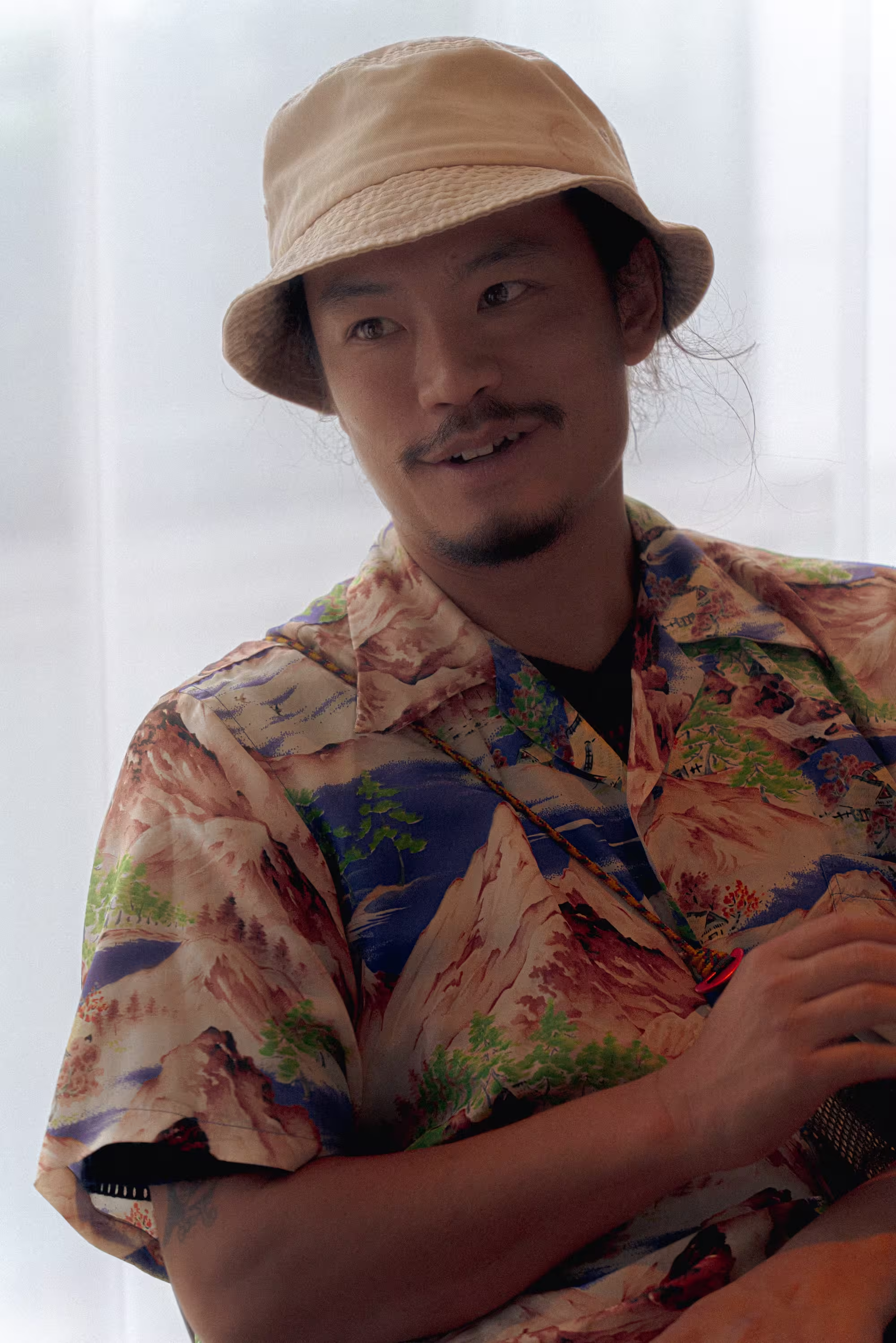
—Brain Dead is known as a creative label that engages in genre-crossing activities through collaborations with artists and creators from all over the world. What is at the core of your activities, and what are your sources of inspiration?
Since I've always loved punk, hardcore, and noise music since I was a child, I've been strongly drawn to the culture of style, like "what kind of clothes musicians and artists wear" or "what kind of attitude they have towards life." I've always found that far more exciting than mere fashion, so I naturally started to grapple with the question of how to incorporate that culture into my own clothing. That's why, when I decided to make graphic T-shirts with Ed Davids (co-founder and graphic designer), I had absolutely no intention of making streetwear. What interested us was the idea of constructing culture itself. We never had the simple idea of turning things we like into products and selling them from the very beginning.
Now, 10 years later, it seems like many people, just like us, are making graphic t-shirts and expressing the culture they love. I think our activities are being received in a way that fits in with the times, as a neutral approach and attitude. That's why Brain Dead now focuses on building a community and providing a playground where people can discover what they love.
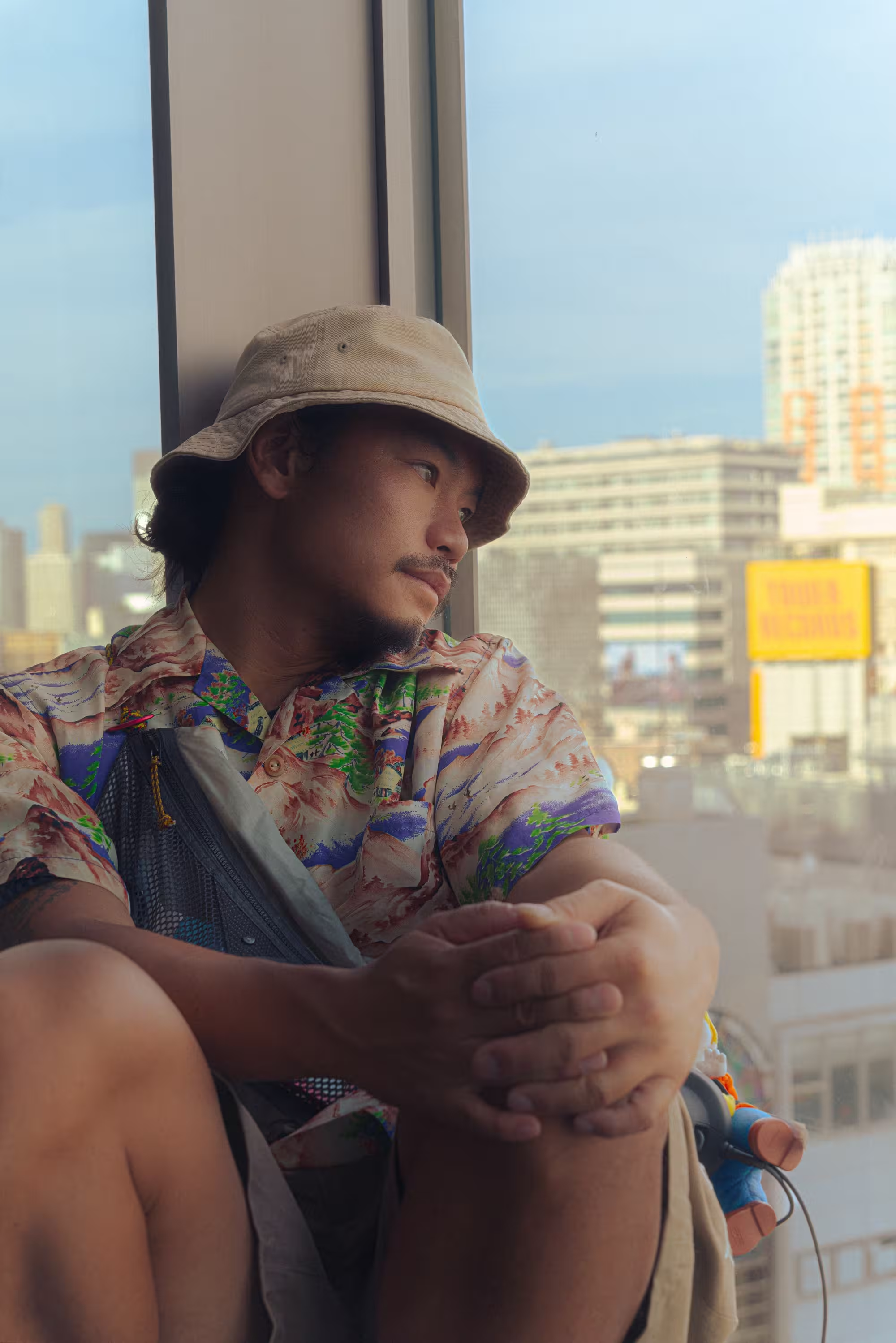
—Compared to other brands, Brain Dead stands out for the individuality of its collaborators, their approach to creation, and the quality of its products. I sense that there is a deep respect for the artists and the cultures they belong to at its core. What do you value most when collaborating, Kyle?
I'm really passionate about a lot of things, and I love researching them. Right now, I'm engrossed in learning about the world, and I enjoy the moments when I realize how little I actually know. When I encounter brilliant people or works that strongly inspire me, my imagination is naturally sparked, and I think, "I want to support this person," or "I want to show this work to more people." Or, I think that this attitude of connecting creativity, including putting a work in a different context and retranslating it into something with new value, is one of the reasons why Brain Dead is so interesting.
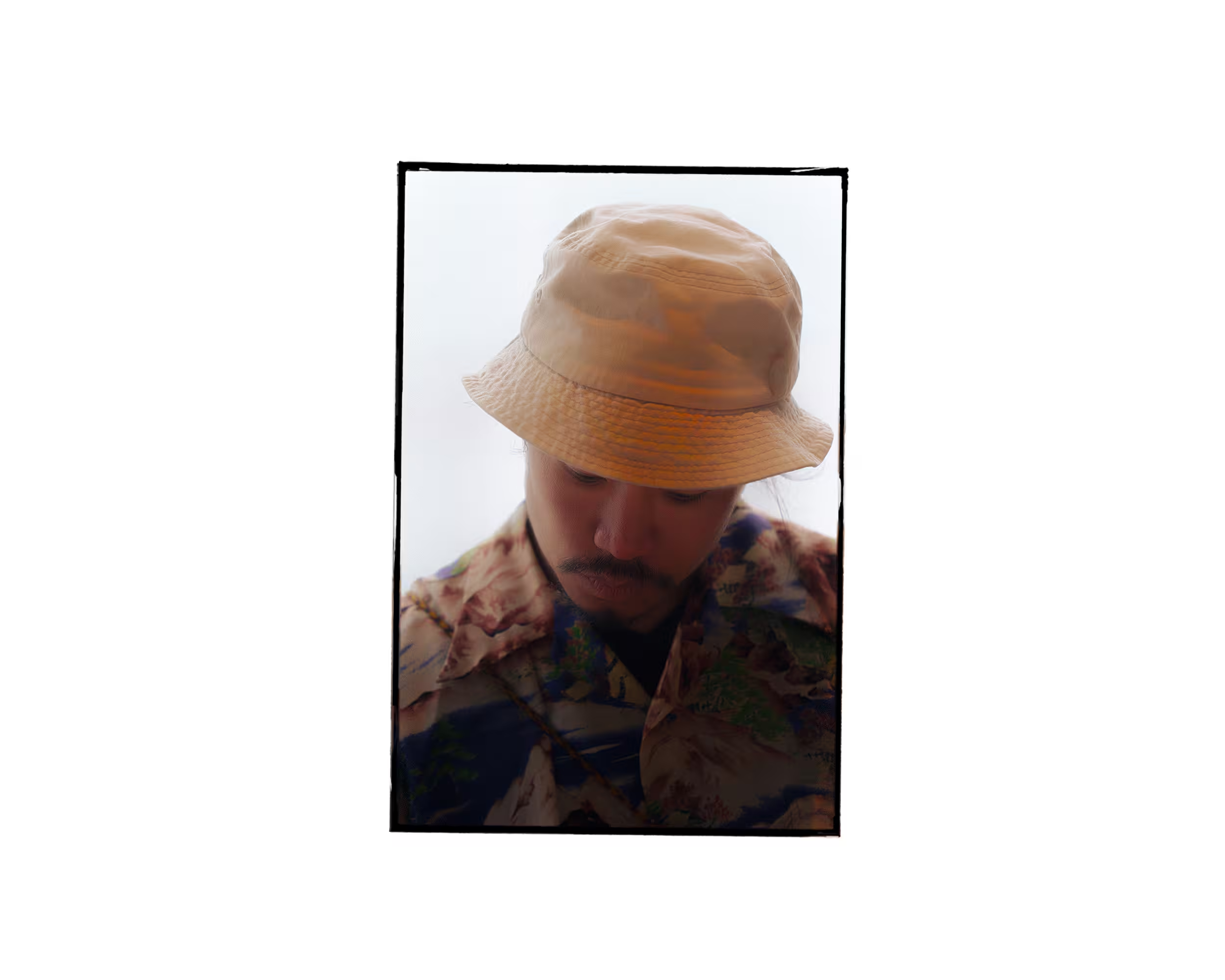
The collaboration with the card game "Magic: The Gathering" is a perfect example of this. I personally love its world, but I felt that gaming culture and card culture haven't really been discussed as "cool" in the context of fashion. I think it's wonderful that this game has the potential to create new aesthetics and forms of expression among people who love it, and I wanted that to be properly appreciated. Games are a very important gateway to nurturing human curiosity and the ability to become engrossed in something. I believe that talking about games, or being passionate about video games themselves, is a perfectly valid form of expression. Also, each card game has its own unique culture and visual identity. Because many people don't treat the messages and worldviews that card games create as art, I wanted to collaborate to convey their essence.
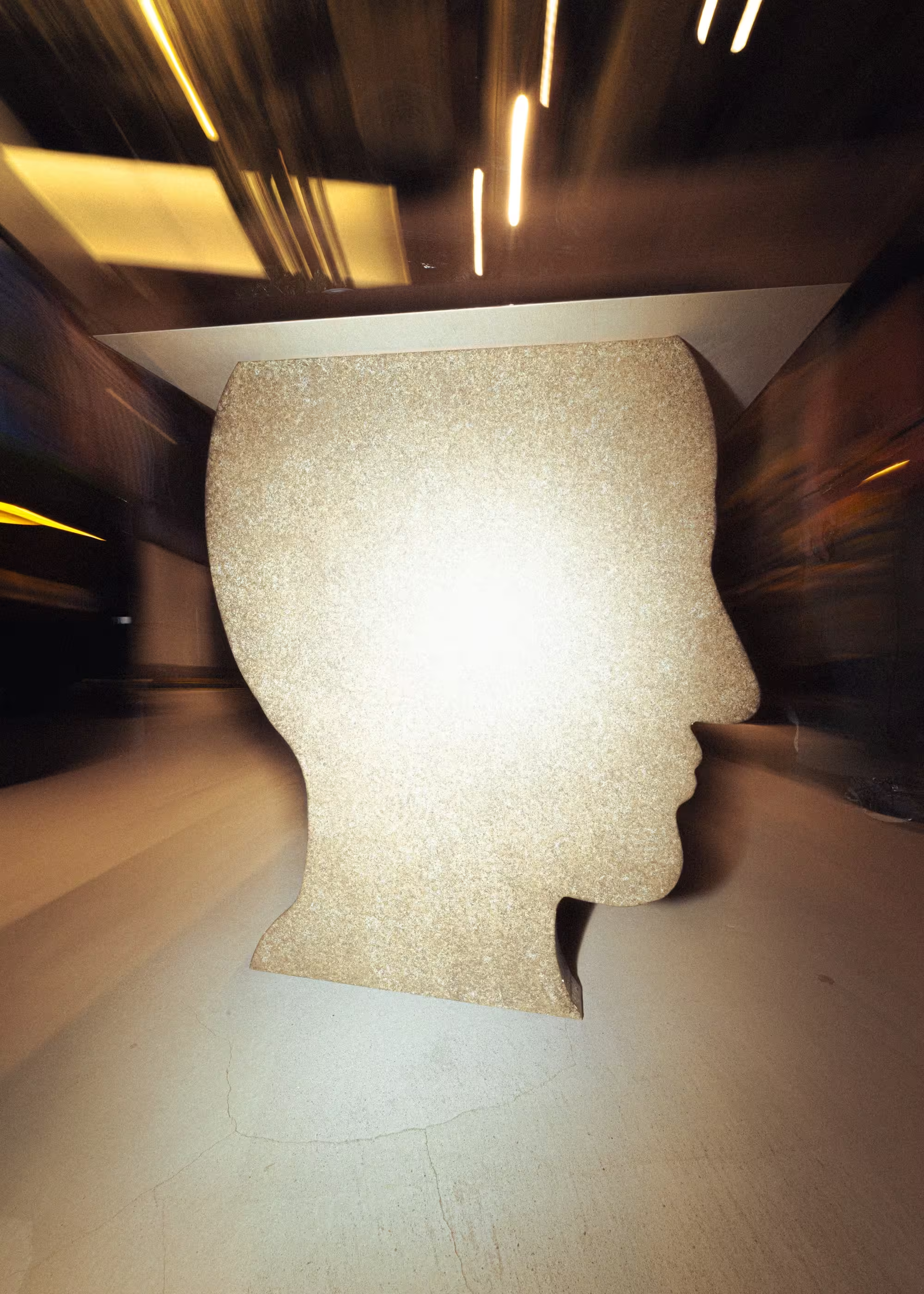
—Did you have a particularly stimulating experience that led you to research and become more aware of various cultures, Kyle?
I feel incredibly fortunate to have grown up in an area surrounded by diverse cultures. I had many friends who played punk rock, Will Wright, the creator of the simulation game SimCity, lived nearby, his daughter was a bit punk, her friends appeared on the robot fighting show BattleBots, and the people from Industrial Light & Magic (ILM), who worked on the VFX for Star Wars, and stop-motion master Phil Tippett were all like friendly neighborhood uncles. There were so many creative people around. All sorts of creative activities were organically connected. Because I hung out with those kinds of friends, we were all obsessed with robots, movies, animation, and other nerdy stuff. I later realized that creativity comes from your immediate surroundings.
What we call "creativity" tends to be judged by success or something completed, but the people in the area where I grew up were all driven simply by "what they love" and "what they want to create." I think that kind of environment is what motivates me today. That's why I find chaos and geeky things so fascinating. They may seem disparate at first glance, but they're all connected in some way, and there are people who deeply understand each of them. It's a very niche thing, but it's something that's truly loved, and I think it holds the potential that what I'm passionate about might be special to someone else.
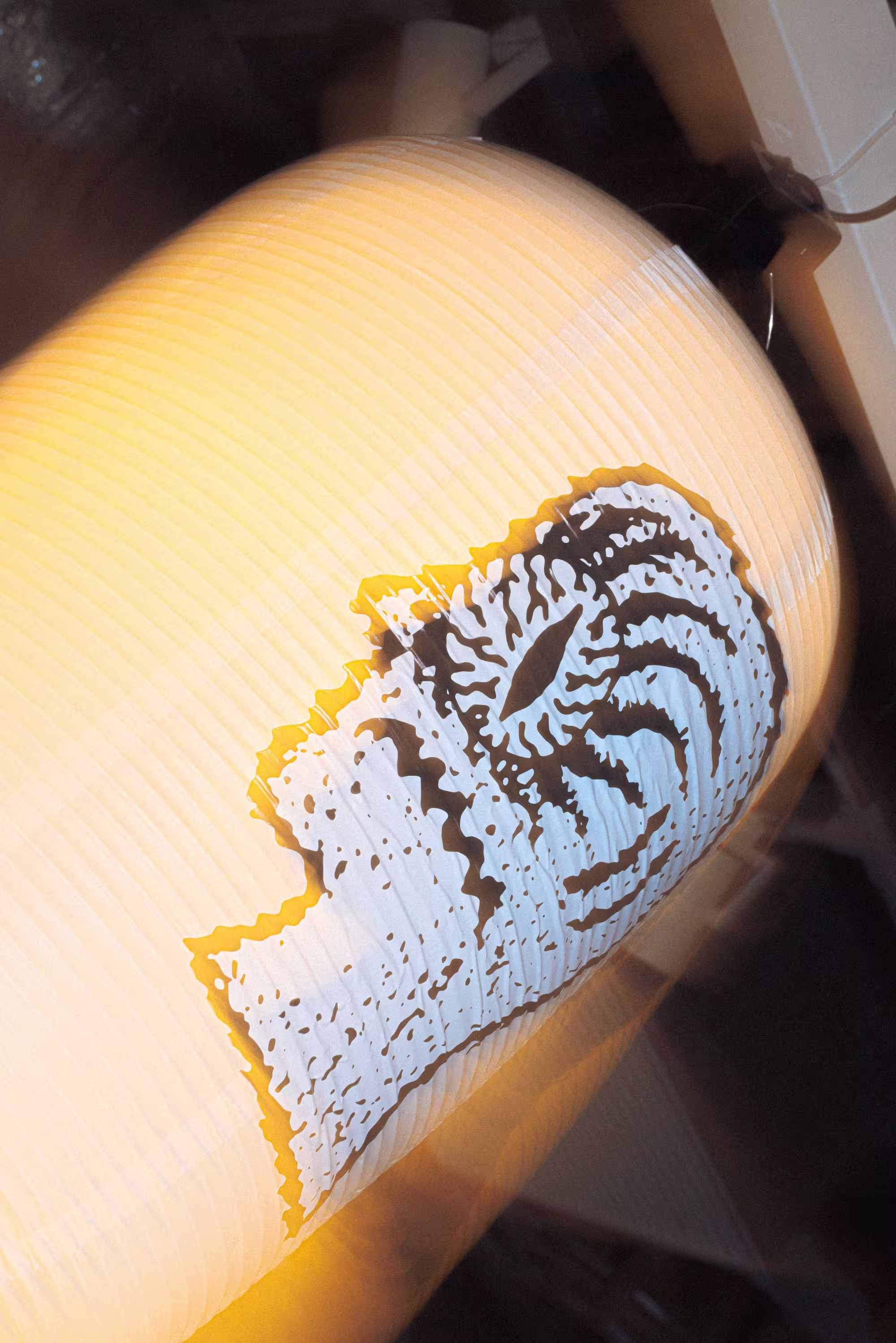
―― The "BRAIN DEAD STUDIOS SHIBUYA" store is unique because it also features sushi and elements of Tokyo culture. Where did that idea come from?
It's simple, but I really love food samples (laughs). There was a conveyor belt sushi place in my hometown in Berkeley, and since it was near my home, I had been going there since I was little. I really loved watching sushi go around the lanes and seeing the samples lined up in the showcase. The strangeness of that visual and the entertainment value stayed with me forever.
I also really like Shibuya PARCO, and when I try to explain to my American friends, "This is what PARCO is a place," they often say, "There's no place like that here!" From high fashion to street culture, art, and music, it's packed with layers of things, and the natural coexistence of these elements is truly unique. And I find it interesting how that kind of variety looks really cool.
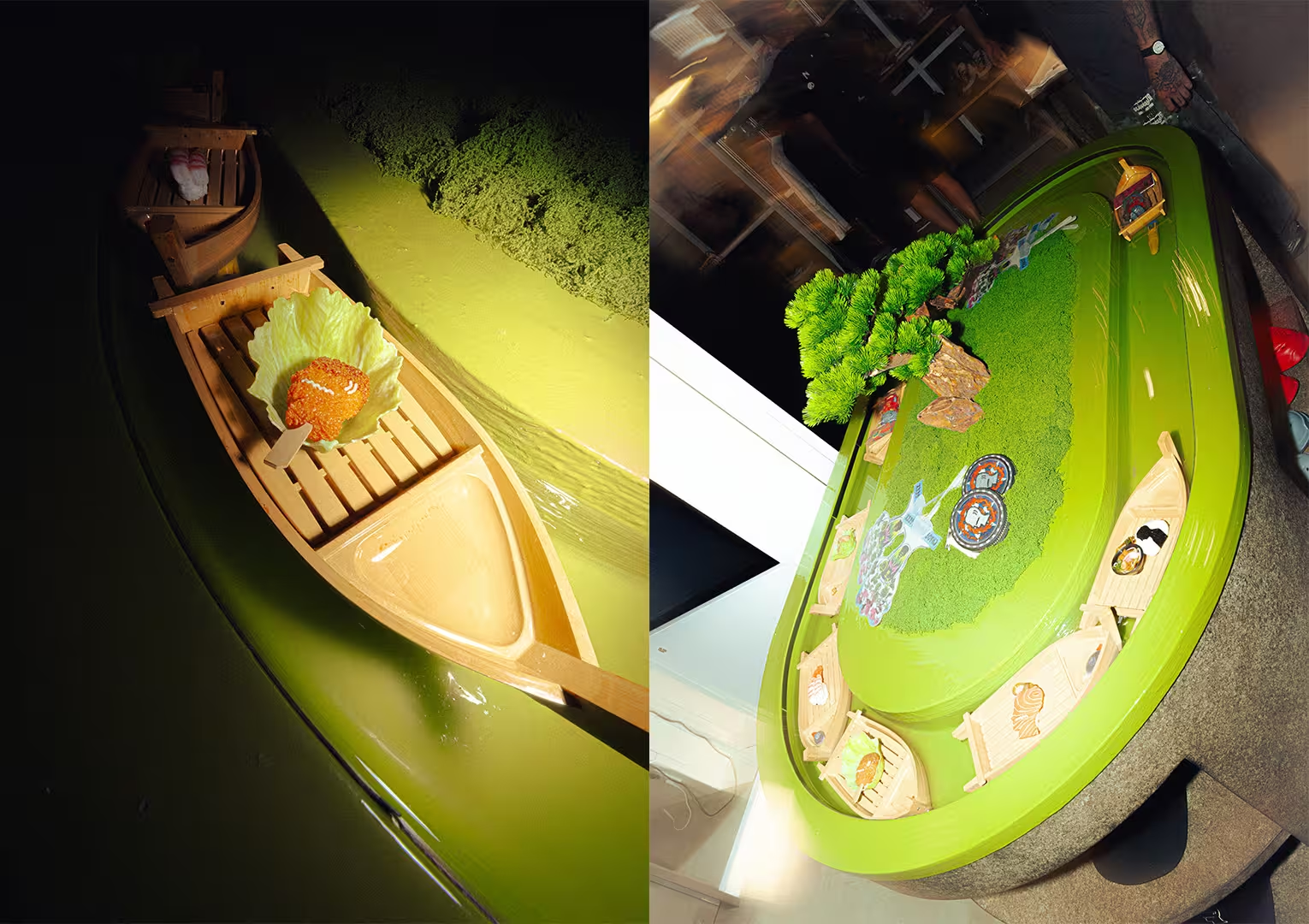
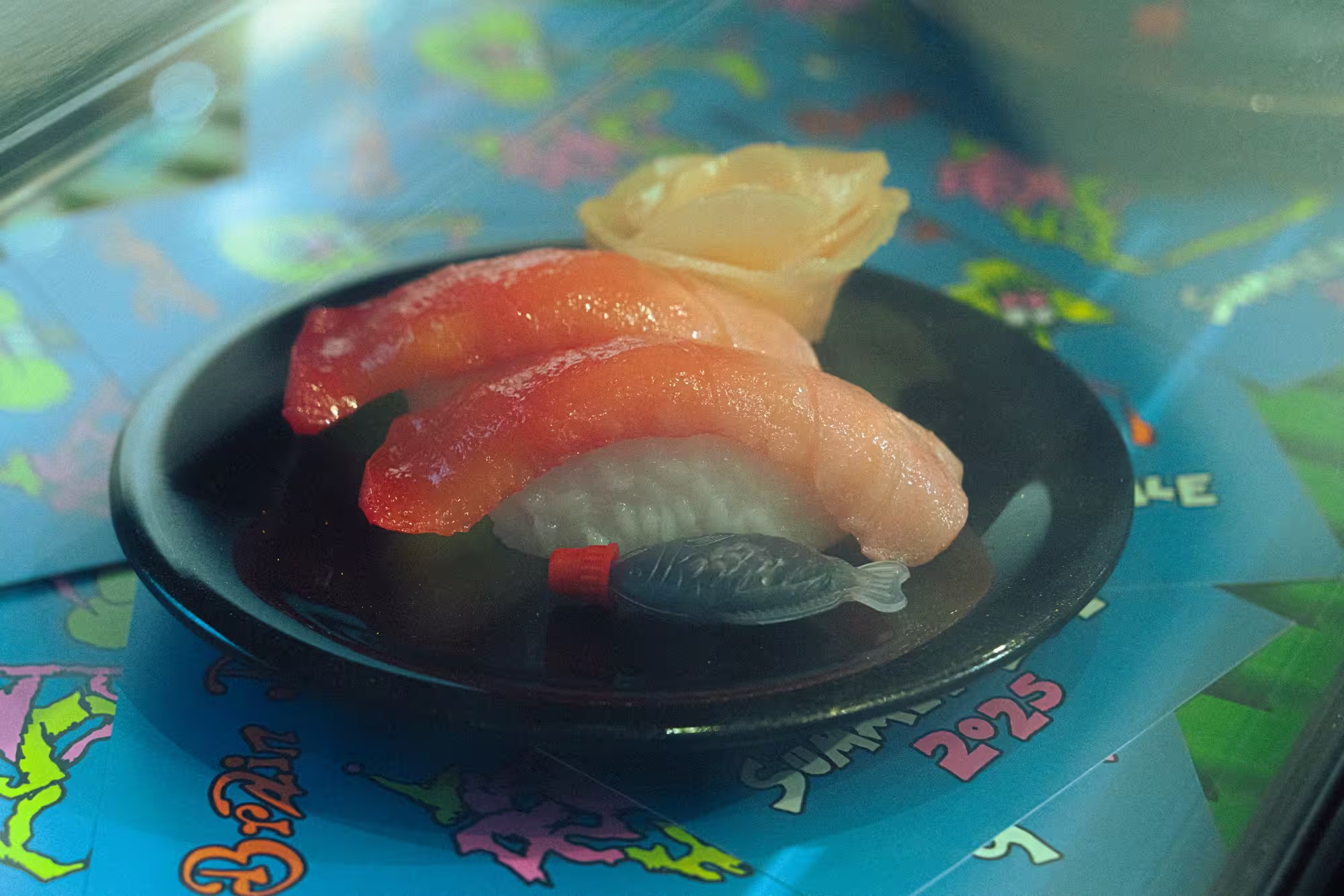 The store features many unique fixtures, such as a conveyor belt where food samples are displayed on a boat, and a counter lined with sushi samples that doubles as the cash register.
—What do you think is the reason why people are drawn to Tokyo's culture?
Actually, both my stepfather and stepmother are Japanese, so I grew up surrounded by Japanese culture. When I first came to Tokyo, I was honestly overwhelmed. The sheer volume of information was incredible, the power of the culture was immense, and I still remember the feeling of being hit with such a vivid stimulus. Because it was something I had always loved, I was surprised, but at the same time, I felt a sense of comfort. That's probably why I feel so at home here. I've been to Tokyo so many times in the last 10 years, it's become like a "second home" to me (laughs).
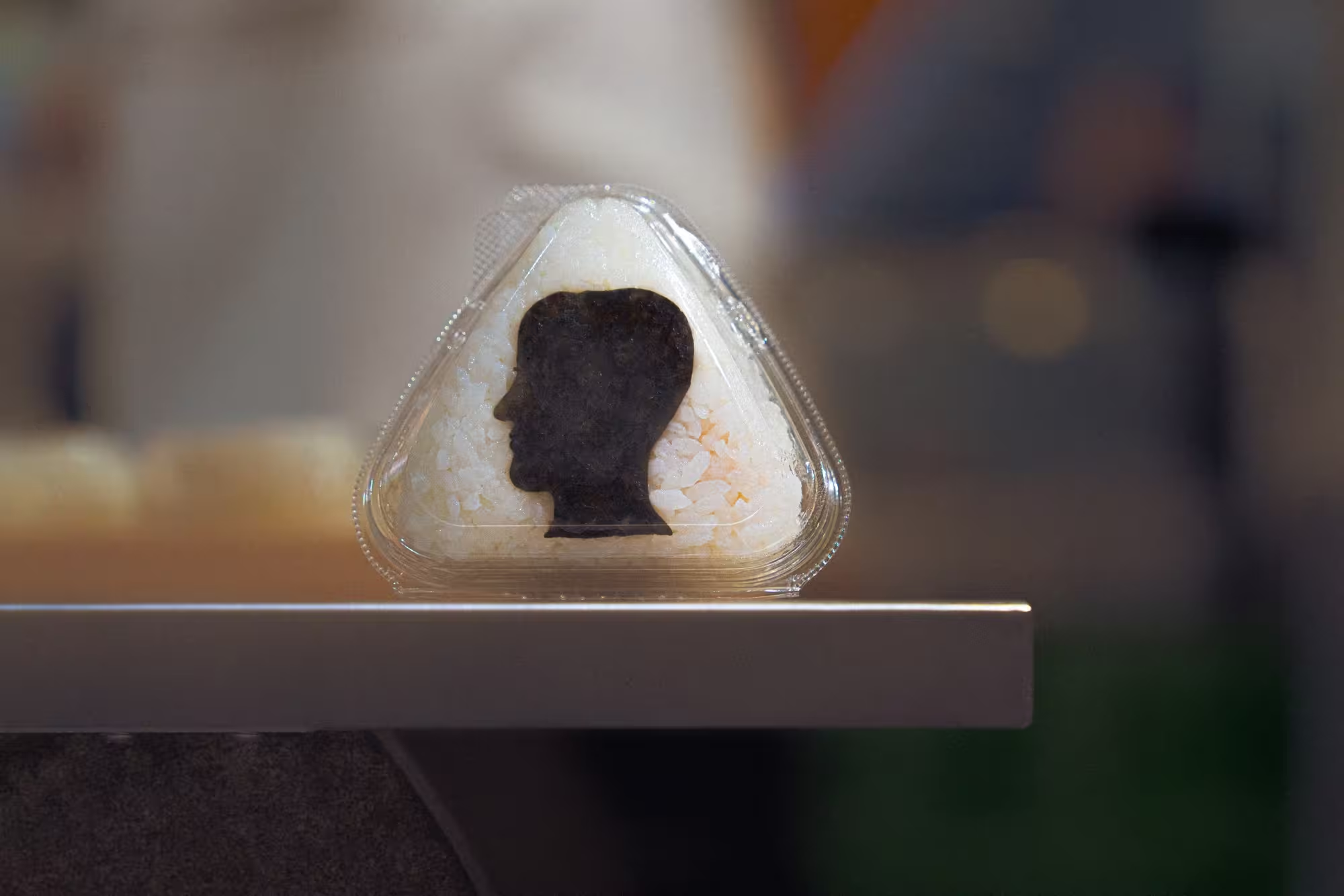
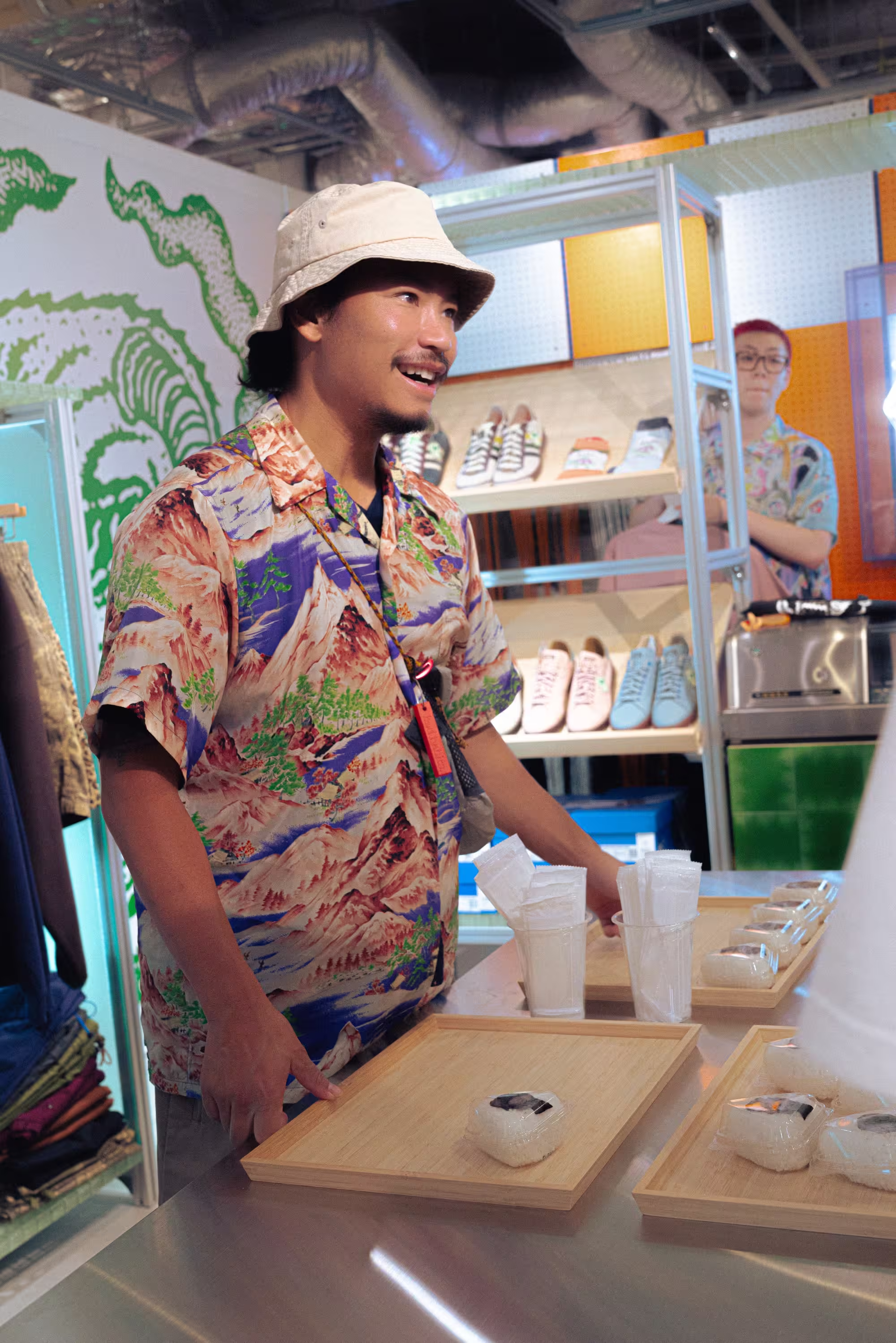 At the event, Kyle himself distributed rice balls decorated with seaweed shaped like the Brain Dead logo.
—Could you tell us about any Japanese artists or cultural influences that have particularly affected you?
I've been greatly influenced by Tokyo-based music like City Pop, but perhaps the biggest influence has been the art and design aspects. For example, I really love the music of Shintaro Sakamoto and Cornelius, and I have deep respect for them. I feel that Sakamoto, in particular, is not only a musician but also an artist, and his approach to expression resonates strongly with our own work. It perfectly aligns with my own aesthetic sense and musical taste. He approaches Japanese culture with sincerity, conducting thorough research, and I'm very impressed by that approach, which I think deeply resonates with my own creative process.
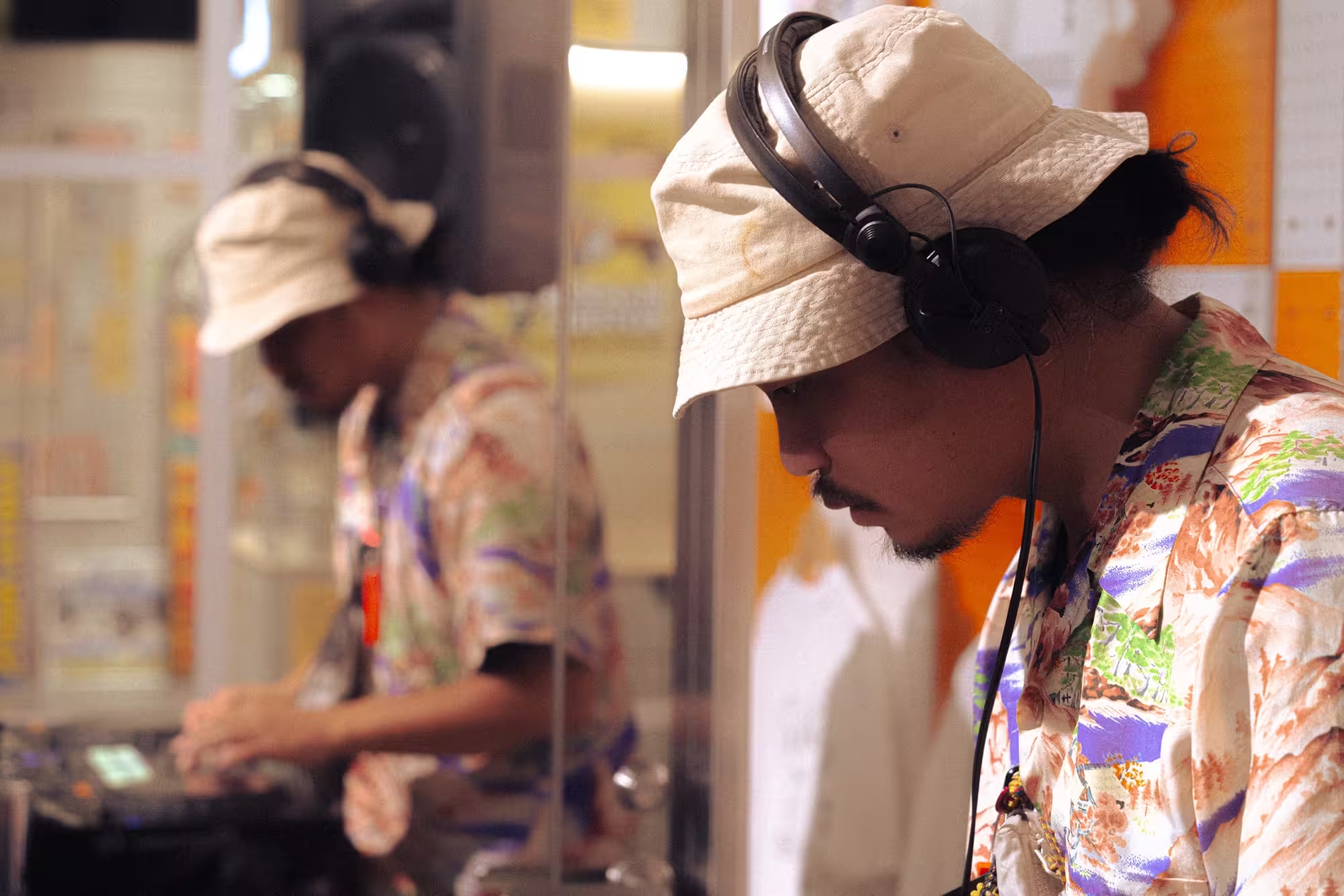
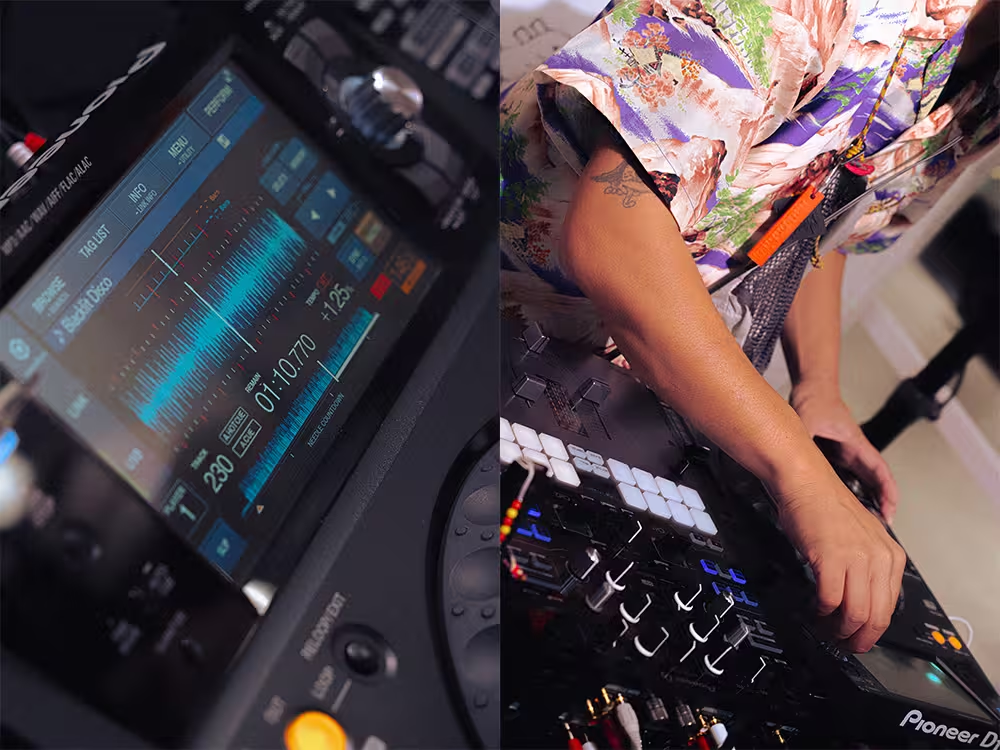 On the first day of 'CHAOS CULTURE GEEK', Kyle DJed in the store. The bags and USB sticks
It came with lots of charms featuring characters that were typical of Kyle.
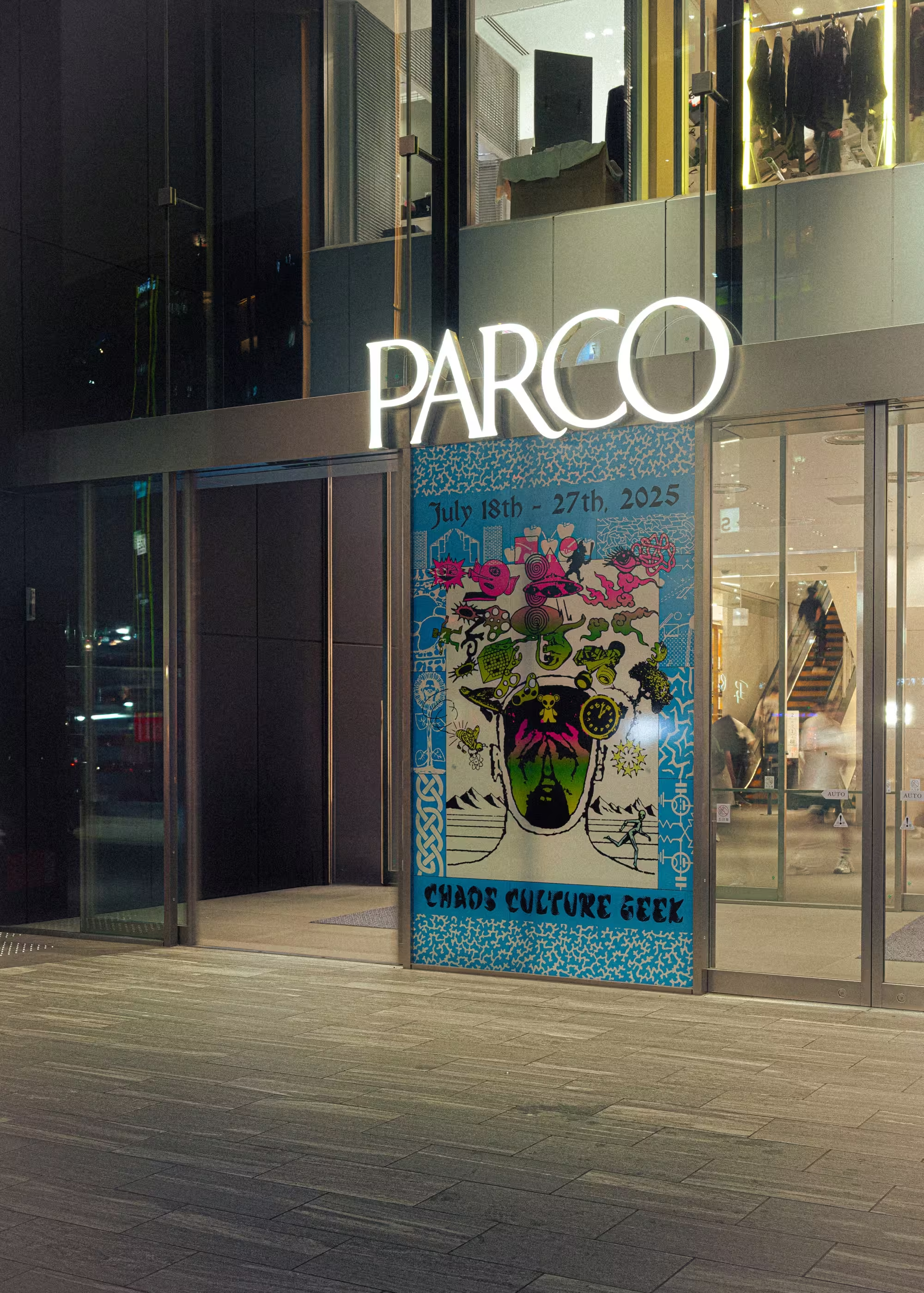
--Shibuya PARCO is undergoing a major renovation this spring, and the 5th floor has been transformed into a secret base-like floor overflowing with items that will tickle the geek's fancy. The visuals created for the "CHAOS CULTURE GEEK" event held in July, which focused on the themes of "playfulness" and "mania," were very impressive, blending with chaos and a geeky sensibility. What does "chaos" mean to you, Kyle?
For me, chaos is a state where there is no set path. Ideas and concepts drift freely, nothing moves in a straight line, and you don't know where it will end up. In fact, it's not even certain if there is an destination at all; it's an unpredictable state, and that's what chaos means to me. And actually, I think I'm a pretty chaotic person myself (laughs).
But that doesn't mean something is broken or heading in the wrong direction; rather, I think it means that everything is always in the potential to change, always taking on different forms. The idea that there's no such thing as a right form or rule from the start is the source of inspiration for my creative work.
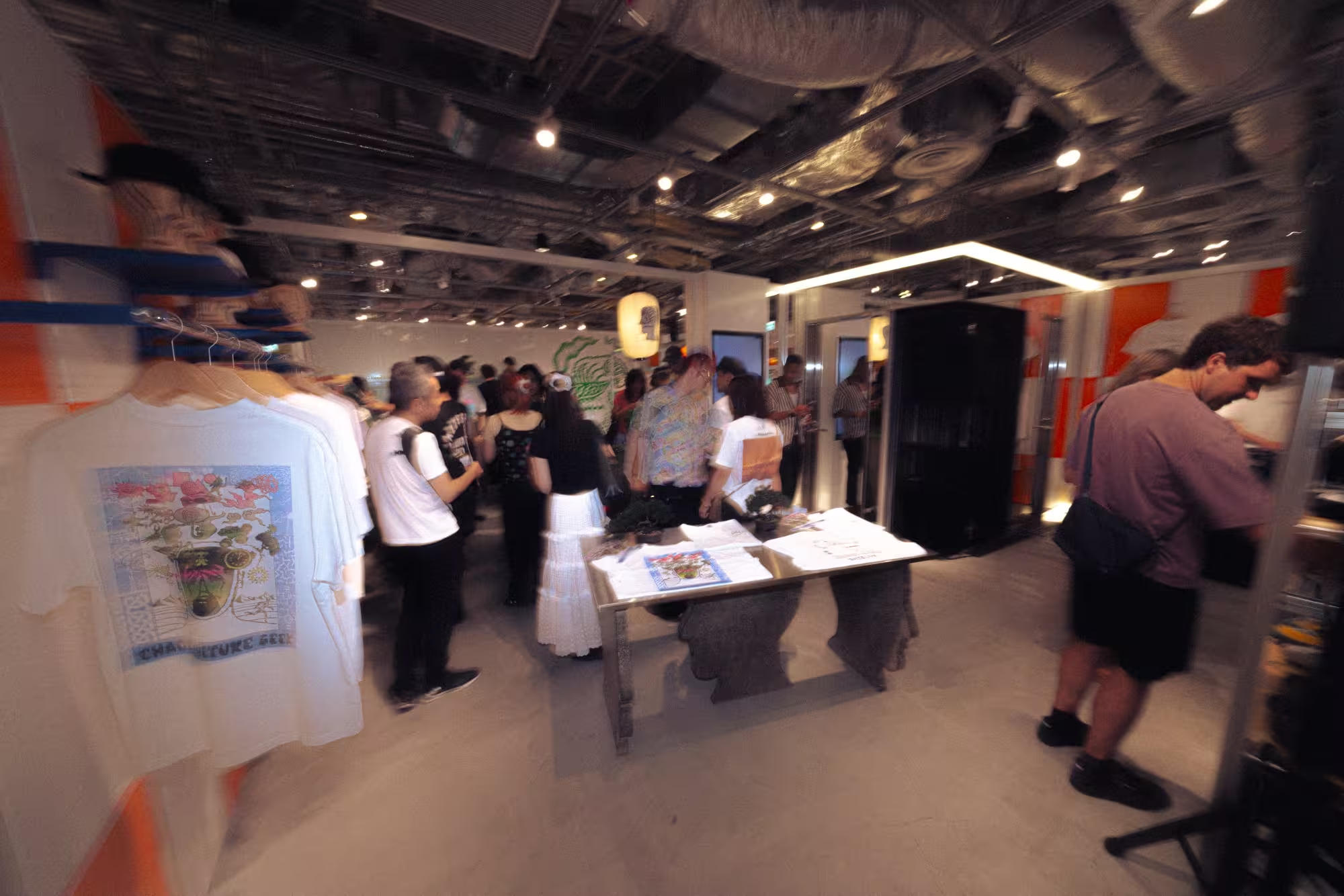
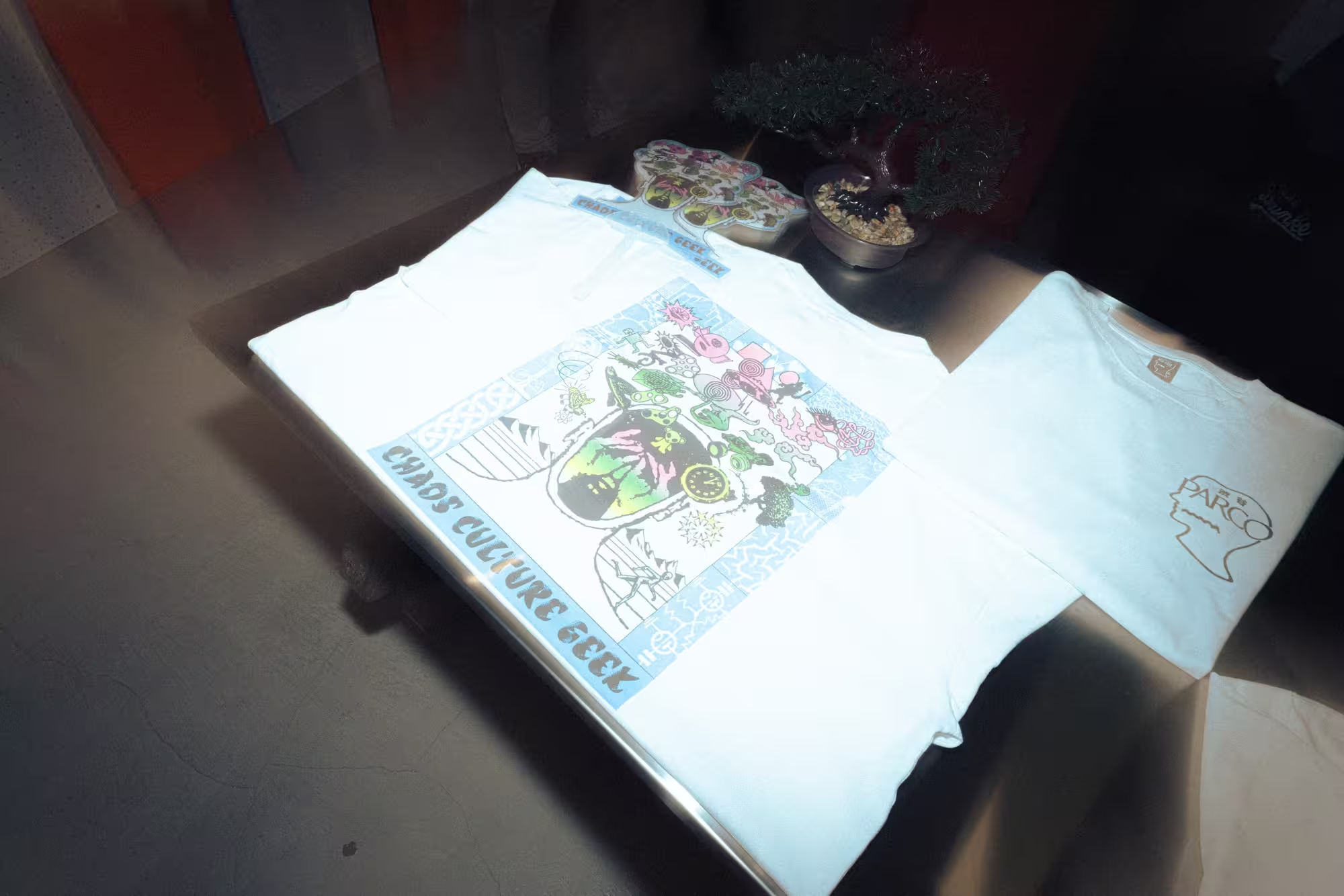 Original 'CHAOS CULTURE GEEK' T-shirts will also be sold in a limited edition of 100.
The front features the Brain Dead x Shibuya PARCO logo.
--Just as Shibuya PARCO has fostered a community by bringing a theatrical element to the city, Brain Dead's efforts to create creative spaces in the city can be seen as the essence of the brand. In that vein, is there anything you would like to try in the future?
Because clothes are something we wear every day, they reflect a person's values, preferences, and background. They're the fundamental "ground zero" of self-expression. That's why we can expand our activities in many directions in a way that's different from other fields, and I feel like there are endless possibilities. Brain Dead's audience is also very open to enjoying the activities themselves, so I want to broaden our scope as much as possible.
Right now, we're running a movie theater in Los Angeles, and that's another form of Brain Dead. By presenting worldviews like those of "Jet Set Radio," "Saga," "Ghost in the Shell," and "Death Stranding" in different spaces, we want to re-examine the value of the act of going to the movies itself. That's what I envision for the next form of Brain Dead. In other words, it's about how to create a place where people can have an experience, not just a product. Designing spaces where people encounter the unknown was my starting point, so I want to create not just the physical form of clothing, but the world that unfolds from it.
Lately, I've been thinking about creating climbing gyms and escape rooms, and in the past, I've even produced haunted houses. I think spaces where people can simply enjoy that kind of play are incredibly important. My current interest lies not in products, but in experiences where we can share places and events with people, and I think that's where the potential for our future expression lies.
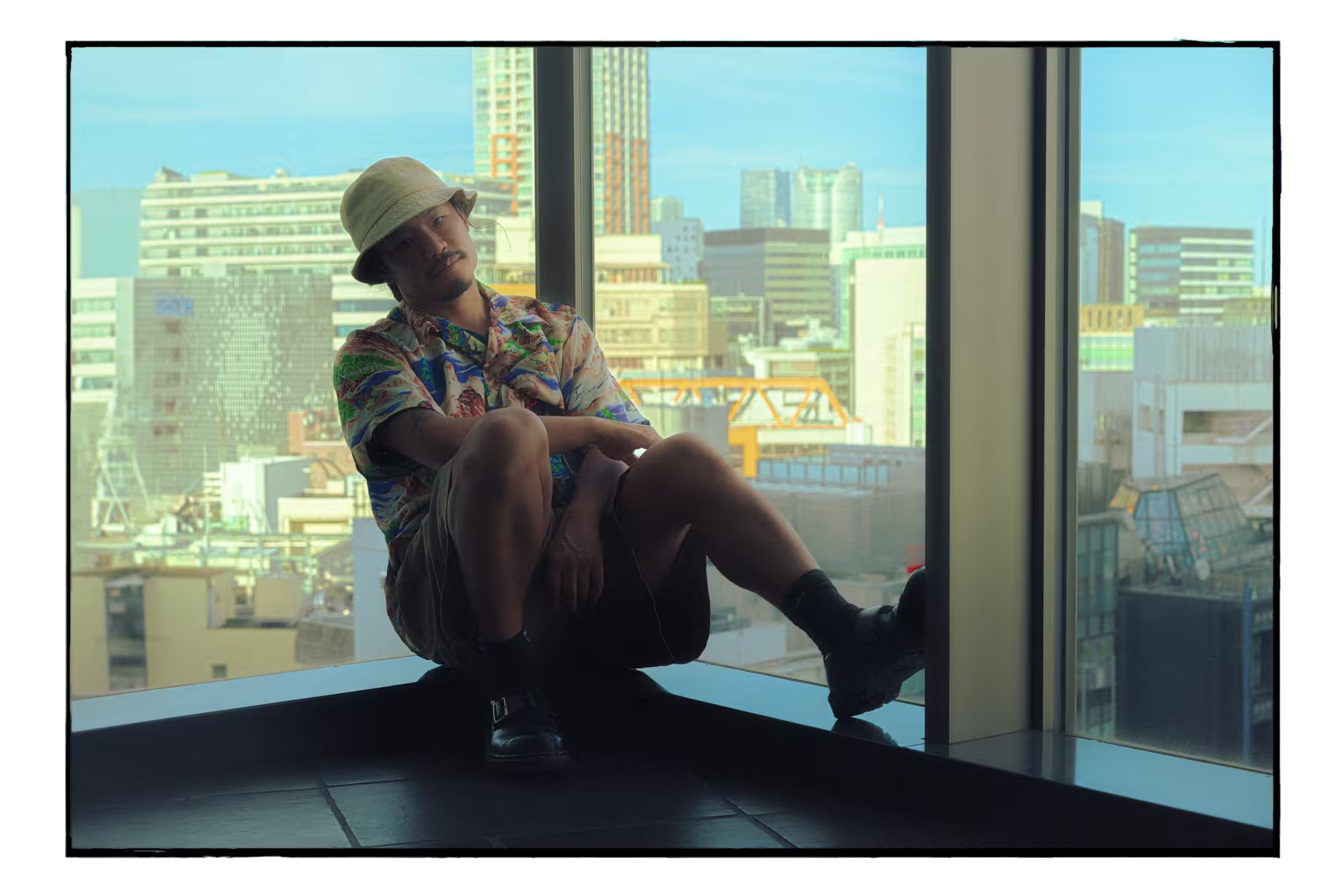
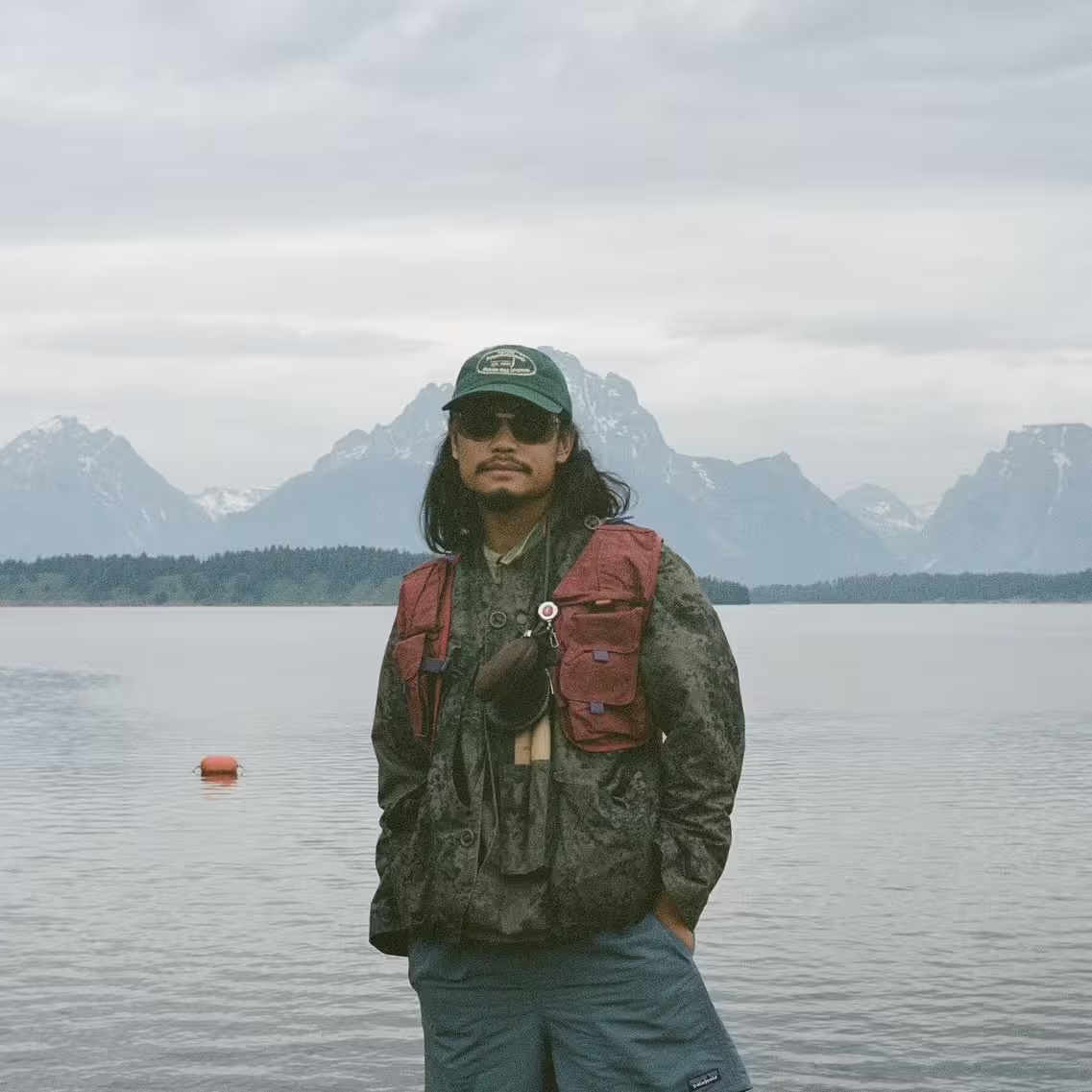
Kyle Ng
Founder and designer of Brain Dead, established in 2014. He expresses elements of his deep love for science fiction movies, comic books, and post-punk through various means such as clothing, furniture, shoes, and animation. His unique graphics are highly popular worldwide, and he has collaborated with numerous brands and companies.
Instagram (@farmtactics) (@wearebraindead)