Keisuke Yoshida, the film director known for "Himeanole" and "The Blank Space," will have his latest film, "God Demands Something in Return," released in theaters on June 24th (Friday).
This film is an original work written by director Yoshida, with "YouTubers" as its theme. Yuri-chan (Yukino Kishii), a struggling YouTuber, gradually expands her activities after meeting Tamogami (Tsuyoshi Muro), who works for an event company. Then, one day, through Tamogami's junior colleague Umekawa (Ryoya Wakaba), she meets famous YouTuber Chorei (Kaito Yoshimura) and designer Murakami Allen (Shuntaro Yanagi), and suddenly becomes a star. Having given up on Tamogami, she is met with an enraged Tamogami, and a fierce battle of love and hate ensues...
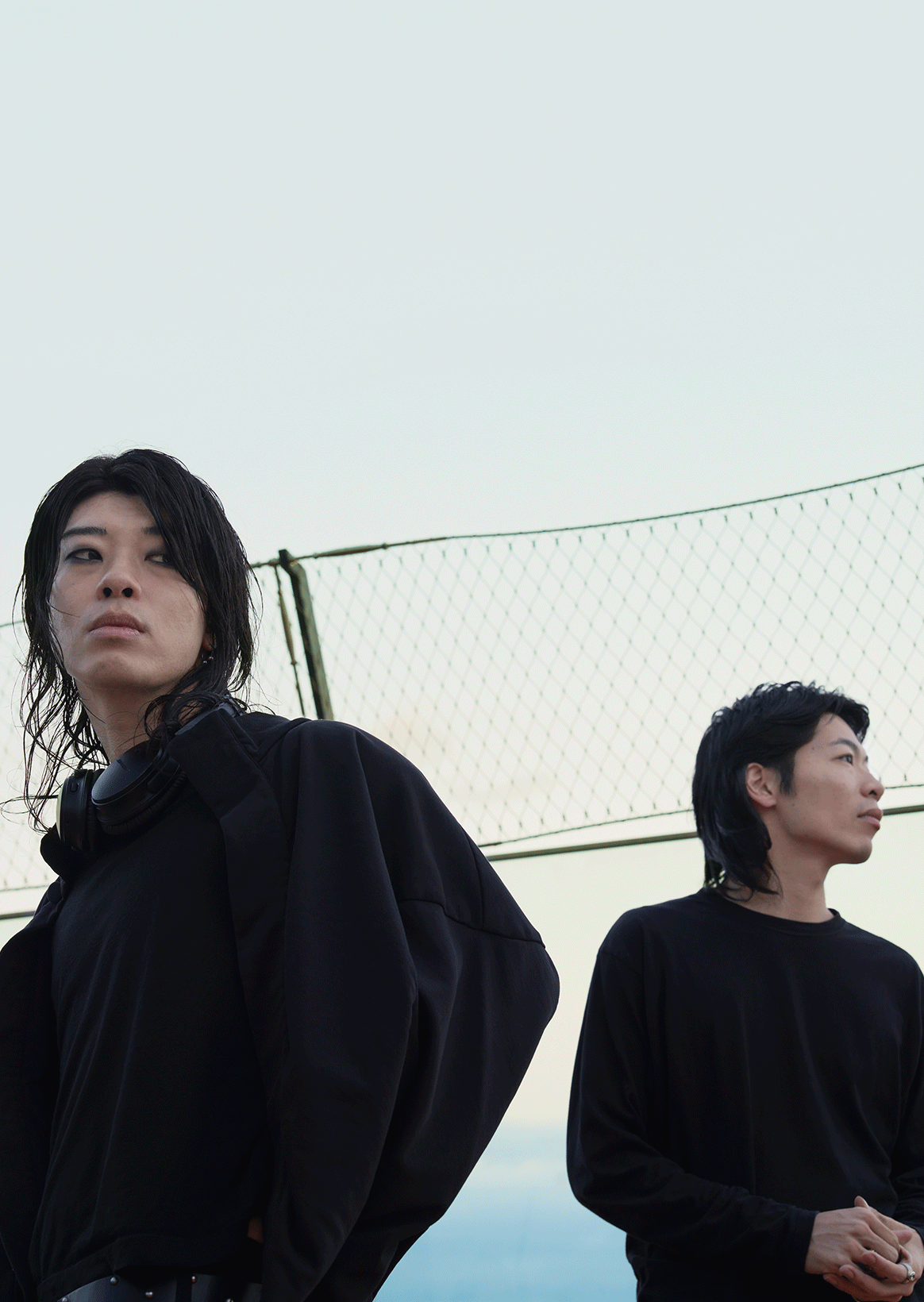
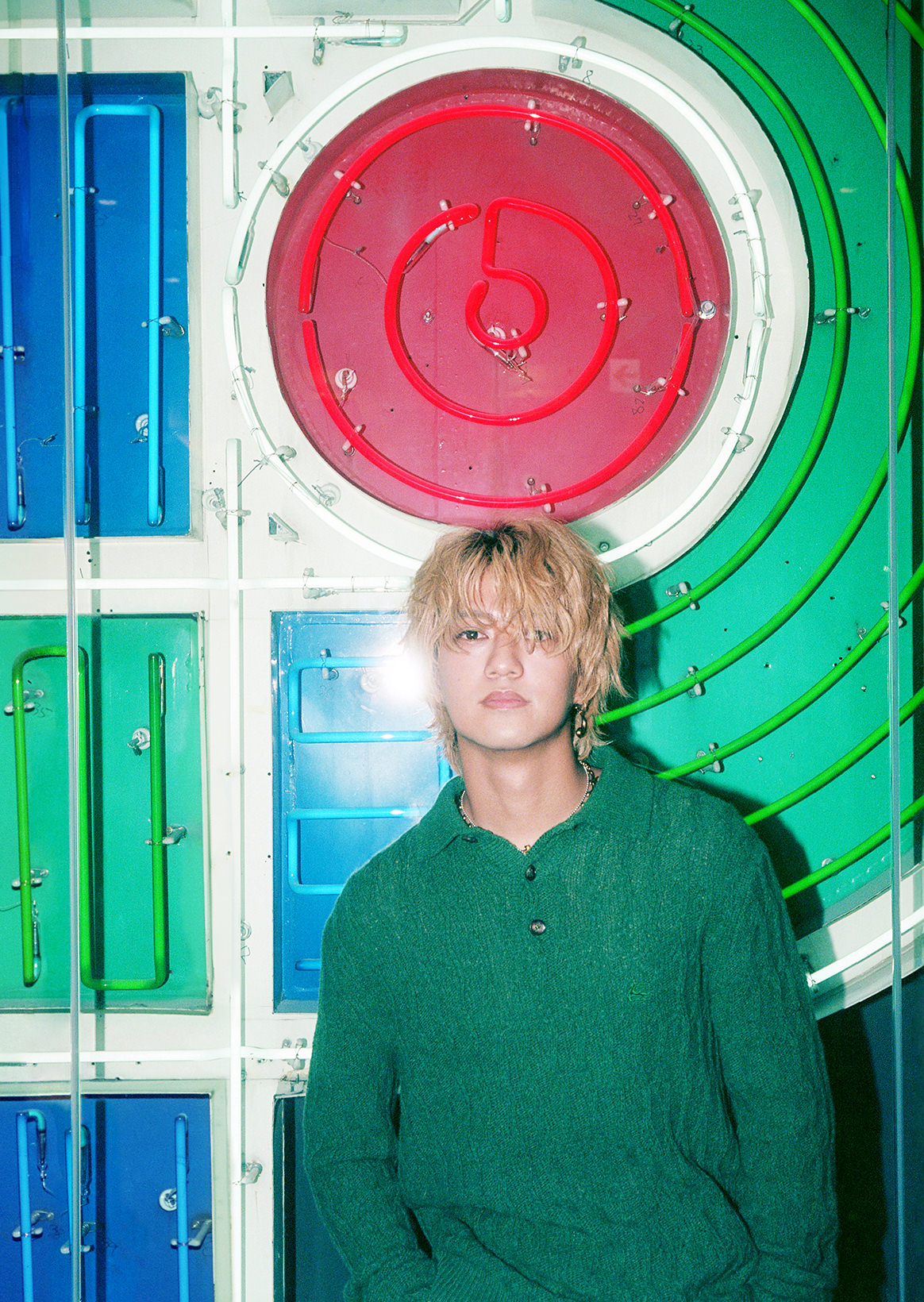
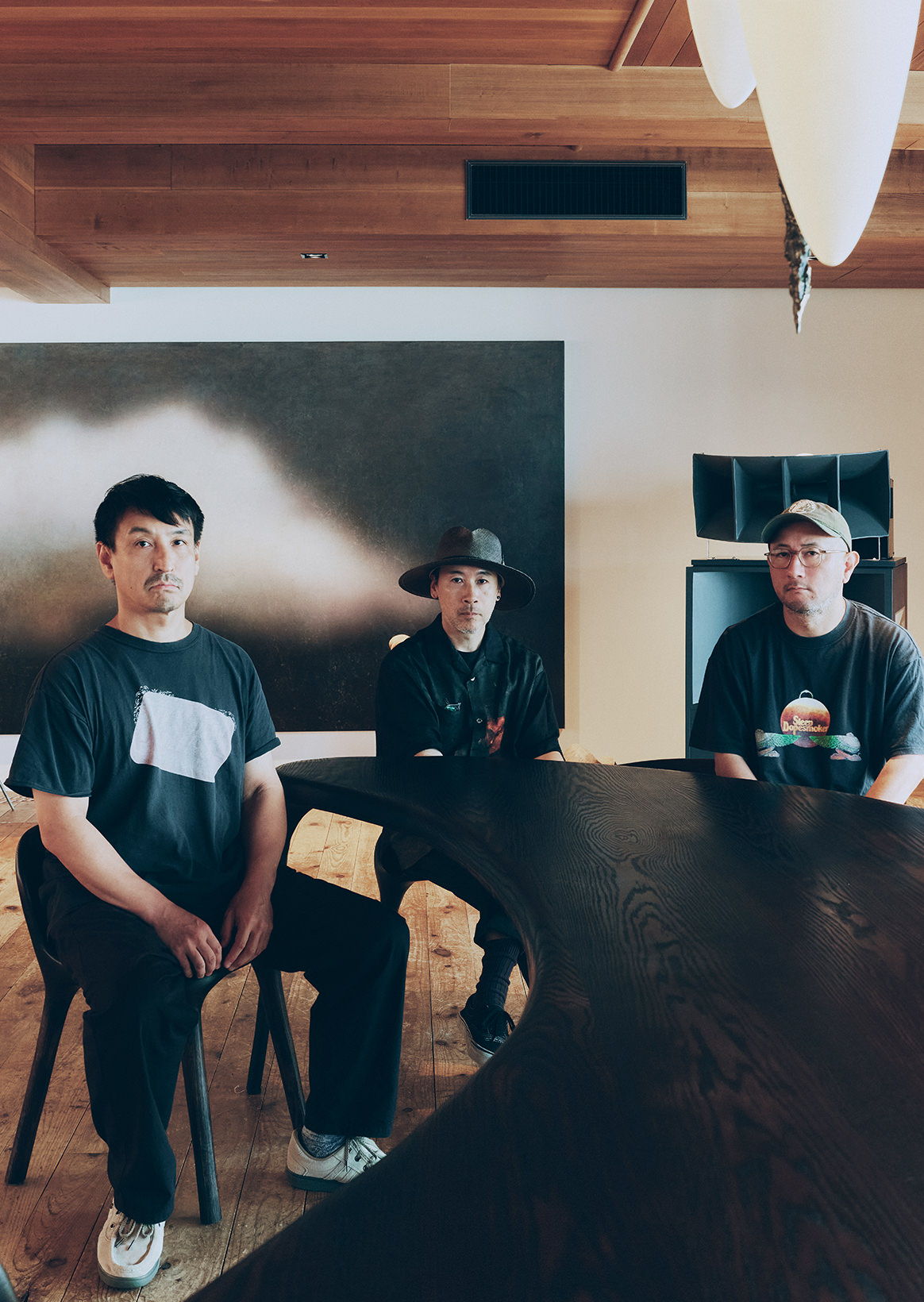
In this issue of "PEOPLE," we conducted interviews with four people: Muro Tsuyoshi, Wakaba Ryuya, Yoshimura Kaito, and Yanagi Shuntaro. In addition to solo interviews with Muro and Wakaba, we will present a special, super-long interview featuring a dialogue between Muro and Wakaba, and a dialogue between Yoshimura and Yanagi.
- Photo
- Sachiko Saito
- Text
- SYO
- Edit
- RIDE MEDIA&DESIGN inc.

—This is your second collaboration with director Keisuke Yoshida, following "Himeanole." This time it's an original work, were there any differences?
Muro: I think the director's stance and the atmosphere on set haven't changed, but with "Himeanole," there was something he wanted to depict in the film while still respecting the worldview of the original work, and with original works like "God Demands Something in Return," I felt he was more relaxed in a good way. And there were parts where you could feel his attention to detail. In this case, I felt the director's strong attention to detail in the scene where Tamogami and Yuri-chan (Yukino Kishii) are fighting with a selfie stick. The schedule was also limited, so there was a sense of tension.
—I heard from Director Yoshida and Ms. Kishii that there was a lot of "free acting" (where the actors were given free rein on set, without specific lines being written in the script, etc.).
Muro: That's right. It's like acting that isn't bound by lines, and sometimes it's more relaxing when there's nothing in the script, which gives it a strange sense of authenticity. This work is the story of a girl who has just set up a system and a man who tries to support her, and even we actors started to feel a bit embarrassed, so it turned out to be a suitable portrayal of the distance between people. I think the direction anticipated that.
And then there's the trust between Director Yoshida and Ms. Kishii. I think it's because they felt they could "confidently entrust the project to her." With me, they might have thought, "If we don't restrict her with a script, she'll be able to do things more freely. Let's let her do it."

—In the film, Tamogami undergoes a transformation that is so surprising to the viewer. In his comments about the film, Muro-san said that he "came to see a version of himself that wasn't him."
Muro: Even if you have the desire to be kind, if you look at yourself from a different perspective, there may be some hypocrisy in it. Kindness and actions that stem from the desire to be liked or thought well of by others, conversely, when those feelings disappear, you become disappointed in people and lose faith in them. Tamogami goes to that extreme.
I've experienced heartbreak and felt discouraged and puzzled by world events, but I don't think I've ever experienced anything quite like that on a daily basis. When someone I'd been kind to realized they didn't need me, my emotions suddenly flipped upside down. In that sense, it was a side of myself I'd never really seen before.
—The transformation of Yuri-chan, played by Ms. Kishii, is also tremendous, isn't it? The scene in the family restaurant, for example, was terrifying.
Muro: It's scary when a person changes as they relentlessly pursue their desires, and when the confidence that comes from a small success leads them to look down on others.
—However, I think that the underlying desire to "become someone" is something that we can "understand." How did you perceive it, Mr. Muro?
Muro: If I put myself in their shoes, I do this kind of work, and I understand that feeling because I want to do something in front of people. Back when the phrase "I want to be famous" was considered uncool, I deliberately used it to get people to remember my name, and I think people in this industry have that feeling strongly, even if they don't say it out loud. After all, it's a job that can't be done unless people see you.
The term "desire for recognition" has become quite common, hasn't it? With technological advancements creating various platforms for being seen, I feel like it's something everyone has these days. While there may be some people with a strong will who think, "I'll do it even if no one's watching," I suspect that most people want to be like that but can't.
—In that sense, it's a work that appeals to a wide audience, isn't it?
Muro: This particular work depicts the greed and foolishness of humanity. People are driven to pursue their desires because they want to be successful, recognized, and praised. But on the other hand, that can also be comical. I think it's something that can be enjoyed by both men and women, or regardless of gender.
Love might be one of those things. I think the phrase "a love story that's hard to feel warm inside" best describes this work.


—This is your first time working with Director Yoshida, Ms. Wakaba. What kind of image did you have of Director Yoshida's work?
Wakaba: The image I had of Mr. Yoshida through his work was completely different from reality. He's a very lighthearted person and talks about 30 times more than I do. I thought, "So this is the person who made those movies with such nasty personalities!" (laughs).
I've been watching Yoshida's work since "Sankaku." I like "Himeanole," including the original story, but the ending isn't niche. When Yoshida does it, he elevates it to proper entertainment, and at the same time, he depicts the sadness and unfathomable creepiness of the character of Morita. He's a director I'm very interested in, so I was happy when he asked me to work with him. During the costume fitting, he said, "I hate people who say, 'I like observing people'," and I replied, "So that means you hate Umekawa (the character I play) the most, right?" (laughs).
Also, the fact that Muro-san is the lead actor this time is a huge factor. I was looking forward to acting with him, and I was also interested to see where Yoshida-san's portrayal of YouTubers would lead. Prejudice and respect—I wanted to know Yoshida-san's thoughts on the job of a YouTuber. Of course, Yoshida-san is cynical, so I have no idea how much of his own feelings are written in it (laughs).
—In this work, I felt the terrifying power of words very strongly. This includes slander and defamation, but the raw intensity of how words are received and treated resonates with the atmosphere of today. How do you personally view "words" in modern times, Wakaba-san?
Wakaba: I believe that words themselves are constantly changing to keep up with the times, and I feel that what's more important is "how it's communicated." In recent years, I've been wearing more and more black in my clothing, and that's largely influenced by the intention of "making sure my message is properly conveyed."
I feel that wearing color makes it harder for my words to be understood, so I try to wear black as much as possible when I'm going to interviews or meetings. I want to minimize the amount of information I provide so that the nuances can be properly conveyed. Even when using the same words, the way they are received inevitably changes, so I want to have as much control over that as possible.
This applies to acting as well; I try to understand "what the director wants to achieve" rather than just the words themselves. I think this is true even when dealing with slander and defamation. Words are merely a means to an end, not the end itself. I hope to grasp the director's intentions and the inexpressible aspects of a scene, and in that sense, I don't put much faith in words.

—Ms. Wakaba, you also check the interview transcripts yourself, right?
Wakaba: That's because I'm very careful about "how it gets across." I want to make sure it's in the words I want to convey. With "On the Street," we had a year-long promotion period, so there were a lot of interviews, and it was tough checking articles from dozens of media outlets, but I want to continue doing that in the future.
—I heard that there were a lot of improvised parts during filming, to put it simply.
Wakaba: Yes. There were a lot of parts where I was told to "just talk," which is something I'm really bad at, so it was tough. If I could avoid it, I wouldn't want to do it, but I guess they wanted to see the look on my face when I made me do something I didn't want to do.
In the opening drinking scene, I had lines to deliver, but the others weren't given such detailed instructions; it was more like, "Get more excited! Make it fun!"
—Ms. Wakaba, you've appeared in many original works, including this one, haven't you?
Wakaba: I'm someone who really prefers original works. There's a simple interest in them, but the biggest thing is being able to incorporate various sentences. For example, with the ad-libs I just mentioned, if there's an original work, I'm afraid of deviating from the original character's personality. While it allows for capturing something very raw, it's also a dangerous tightrope walk. However, I think Mr. Yoshida is someone who captures that aspect, whether it's original or not, though there may be variations in intensity.
That's one of the reasons why he's so observant. Yoshida-san talks a lot and is there on set in a lighthearted way, but in reality, you feel like he's watching you very closely. He himself says he "hates people who observe others," but he's exactly like that himself. I felt like he was sending a message that he wouldn't let me do what I was good at, or that he wouldn't let me go in that direction.
—So this time, it won't be in the form of a full-fledged discussion with Director Yoshida about the role, right?
Wakaba: I didn't do anything in particular. I just tried to copy people that I find really unpleasant to look at.
I feel this when I play a bad boy myself, or when I watch movies about it, but I think truly dangerous guys are the ones who can look the other person in the eye and say, "I really think I like you." Not being able to put "I like you" into words can be a kind of pure love, or it can make you think you really do like them, but someone who says it without any hesitation is somehow untrustworthy. It's similar to someone who says, "Lend me some money, I'll definitely pay it back." I played that kind of guy in a pure way (laughs).
—Indeed, the character you played in "Kasumi Arimura's Day Off" was frivolous, but it didn't give the impression of being "dangerous."
Wakaba: He was just a simple idiot, wasn't he? (laughs) But Umekawa is closer to a psychopath, and what's worse is that he doesn't mean any harm. I'm the type of person who will try something even if I don't understand it intellectually, so I'll accept any role, but Umekawa was just so creepy, and I felt like he was someone you shouldn't get involved with.
What I had decided beforehand was that "the character genuinely believes they are doing the right thing." For example, in scenes where they say, "That guy was spreading rumors about me," I wanted to portray it purely and without any calculation. I believed that the purer the character, the more truly unpleasant they would become, so that was the only thing I had decided beforehand.
—The scenes with Muro-san and Kishii-san also had a sense of immediacy, as the relationship between them changed constantly.
Wakaba: I don't like to bring too much of my preconceived notions to the set, and I think it's okay to change based on what happens in the moment. It's okay if the character looks completely different in the next scene. That's just how humans are.
—There are a lot of actors of the same generation in this production, aren't there?
Wakaba: It was exciting and fun. Yoshida-san seemed to have the impression that I was the least likely to listen to instructions (laughs), but afterwards he said, "That wasn't the case at all." I'm actually quite serious, you know (laughs).
—(laughs). Wakaba-san, you celebrated your birthday on June 10th. Do you have any goals right now?
Wakaba: I don't want to make things too comfortable. Because of my personality, if I go to a place that's too comfortable, I'll slack off. There were a lot of uncomfortable moments in "God Demands Something in Return," and even on the set I was filming until recently, I deliberately steered it in that direction. I want to intentionally create a "difficult" environment.


Muro: (Looking at the cream soda that was brought to him) This is all part of the act. You're probably thinking, "Wow, this senior has started ordering cream sodas now," right? (laughs)
Wakaba: No, that's not true. I'm the one who ordered this (laughs).
Muro: Huh...? Wow, I thought it was just a staged effect for the photo! (laughs)
Wakaba: (laughs).

—To reiterate, I'd like to ask about how you two first met. Your first co-starring role was in the drama "Samurai High School" (2009), and then Wakaba appeared in Muro's stage production "muroshiki.7" (2013), is that correct?
Muro: In the meantime, could you add a story about an "izakaya" (Japanese pub)? There was this one time at an izakaya in Ebisu when Wakaba was hunched over and I couldn't tell where she was looking (laughs).
Wakaba: The focus was off... (laughs).
Muro: (laughs). There was a time when I thought about stopping acting together (laughs).
—(laughs). After that, we had 'muroshiki.7', the movie 'Akegarasu' and 'muroshiki.9' (2015). We've had many opportunities to work together, haven't we?
Muro: It was intense, wasn't it? Standing on stage with 7 and 9 of "muro-shiki." is a very strong memory in my acting career, and I learned a lot from them, but I also feel like I put them through a lot of hardship. Since it was a three-person or two-person play, they carried a third or half of the stage, and we toured around the country for performances, so they really carried a lot of the burden.
Wakaba: I met Muro-san as an actor, and then soon after, I met him as a director, so there's a gap between his public image and the image I have of him.
Muro: You've seen me with bloodshot eyes so many times (laughs). On the contrary, I might not be any different. When people see Wakaba Ryuya on stage, on TV, or on screen, I think what comes to mind is a "?". What kind of person is he? Is he a nice young man, or is he a little crazy...? He's an "unknown" presence that makes you wonder. I hope that he continues to cherish that in the future.
When I first saw him, his presence made a strong impression on me. I still like him, and I feel like I could watch him forever. I guess his charm lies in the fact that he's a mystery. Wakaba probably feels embarrassed when people call him "mysterious" (laughs), but I think that's what's so great about him.
—This time, you're playing characters who are senior and junior colleagues at the company, right?
Muro: He really suited the role of a nasty guy. I thought, "A harmless evil has appeared!" (laughs).
Wakaba: He's just a genuinely unpleasant person, isn't he?
Muro: I thought he was the most dangerous guy because he doesn't have any malicious intent. He gives off the strongest sense of madness (laughs).
Apparently, Mr. Yoshida has encountered several people like that in his life. He seems to have incorporated those experiences into the script. Watching Wakaba brilliantly portray those characters, surpassing the script, I thought, "That's scary!" (laughs).
Wakaba: (laughs). What I realized again this time is that I get to play characters with a different relationship with Muro-san each time. That's what makes it interesting.
Muro: Also, with "Muroshiki." and "Akegarasu," the focus is on the audience. They're comedies delivered to the audience, but in Yoshida's case, the audience is irrelevant; it's complete within the film itself. I enjoyed being able to do that this time. Especially the scenes with the three of us, including Kishii.
Wakaba: That was fun.
Muro: All three of us were clashing, but it wasn't like a "battle of acting" either. We were just each maintaining our own stance and making the conversation work. There was a sense of tension, which made it interesting.
—The relationship between the characters changes within the scene, doesn't it? Did you two talk to each other in between takes?
Muro: No, we don't talk that much. When we do a play together, it gets awkward (laughs), so the moment we meet we just say something like, "It's been a while. How have you been lately?" and we don't really have any deep conversations.
Wakaba: It's kind of embarrassing, isn't it?

 © 2022 "God Demands Repayment" Production Committee


—You mentioned this on "Kaito Yoshimura's Instant Radio," but I heard that you two met at an audition for director Michihito Fujii.
Yanagi: In the audition, we did a scene where we were getting into a physical fight. My first impression was, "There's a cool guy here."
Yoshimura: I distinctly remember when we met privately afterwards, Shuntaro (Yanagi) showed up in a bright red tracksuit. I thought, "That's cool."
Yanagi: I always think this, but Kaito (Yoshimura) has an exquisite balance between the character he plays and himself. That's why it feels fresh every time, and I never get bored watching him.
Yoshimura: That's the first time anyone's ever said that to me (laughs). Shuntaro has a strong presence, he's full of confidence and not timid at all, and I think that's great. He's always been like that, hasn't he?
Yanagi: I'm not confident at all (laughs).
Yoshimura: Oh, really?
Yanagi: I get extremely nervous in front of people (laughs). But it's true that I'm often told, "I don't know."
Yoshimura: That's like being an astronaut. Astronauts are required to have all sorts of skills and athletic abilities, but apparently the most important thing is their heart rate. Because they need the mental fortitude to remain unfazed no matter what kind of crisis they find themselves in. They showed that in "Ad Astra" starring Brad Pitt.
Yanagi: Well, then it's no good. I may look normal on the outside, but my heart races like crazy, so I'm the least suited for it (laughs).
Yoshimura: (laughs).
—Do you ever feel nervous at work, Ms. Yoshimura?
Yoshimura: I do get nervous, but I've also grown tired of it. I observe myself being nervous from a distance and get bored of it, so I start looking for a different kind of nervousness.
Yanagi: That's cool...
—So, how did you two feel when you read the proposal and script for "God Demands Something in Return"?
Yoshimura: I felt this was a project that needed to be done right now. I did find the role of a YouTuber to be quite challenging.
Yanagi: When I read the proposal, I wondered what it would be like, but I felt that the way it betrays the audience and the plot development are very typical of Yoshida. Only scary people appear in it, right? (laughs)
Yoshimura: That's scary. They're all nasty people, aren't they?
Yanagi: I like "Sankaku" and "Himeanole," and I think they really showcased the contrast between Yoshida's dark style and brightness.
Yoshimura: Yoshida's works are interesting. "My Beloved Irene," "Dog and Monkey," "BLUE"... I like them all. It's amazing how he wraps the unpleasant parts of humanity in humor and absurdity and portrays them in a bright way. Things that would come across as dark and foolish if portrayed directly are depicted in a cheerful manner, which I think is brilliant.

—The characters you both played, YouTuber Chōrei (Kaito Yoshimura) and designer Alan Murakami (Shuntarō Yanagi), have very unique visuals, don't they?
Yoshimura: When we were doing the costume fitting, we discussed and decided to "make it as flashy as possible. Let's make it superficially easy to understand and give off a 'Yeah!' vibe."
Yanagi: I happened to have a beard when I went for a costume fitting, and when Yoshida saw it, he said, "That's good. Let's go with that look." Isn't Yoshida's decision-making really quick?
Yoshimura: That was quick.
—What did you think of each other's roles?
Yanagi: I thought it would be difficult. I'd probably struggle too if I were asked to play a YouTuber. But, as we were just talking about, Kaito managed to maintain his own unique style while still looking like the character, which I thought was impressive.
Yoshimura: As a basement, being a designer isn't a role just anyone can play, is it? But he managed to make it look so convincing that I felt he must have some innate talent. He really did a great job of creating the right atmosphere.
—Chorei and Allen are characters who have a big influence on Yuri-chan and Tamogami. What was it like working with Kishii-san and Muro-san?
Yoshimura: Kishii-san is incredibly skilled, isn't she? She can do the same thing over and over again, she knows exactly where the cameras and lights are, and I felt like she was always calmly observing everything from a broad perspective.
Yanagi: Also, she really puts effort into her reactions and responses. Yoshida-san also valued that aspect very much. My character was rather bland, so I relied heavily on Kishii-san to carry the role.
There's a scene where I (Allen) berate Tamogami at the beach, and Muro's acting in that scene is really funny and makes it easy to berate him (laughs). He acts in a way that makes you think, "Yeah, that's understandable, I'd say that," so it was really easy.
Yoshimura: It's a kind of humor that only Muro Tsuyoshi can do. There's also a sense of security knowing that he'll pick up on whatever you say.
Yanagi: Another thing I remember is that during the camera test for that scene, I was sitting in a chair taking notes, and Yoshida-san was laughing the whole time (laughs). I was wearing an all-black outfit, so he was laughing hysterically and said, "There's a guy who looks like he's from 'DEATH NOTE'! It's Ryuk!"
Yoshimura: (laughs).


—When Yanagi-san appeared on "Yoshimura Kaito's Instant Radio" earlier, I was struck by how he said he wanted to "become famous." Could you tell us what challenges you both feel you're currently facing or what your goals are?
Yoshimura: The time we met right before that recording was when we were filming "God Demands Something in Return," and when I said "It's been a while," Shuntaro's first words were, "They're really looking down on us, aren't they?" This was in Shibuya/Ebisu at 7 a.m. (laughs).
Yanagi: (laughs). I was really depressed back then. I wonder why...
Yoshimura: I replied, "That's not true," and then we started recording the radio show, but then he said, "Kaito, you have to become successful!" (laughs). I wondered what had happened.
Yanagi: (Laughs). But you were cheerful during that recording, weren't you? You were really down during filming, but even though you said that, you were in high spirits and had fun during the recording.
Yoshimura: How's the channel doing now?
Yanagi: I'm feeling like I'm going to get through the summer with sheer willpower! How about you?
Yoshimura: I guess it's the same for me. Rather than thinking about it, I feel like I have no choice but to hit because I'm at bat.
Yanagi: Do you have anything that motivates you? Like something relaxing? Trying too hard is tiring, right? I watch the nature documentary 'OUR PLANET'. Watching large groups of animals or birds' courtship dances helps me relax.
Yoshimura: Oh, really? I guess I just draw pictures.
And finally, I want summer to be summer! This year, I don't want to hand over summer to God.
Yanagi: That's nice. We ended with a romantic word (laughs).


The movie "God Demands Something in Return"
Release Date: Friday, June 24
Business hours: 11:00 AM to 9:00 PM
Venue: CINE QUINTO (next to Shibuya Loft)
Distribution: PARCO
Advertisement: FINOR
Official website: kami-mikaeri.com
Twitter:@MikaeriKami
© 2022 "God Seeks Reward" Production Committee
*The correct spelling of Keisuke Yoshida's name uses the character "吉" which is written with the radical for "earth".

- Shop name
- QUATTRO LABO
- floor
- B1F
- telephone number
- 03-6455-3001
- Official website
- https://quattrolabo.com/
- Official Social Media
- Instagram(@quattrolabo)
"God Demands Something in Return" Screening Ticket Giveaway
From Thursday, June 23rd to Sunday, June 26th, 2022, we will be holding a giveaway campaign on Shibuya PARCO's official social media accounts.
Please enter the giveaway using the method below.
① Instagram (@parco_shibuya_official)・Twitter(@shibuya_parco Follow either of the official accounts.
② On Thursday, June 23rd, please "like" and comment on the official SNS post offering tickets to the screening of "God Demands Something in Return" if you are applying via Instagram. If you are applying via Twitter, please retweet the post.
We will be giving away prizes to a total of 10 pairs (20 people) selected by lottery from among all participants.
Winners will be contacted via direct message, so please follow Shibuya PARCO's official Instagram and Twitter accounts.
*Only one entry per person is allowed.
*Those who are already following us are also eligible to participate.
*The right to receive the prize belongs solely to the winner and may not be transferred to a third party (whether for a fee or free of charge) or exchanged for cash.
<Winner Announcement>
After a rigorous selection process, winners will be contacted via Instagram Direct Message around late June 2022. The shipment of prizes will serve as confirmation of winning. Prize shipment is scheduled for late June 2022. Please note that there may be slight delays due to unforeseen circumstances.
*If you do not respond to the direct message within the specified period, or if you do not provide your address or other information after being notified of your win, your win will be invalidated.
*Personal information provided by winners will be used solely for the purpose of notifying winners and shipping prizes for this campaign.
*We do not accept any inquiries regarding the reasons for winning.
*Actions that interfere with the operation of social media, actions that go against the purpose of this platform, or actions that we deem inappropriate are prohibited.
*This campaign is not affiliated with Facebook or Instagram in any way.
*Please note that this campaign may be changed or canceled without prior notice.

© Yoshiko Kojima
Muro Tsuyoshi
Born on January 23, 1976, in Kanagawa Prefecture. He began his career in 1999 with a one-man show in which he wrote, directed, and starred. In 2005, he expanded his activities into film after appearing in the movie "Summertime Machine Blues" (directed by Katsuyuki Motohiro). In recent years, he has appeared in popular works such as "New Interpretation of the Three Kingdoms" (2020/directed by Yuichi Fukuda), and last year he starred in his first leading role in the movie "My Daddy" (directed by Junichi Kanai). His upcoming film is "Kawapperi Mukoritta" (released September 16/directed by Naoko Ogigami). This will be his first appearance with the Yoshida team since "Himeanole" (2016).
Instagram (@murotsuyoshi0123)

Tatsuya Wakaba
Born June 10, 1989, in Tokyo. In 2016, he won the Best New Actor Award at the 8th TAMA Film Awards for his role in the film "Katsuragi Incident" (directed by Masaaki Akahori). He has appeared in numerous works, showcasing his versatile acting ability and different expressions depending on the role. He gained attention for his first appearance in an NHK morning drama, "Ochoyan." In 2021, he starred in his first film, "On the Street" (directed by Rikiya Imaizumi), and has continued to appear in popular films such as "Those Days" (21/directed by Rikiya Imaizumi), "Kurenazume" (21/directed by Daigo Matsui), and "The Ex-Convict" (22/directed by Yoshiyuki Kishi). His upcoming film is "It's All My Fault" (released August 11/directed by Yusaku Matsumoto).
Instagram (@ryuya_wakaba.official)

Kaito Yoshimura
Born on February 2, 1993, in Tokyo. He made his film debut in 2014 in "Hotori no Sakuko" (directed by Koji Fukada). Since then, he has appeared in numerous films and television dramas. In 2018, he won the Best New Actor Award at the 10th TAMA Film Awards for his roles in "Mori no Iru Basho" (directed by Shuichi Okita), "Akuma" (directed by Michihito Fujii), "Saraba Seijaku" (directed by Kenichi Ugana), and "Vigilante" (directed by Yu Irie). This summer, he also has two films coming out: "Tooku e, Motto Tooku e" (directed by Shinji Imaoka) and "Hito" (directed by Ryutaro Yamaguchi).
Instagram (@kaito_.yoshimura)

Shuntaro Yanagi
Born on May 16, 1991, in Miyagi Prefecture. He made his acting debut in 2012 in the film "Tokyo Playboy Club" (directed by Yosuke Okuda). Since then, he has appeared in popular films such as "Let's Meet in Sarugakucho" (21/directed by Takashi Koyama), "Yowamushi Pedal" (20/directed by Koichiro Miki), "Rurouni Kenshin: The Final" (21/directed by Keishi Otomo), and "My Lover Like a Cherry Blossom" (22/directed by Eihiro Fukagawa). His film "I'm Glad I'm Alive" (directed by Taichi Suzuki) is currently showing in theaters.
Instagram (@shuntaroyanagi)