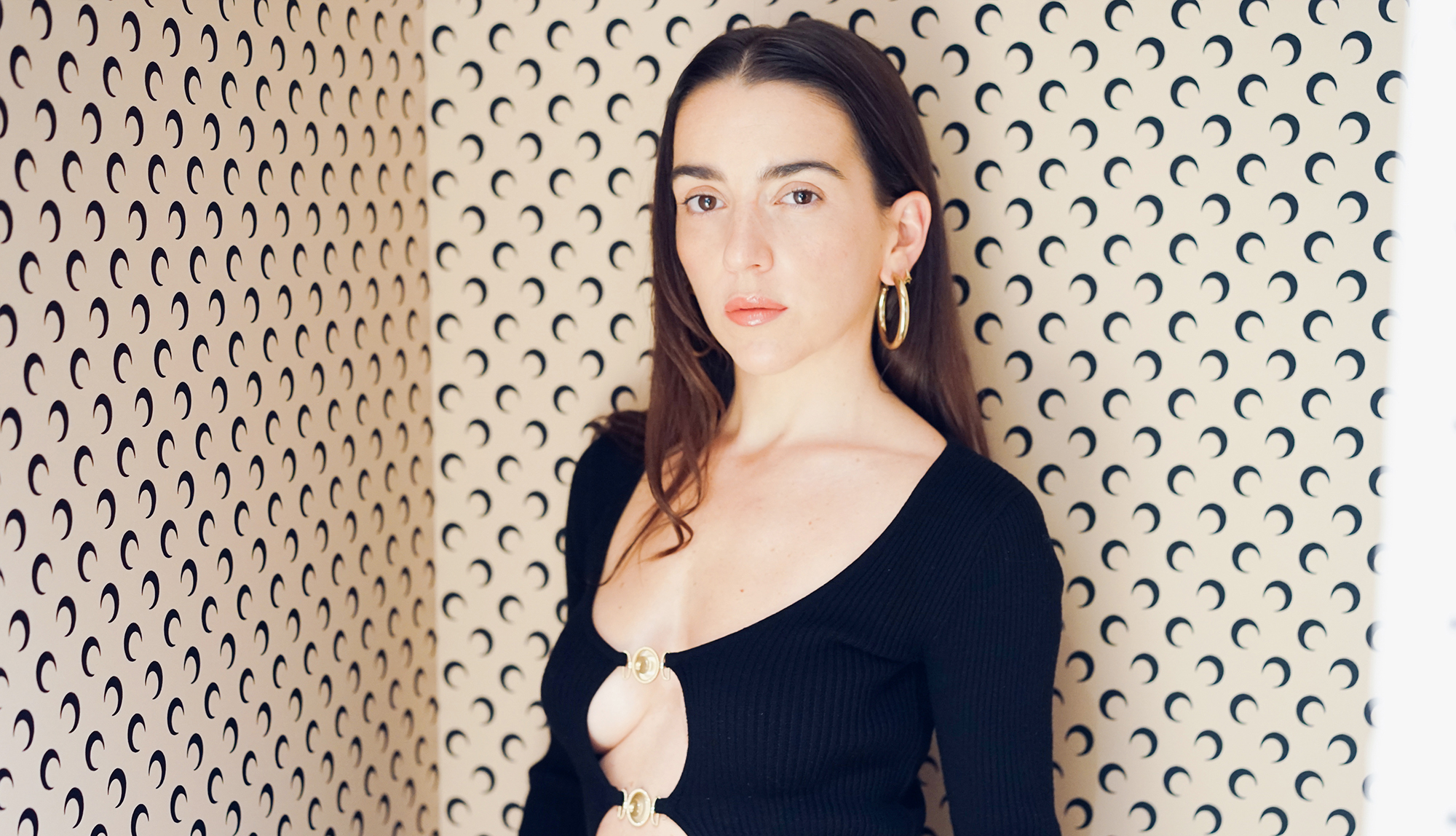
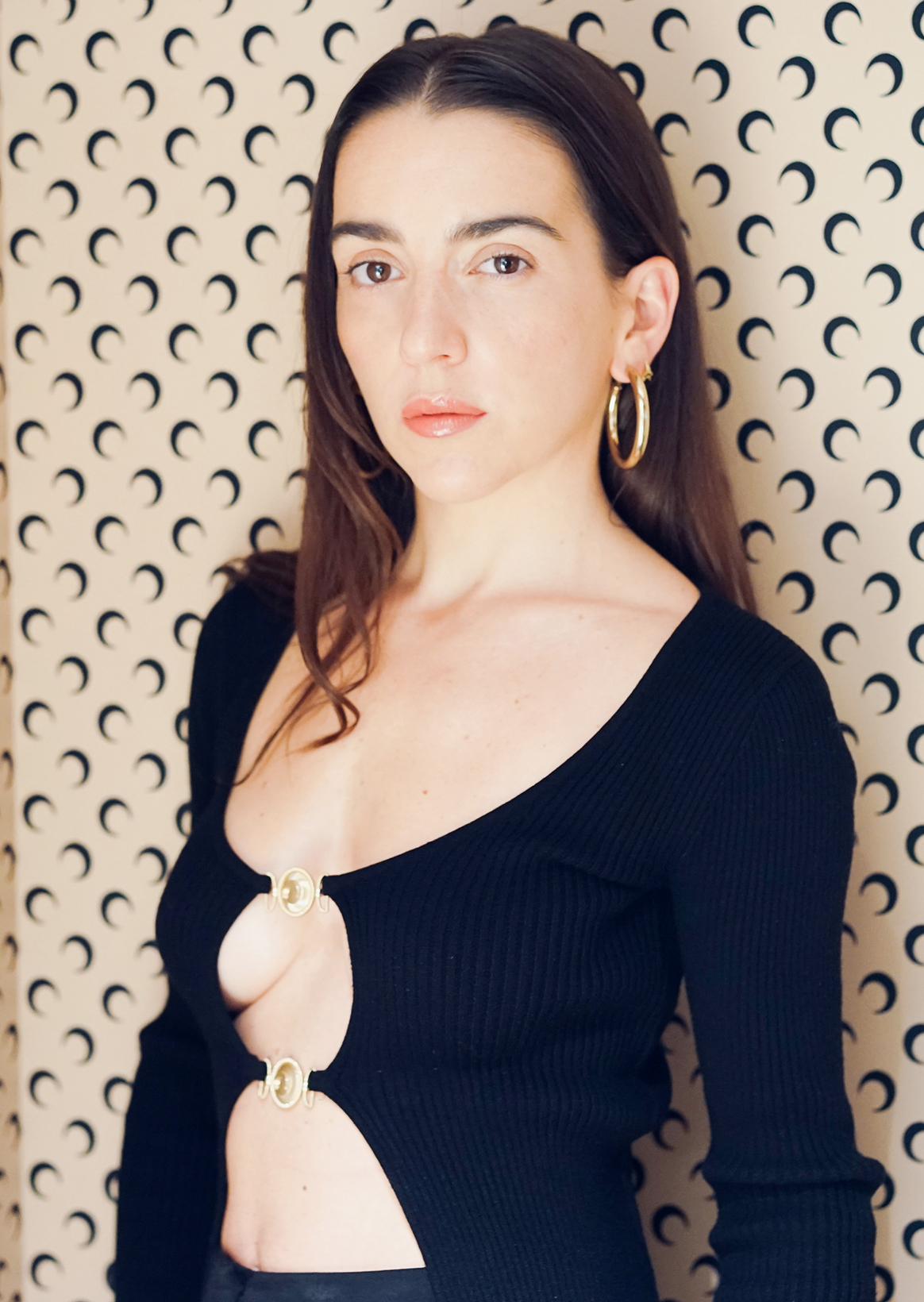
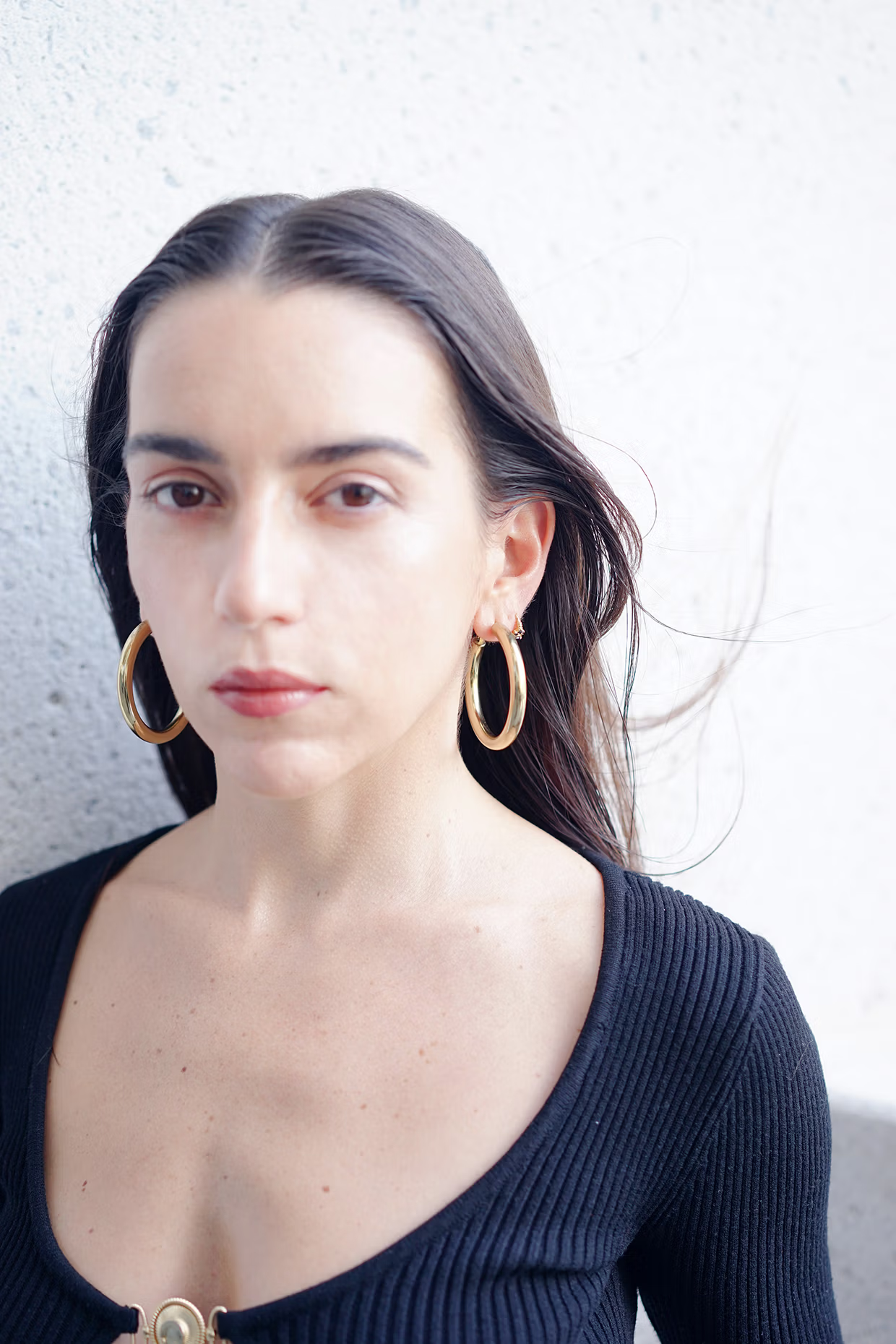
Marine Cell was born and raised in a small village in central France. From a young age, she was surrounded by rich nature and was familiar with sports, and in her teenage years, she discovered the charm of fashion in the world of creativity. Since founding her own brand, MARINE SERRE, in 2016, she has gained immediate attention by winning the LVMH Prize the following year. Since her debut, she has consistently maintained an unwavering commitment to exploring sustainable materials and practicing manufacturing methods under the concept of an "eco-futurist." Her third visit to Japan is for MARINE SERRE 's first store in Japan, Shibuya PARCO. She spoke about the origins behind Marine Sell's creation with a vision toward the future and her mission as a fashion designer going forward.
※The English version is next page.
- Photo
- Zero Wang
- Text
- Yoshiko Kurata
- Edit
- RCKT/Rocket Company*
—First, I'd like to ask what sparked your interest in fashion. I understand you were passionate about tennis from age 3 to 16. I'm curious how you transitioned from there to a career in fashion.
I was born and raised in a nature-rich area surrounded by mountains, so I enjoyed various sports besides tennis on a daily basis. However, when I started attending art school at the age of 14, I gradually began to take an interest in my own style. So my first experience with fashion started with exploring my personality and character as a woman. Gradually, I began to enjoy expressing my mood through my clothing to suit various situations, such as when going to the movies, or when going to a flea market or a shop. Looking back now, I think that at the age of 15, I might have been trying to make myself look like I was 25. I think I was seeking the experience of people saying to me, "Your mood is wonderful, you have a unique individuality that sets you apart from others."
—So it all started with dressing up as a form of self-expression?
I think it was both a form of self-expression and a way to protect oneself. In a sense, I believe those two things are two sides of the same coin. The desire to be seen in a certain way by others is also an act of self-protection, isn't it? Fashion may not be able to directly and truly protect one's life, but I don't think anyone would go out completely naked, so dressing up is necessary, isn't it? Dressing up is also a way of reflecting on and caring for oneself. That's why I still love dressing up, and I also love making clothes for my sister and friends. If there's one thing I can do to the best of my ability as a fashion designer, it's to empower women all over the world. I enjoy designing clothes that allow women to be strong. In fact, it's no exaggeration to say that I'm able to continue this job precisely because I can do that.
—What kind of female character are you portraying?
For example, women like those in movies such as "Ghost in the Shell" or "The Matrix." Of course, Coco Chanel is also one of the women I admire. I am inspired by women who always possess strength, regardless of nationality or age. In order to give shape to this in my designs, I always try to carefully observe and think about "what it means to be a woman." This is because, having been socially oppressed for so long, I feel that we first need to fully understand ourselves.
—What kind of person was your mother as a woman close to you?
My mother wasn't born and raised in a wealthy family, but she was always elegant. She had a clear understanding of her own unique style and preferences. I love her style, especially how she could pull off brightly colored clothes like pistachio green and pink. She always meticulously styled her hair and makeup, and always presented a beautiful and elegant presence. Interestingly, like me, she was from the suburbs, so she wasn't influenced by fashion from the city or the outside world. Perhaps that's why she didn't seem artificial, but rather a consistent, natural self that came from within.
— Growing up in a hometown rich in nature has had a significant impact on you and your family, hasn't it? Since the brand's inception, you've consistently demonstrated a commitment to sustainability and taken action. From what you've said, it seems to be connected to your own background.
That's right. Nature is an indispensable part of us, almost like a part of ourselves. Sometimes it seems like society forgets its importance, but realistically, if there were no trees or water, we wouldn't be able to live, would we? We wouldn't be able to work, and we wouldn't be able to find happiness. I believe our happiness begins with loving nature and animals. On a windy day like today, I feel happy every time the trees sway. We have an equal relationship with nature, yet every time I experience it, I feel that it is a being far greater than ourselves. Thinking about sustainability is an obligation we bear on a daily basis, but I think that creating anything in the first place includes caring for people.
— Paris also experienced a heatwave this summer that made headlines. Tokyo's temperature is rising every year, and I feel that in the near future, it won't be surprising if people can no longer stay outside in the summer. I feel that the non-human-centered thinking that Marine mentioned earlier needs to be addressed not by one person alone, but by everyone working together and taking action.
That's right. We may have reached a point where it's already too late to take action. The climate around the world is changing day by day, the seasons are disappearing, and it feels like there's nothing we can control anymore. In cities, in particular, opportunities to connect with nature are limited. I often take short trips to the suburbs where there is nature, or go to the mountains, but when I invite my friends, they get scared even to take a walk in the woods. First and foremost, I think it's important to connect people, nature, and the whole world. Otherwise, I feel like people will continue to live without ever caring about nature, or even the food they put into their mouths. I think it's important to stop looking at instant information on screens, understand what we've done, and think about how we want to live. As a fashion designer, I believe what I can do is to reconnect everything through creation.
I sometimes feel uneasy about a world where we lose even the opportunity to think for ourselves.
People watch screens feeling anxious and alone, but nothing is resolved there. Instead of feeling anxious and turning a blind eye to fear, it's important to confront the reality of how much the world has changed because of our actions. That's why it's important to get real energy by connecting with nature and talking to friends and people you meet for the first time. I think this helps you to look at the anxieties you were feeling alone from a slightly more objective perspective.
— In a world where information is constantly flowing, how do you take care of yourself on a daily basis?
For example, this morning I woke up at 6:30, went swimming, then did yoga and a sauna to get myself in shape. Today was a particularly long day, as I knew I wouldn't have time to rest after this interview and would have dinner appointments until late at night, so I wanted to spend two hours carefully preparing my mind and body. People often say that your body is your most valuable asset, and if you're even slightly sleep-deprived or tired, your mind won't be sharp. Ideas and actions all come from within. Even when I'm working in Paris, I walk my dog in the morning, meditate, and try to avoid using my cell phone until late every day, prioritizing sleep and rest. I think that's because I've had the habit of playing sports surrounded by nature since I was little, which allows me to put my cell phone down and concentrate on moving my body.
— From what I've heard so far, and from reviewing past interviews, Marine, your dignified presence is very impressive.
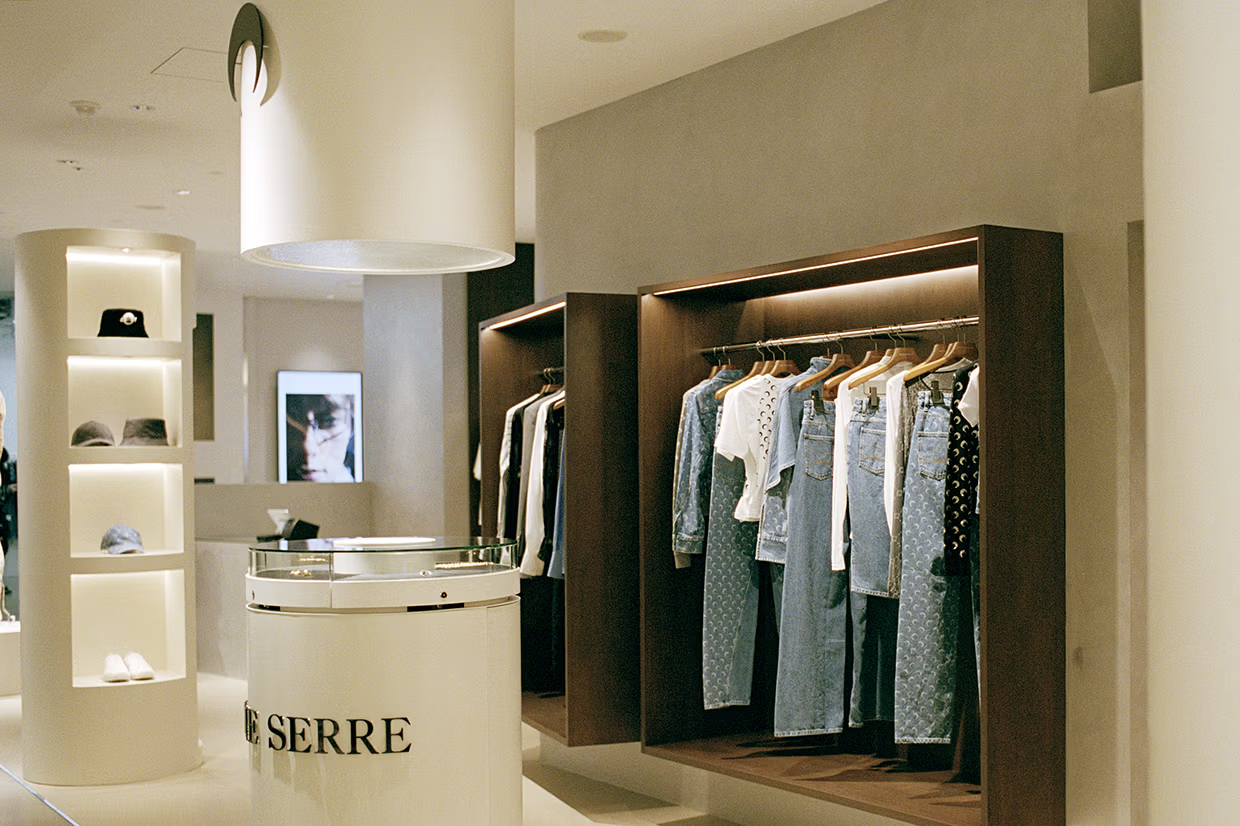
I believe my body is like a sacred temple, a place to be kept in charge. I strive to be as objective as possible in everything I do, rather than leaning forward too much. I knew I needed energy to speak with you like this, so I prepared myself the day before. Cities, in particular, can quickly throw you into a whirlwind of unexpected changes the moment you step inside. In such a daily routine, it's easy to neglect your own self-care, but I feel that as long as I'm properly recharging my energy, I can maintain self-control at all times. I believe that each moment adds up to create each day. Our Shibuya PARCO store, which just opened in mid-September, was also designed to be a peaceful, immersive space for everyone, like a meditative retreat.
—I understand you conceived and designed the store yourself.
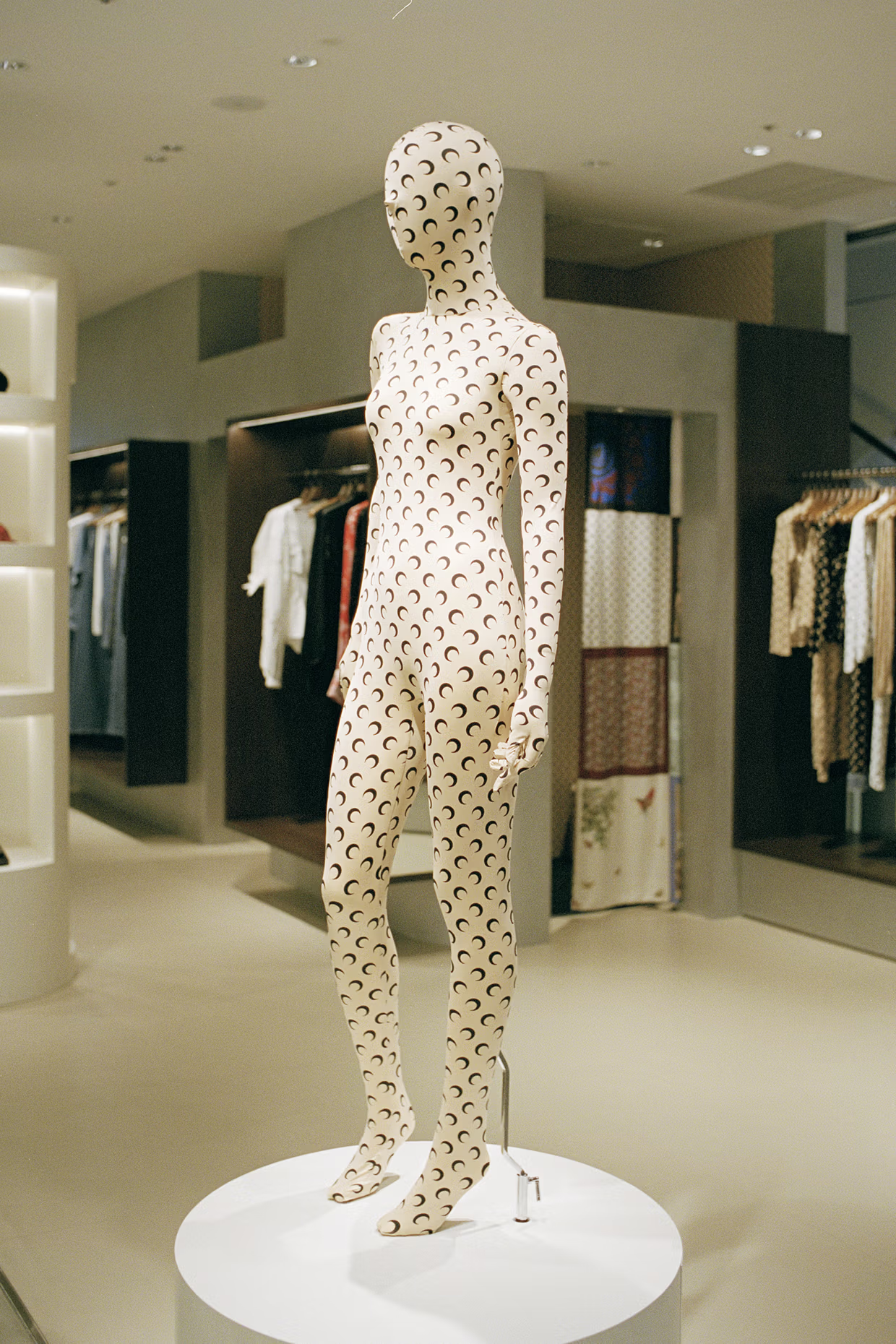
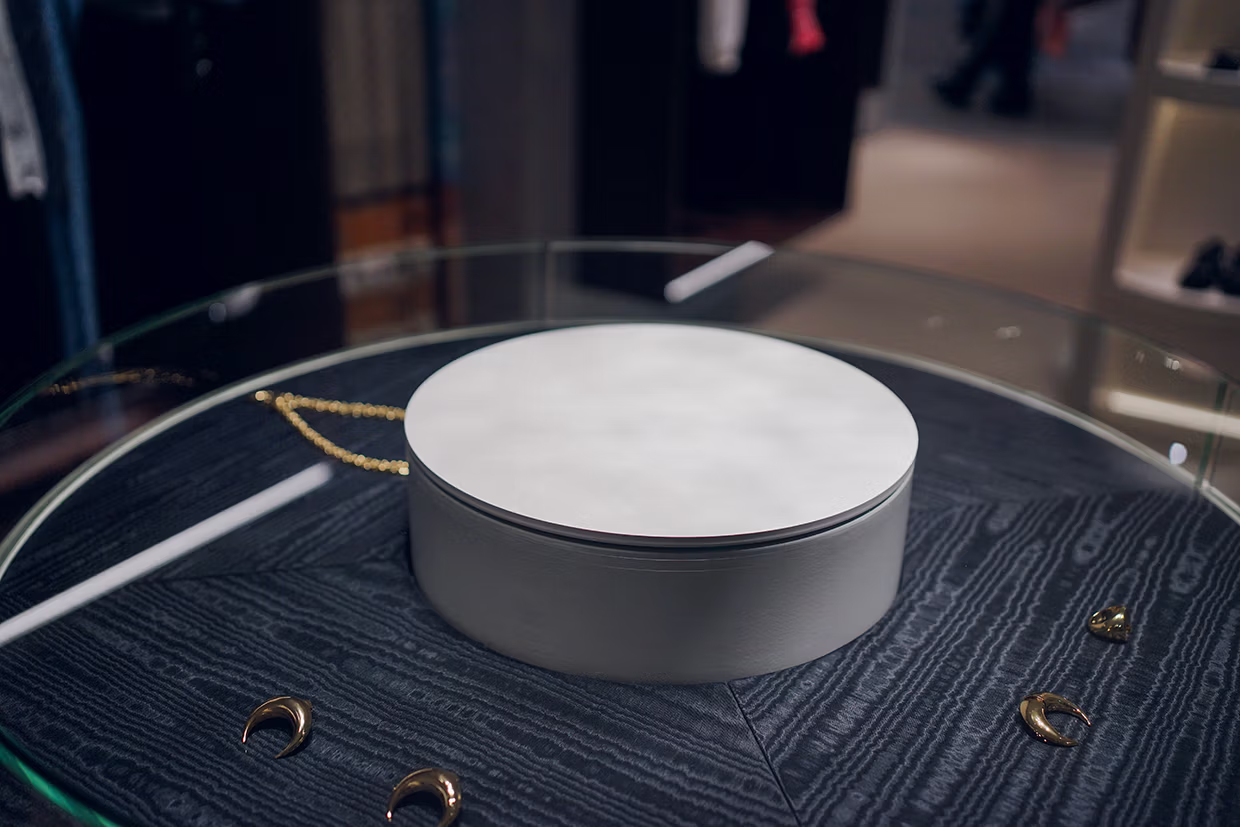
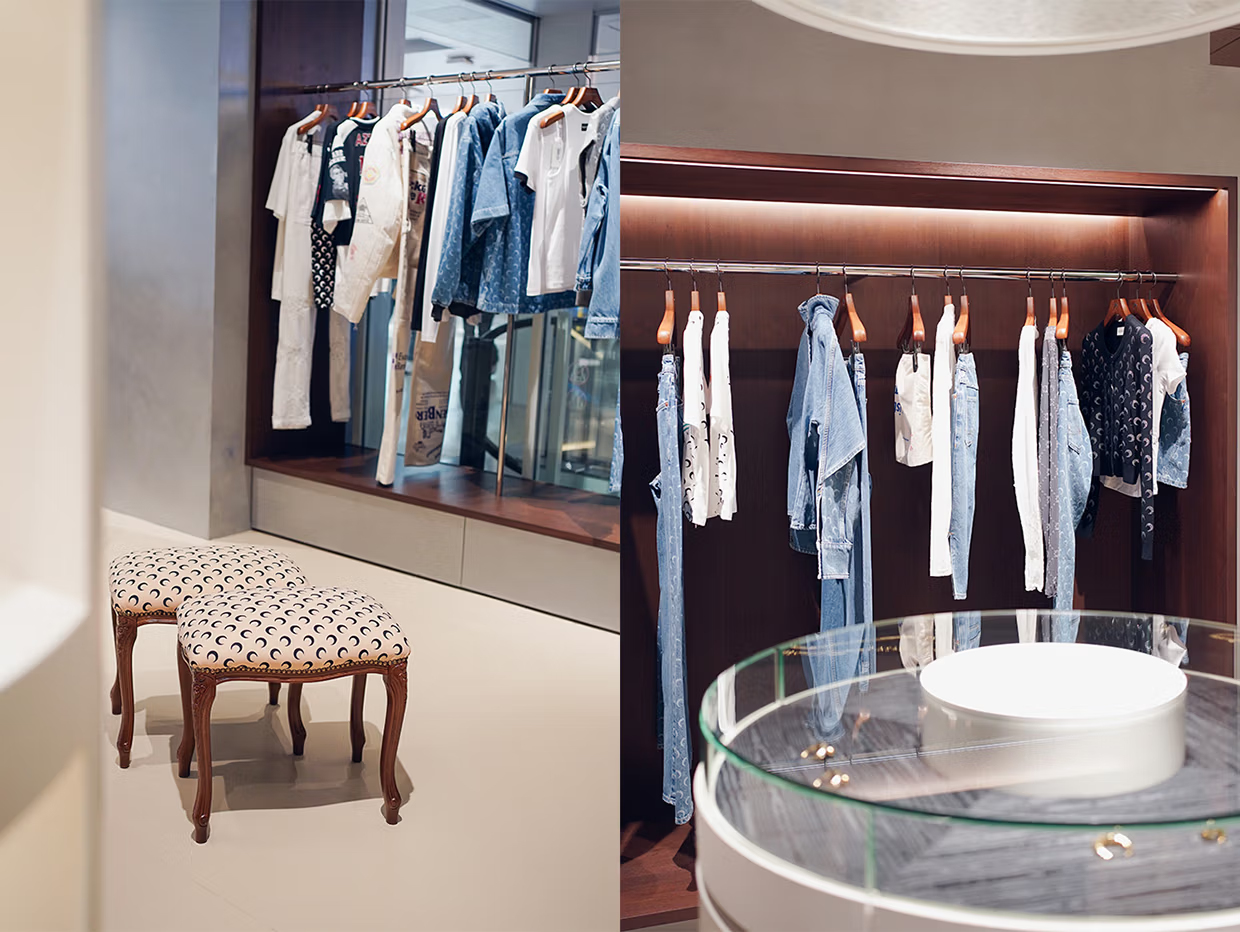
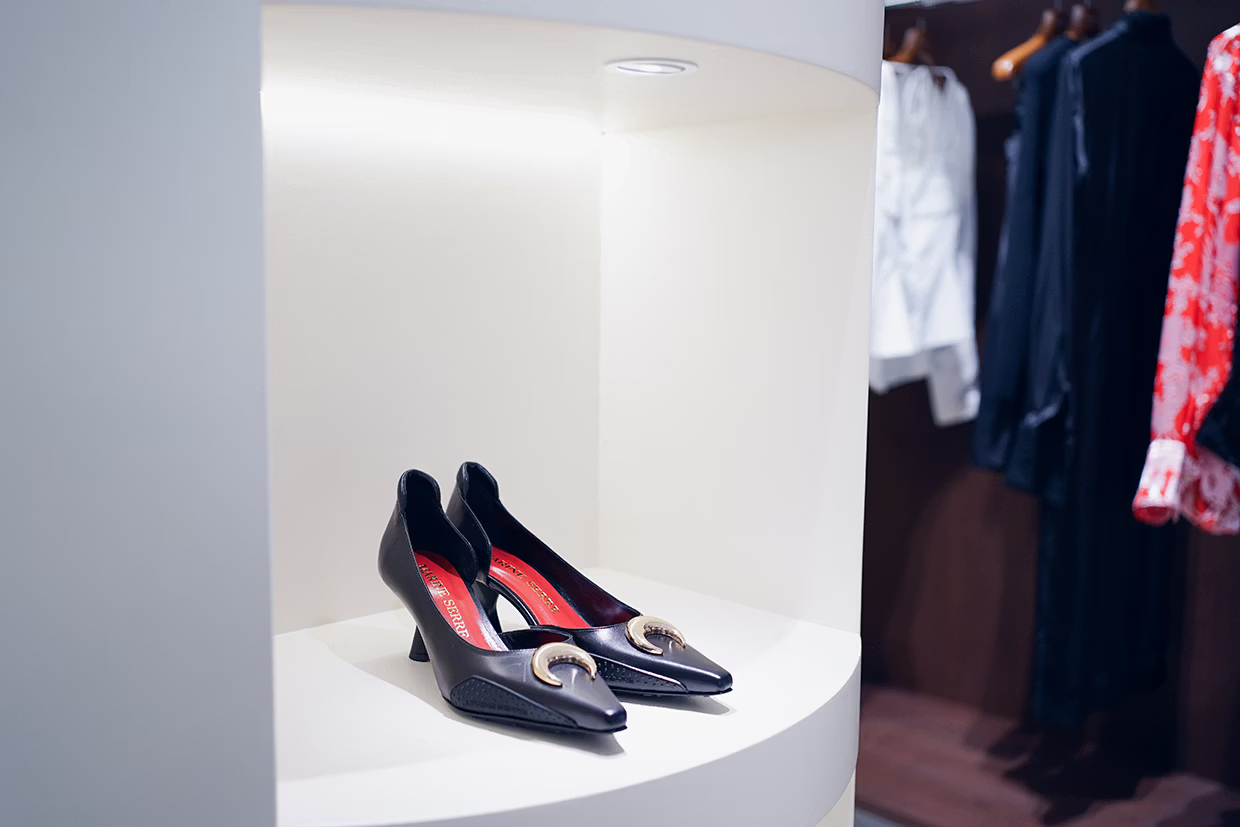
That's right. We created a mystical space inspired by ancient temples. We also added a futuristic vision, creating a world where dystopian sci-fi landscapes reminiscent of the movie "Blade Runner" intersect with timeless architectural references. Even amidst the futuristic elements, we designed the shelves out of wood to evoke a sense of tranquility and nature. As a symbol of the store, five columns stand tall, reminiscent of the columns of ancient Greek temples. Mannequins stand on either side of these columns, which are inspired by caryatids, and their poses also represent the store's worldview. The central column displaying jewelry reflects light like the surface of water, allowing you to enjoy an immersive experience. In the fitting rooms, when you lift the curtain made from scarves sewn together from vintage clothing, you'll find the entire interior covered in the brand's iconic "All Over Moon." More than just a boutique, we aimed to create a space where you can touch, contemplate, and connect with the essence of the brand through the details of space, texture, and design.
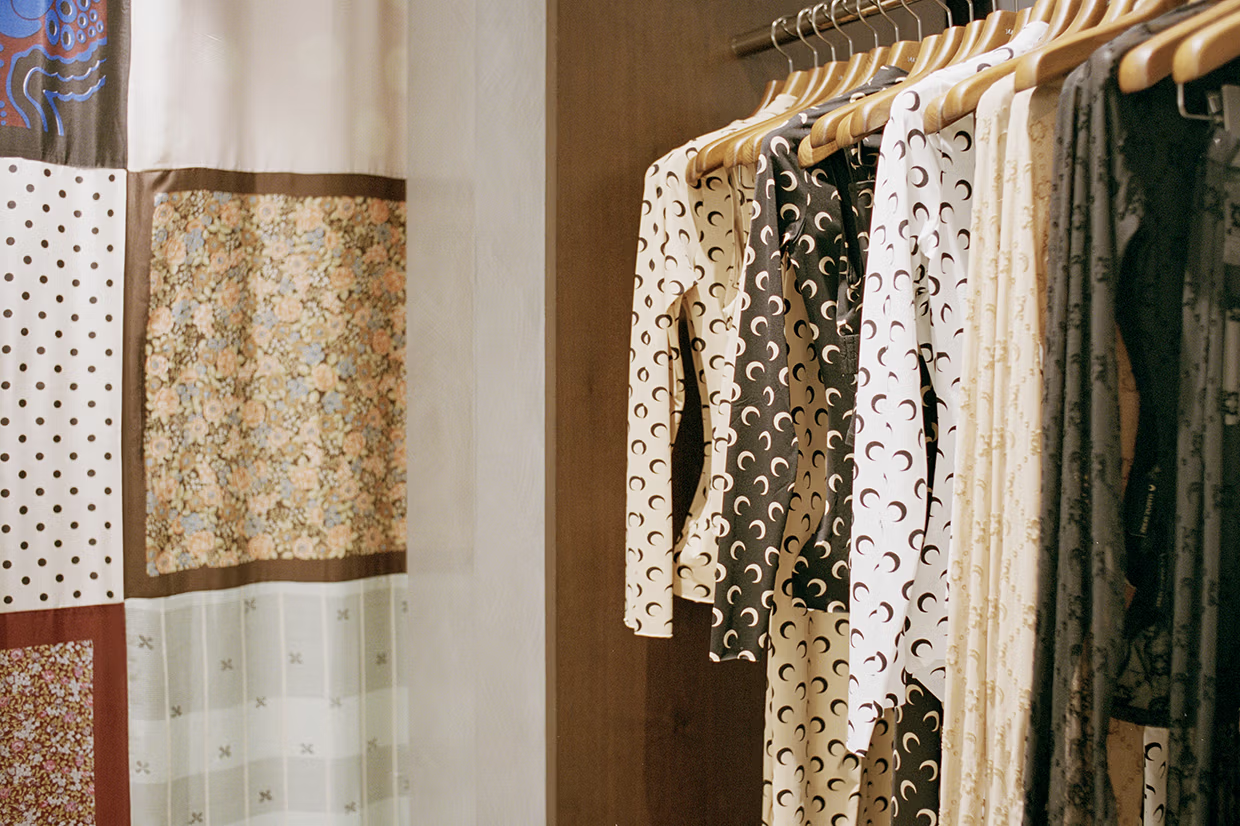 At the entrance to the fitting room, there's a curtain made from vintage scarves sewn together.
—What are your impressions of Tokyo?
Japanese people are calm and kind, aren't they? Thanks to the mutual care they show, the cities are clean, and you can see their underlying spirituality towards nature. I think it's wonderful how it's reflected in their daily lives. In my work, I mostly only meet women, and I'm always impressed by how hardworking they all are.
— Do you anticipate having opportunities to experience nature outside of Tokyo during this visit to Japan?
Unfortunately, this will only be my third visit to Japan, and I always come to Tokyo for work and end up going home without traveling anywhere else. Recently, I've traveled to Thailand, India, and South Korea, so I'd like to visit various countries, not just those with beautiful nature. I hope to take a proper vacation and come back to Japan someday.
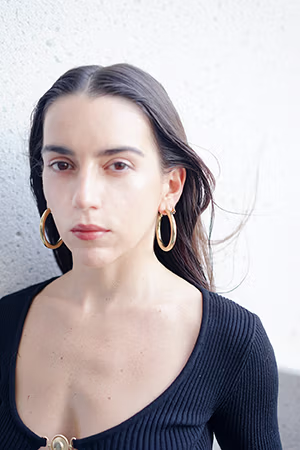
Marine Serre
Born in 1991 near Brive=la=Gaillard in the Corrèze region of central France. Raised in a nature-rich environment, aspired to become a tennis player, and studied fashion at La Cambre School in Brussels. Founded his own brand MARINE SERRE in 2016 and won the LVMH Prize the following year. Under the banner of an "Eco-Futurist," he develops innovative collections that combine recycled materials with artisanal craftsmanship. A designer recognized for moon motifs and sustainable philosophy.
Instagram(@marineserre_official)